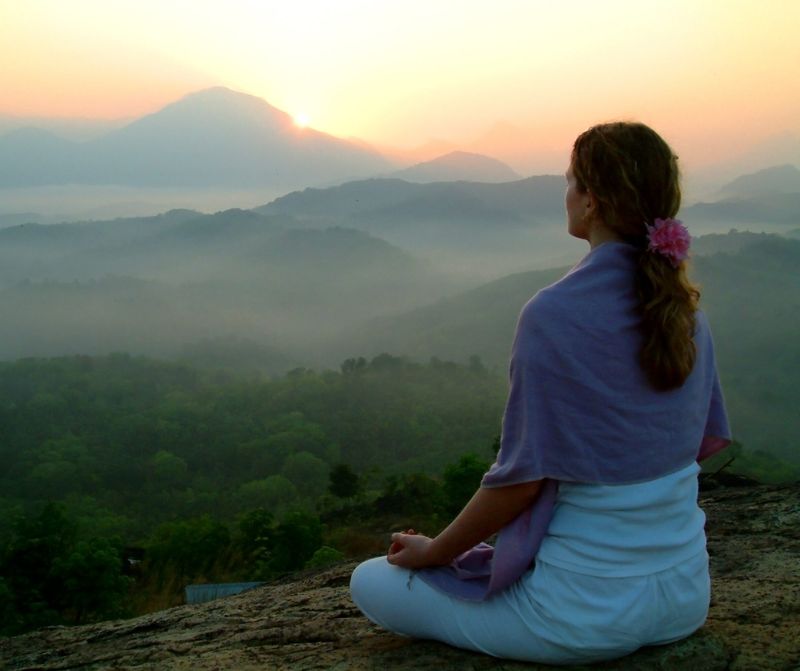
People often ask me what is distinctive about Thich Nhat Hanh’s Plum Village tradition. After all, mindfulness, meditation and Buddhism are now familiar terms in contemporary life. My own simple response is this: Plum Village is not primarily something you learn — it is something you taste. And once tasted, it quietly changes the way you breathe, walk, listen and live.I first encountered Thich Nhat Hanh, whom many of us lovingly call Thay, not as a philosopher or scholar, but as a human being who radiated calm, warmth and attentiveness. In his presence, you felt deeply seen. That quality lies at the heart of the Plum Village tradition. It is a living, embodied practice of mindfulness, rooted not in abstraction but in the ordinary moments of daily life.Mindfulness, as taught in Plum Village, is both simple and transformative. It is the art of being fully present to what is happening now, your breath, your body, your feelings, the person in front of you. Breathing in, you know you are breathing in. Breathing out, you know you are breathing out. This may sound unremarkable. Yet in a world of constant distraction, this simple act of stopping and arriving can feel like coming home after a long absence.A key strength of the Plum Village tradition is that meditation is not confined to sitting on a cushion. We practise mindfulness while walking, eating, washing dishes or drinking tea. Walking meditation, for example, invites us to slow down and take each step with awareness. We are not walking to get somewhere; we are walking to be present. As Thay often reminded us, “Peace is every step.”Another defining feature of the tradition is its emphasis on community, or sangha. Thay taught that transformation is much easier when we practise together. Sitting, walking and eating in silence with others creates a shared energy of steadiness and ease. In retreats or Days of Mindfulness, many people are surprised to discover how nourishing silence can be. In that silence, we learn to listen more deeply, both to others and to ourselves.The Plum Village tradition is also firmly grounded in what Thich Nhat Hanh called engaged Buddhism. Shaped by his experiences during the Vietnam War, his insight was clear; meditation must help us respond to the suffering of the world, not withdraw from it. Inner peace and outer responsibility are not separate. When we learn to care for our own fear, anger and despair, we are better able to act with clarity and compassion in our families, communities and society.One of Thay’s most widely shared teachings is interbeing; the understanding that nothing exists independently. We are made of our ancestors, our food, the earth and one another. This insight is not merely philosophical; it softens the heart. When we truly see that our well-being is inseparable from the well-being of others, compassion arises naturally.Ethics in the Plum Village tradition are expressed through the Five Mindfulness Trainings. They offer practical guidance for mindful living, in our speech, consumption, relationships and use of power. These are not rigid rules, but gentle invitations to live with greater awareness and care. Perhaps the most inviting quality of Plum Village is its gentleness. There is no pressure to strive, achieve or become someone else. Joy, ease and even laughter are recognised as essential to the path. Retreats are spacious and humane, allowing time to rest, to be in nature and to reconnect with what truly matters.For those who feel tired, overwhelmed or inwardly scattered, a Day of Mindfulness offers a rare pause, to slow down, breathe with others and rediscover that peace is possible here and now. You do not need to be Buddhist or experienced in meditation. You only need the willingness to stop and take one mindful step.That, to me, is the distinctive gift of the Plum Village tradition: not an escape from life, but a practical and compassionate way of meeting it, fully and together.(Ahimsa Trust will host a Day of Mindfulness led by Brother Phap Huu, the Abbot of Plum Village and other teachers on 15 February at the India International Centre, New Delhi, followed by a retreat in Dehradun (18-22 February) at The Doon School and Jamun Village; details at www.ahimsatrust.org, ahimsa.trust@gmail.com, or +91 88606 94315.)— Shantum Seth is an ordained Dharma Teacher in the Buddhist Mindfulness lineage of Zen Master Thich Nhat Hanh