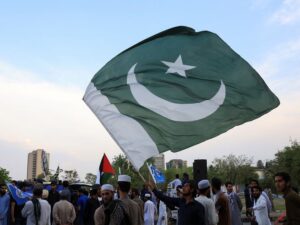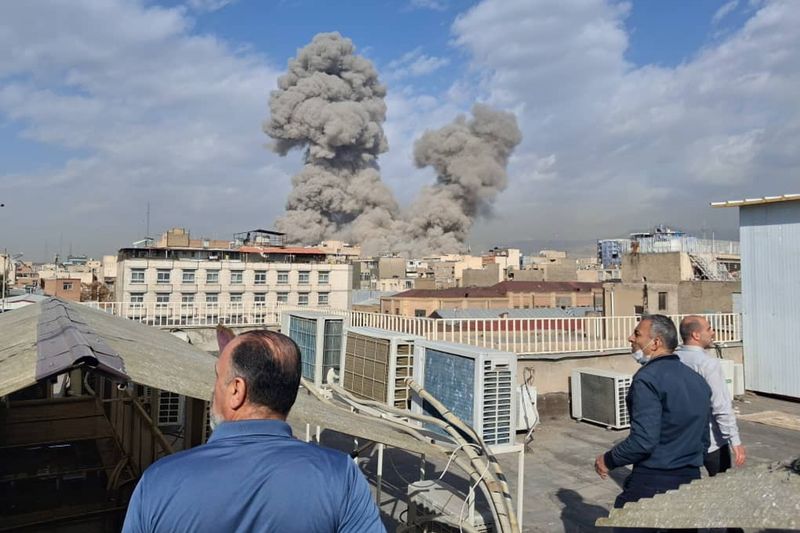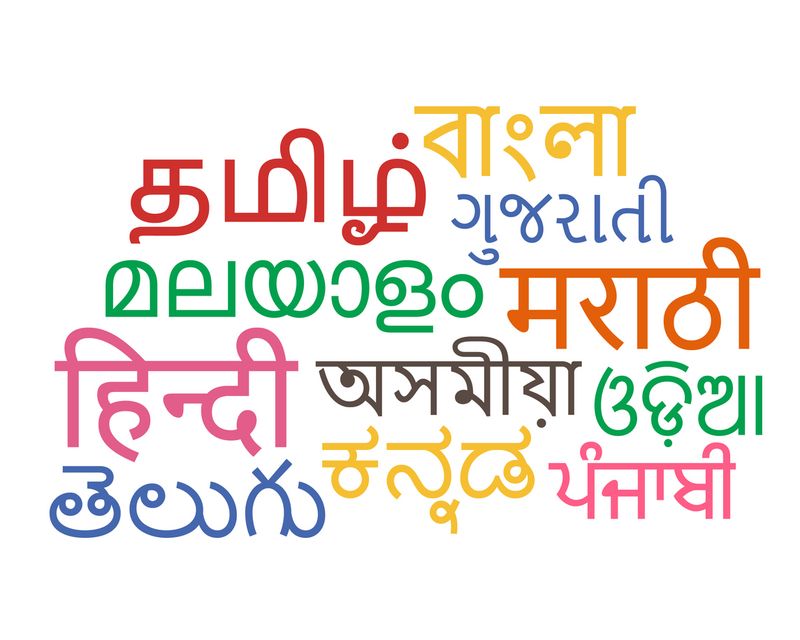

As I was cleaning up my phone recently, deleting old photos and those irritating Good Morning forwards that just clog up space, I chanced upon a stunning article written by Aatish Taseer for Vanity Fair in 2019, titled ‘A Rake’s Progress’. It was a deep, psycho-political dive into the life and times of Pakistan’s Imran Khan, surely one of the most iconic political figures of our subcontinent and a man imprisoned by the present Pakistani government for reasons that have never made sense. Ironically, for a man who was as admired by our cricket-crazy Indian janta as well as his legion admirers abroad, no one has spoken about the inhuman conditions he has had to endure during his solitary confinement.I began to reflect whether it is a reluctance (understandable perhaps) here in India to interfere in the political affairs of a neighbouring country, or whether it is a convenient excuse offered by those in power who are elected by us to speak out on what are considered ‘difficult’ subjects. This is true not just of our government but of all those across the world who have allowed Trump and Netanyahu on one hand and Iran’s leaders to hold the world to ransom. Worse, they have remained resolutely silent over the killing of civilians and, horrifyingly, of more than 160 schoolgirls. None of us are unaware of how many children have been orphaned, how many women widowed, how many homes and lives destroyed. And yet, we make tch-tch sounds and continue to view reels of the daily spectacle of flying missiles and drones while we munch popcorn in front of our TVs.Are we so dehumanised now that nothing that does not directly affect our lives moves us? Or have we surrendered our own conscience to our respective governments to deal with questions of ethics, morality and humanity?Perhaps it is because we have shrunk ourselves into nuclear families and nuclear states (no pun intended). But please remember that by their very nature, nuclear units atomise into smaller and smaller units. So, in India, we have carved up a syncretic land into linguistic states and these are now divided according to regions. The South considers itself to be no part of the land that lies north of the Vindhyas, while the eastern states are embroiled in ugly arguments over who has a legitimate dominion status. Let’s not even talk of Bengal that has never surrendered its identity to India. Kashmir? I’ll say no more.Somewhere, there is the absence of a common language of universal emotions and an ethical foundation. There was a time when one’s mother tongue was more important than the lingua franca being promoted in our schools. My mother understood this, having been exposed to so many different languages as she and her siblings went from Gujarat to Kumaon, to Bundelkhand and Rampur and then to Santiniketan to become fluent in Hindi, Urdu, Sanskrit, Kumaoni, Gujarati, Bengali, Marathi, English, Avadhi and Bundelkhandi as well.My generation may have lost a few of that huge palette of languages but retains several and added some (Punjabi in my case). My comfort level in English is undeniable but I have still kept up my reading in Hindi and speak in Kumaoni to my siblings and cousins. And I can tell you that if my translation skills are valued today, it is in no small measure to my mother’s insistence that we speak the language of the common man. She taught us to add, rather than drop, languages as we went along our lives.In her last years, my mother spent more and more time in Lucknow and became a sort of fixture of the literary fraternity there. People came to meet her and learn from her but she never stopped learning herself.Every morning, she sat on her terrace, surrounded by her staff and a curious fan club that included Ramrati, her faithful maid, her children and grandchildren, Burho, an old crone who came because she had nowhere else to go, her rickshawala Qutb Ali, her sweeper Mohan and wife Bahuriya, even a monkey called Ramkali who sat in her puja and put out a paw to receive some prasad at the end. My mother was convinced Ramkali was a failed writer and read her newspaper upside down with Shivani’s reading glasses perched on her face.Who knows whether this was true or another one of my mother’s extraordinary stories?Yet this woman, who listened intently to her dhobi Misrilal’s weekly saga of unhappiness at the hands of an uncaring daughter-in-law, was equally at home in the company of Acharya Hajari Prasad Dwivedi, Amritlal Nagar, Mahadevi Verma and Sumitranandan Pant. Her greatest takeaway from her time at Tagore’s ashram and its liberal education was to remain a learner who listened intently to all those around her. Who can say whether the stories she has left behind had real characters behind them, but to date all her readers stoutly believe that she was an extraordinary teller of tales who could make you believe in whatever she wrote.Our conversations with the people amongst whom we live are essential to understand the human conditions that are universal. Reaching out to strangers, chatting with lonely folk, even just a smile to people you meet on your morning walk, connects you in ways that nurture humanity.Remember that.— The writer is a social commentator