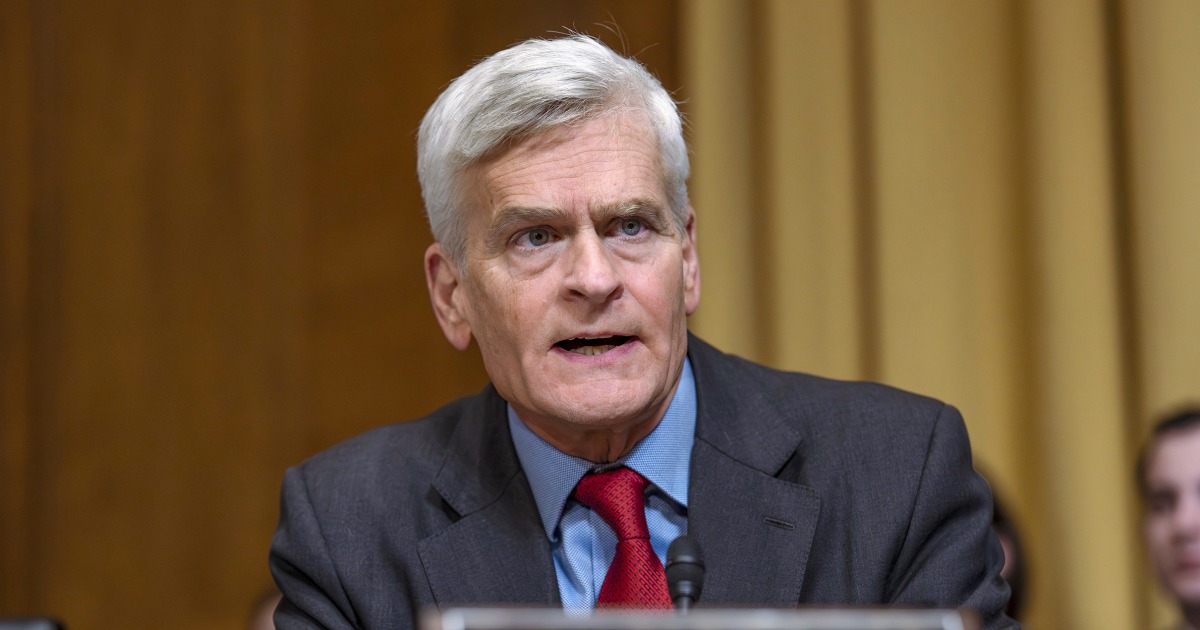

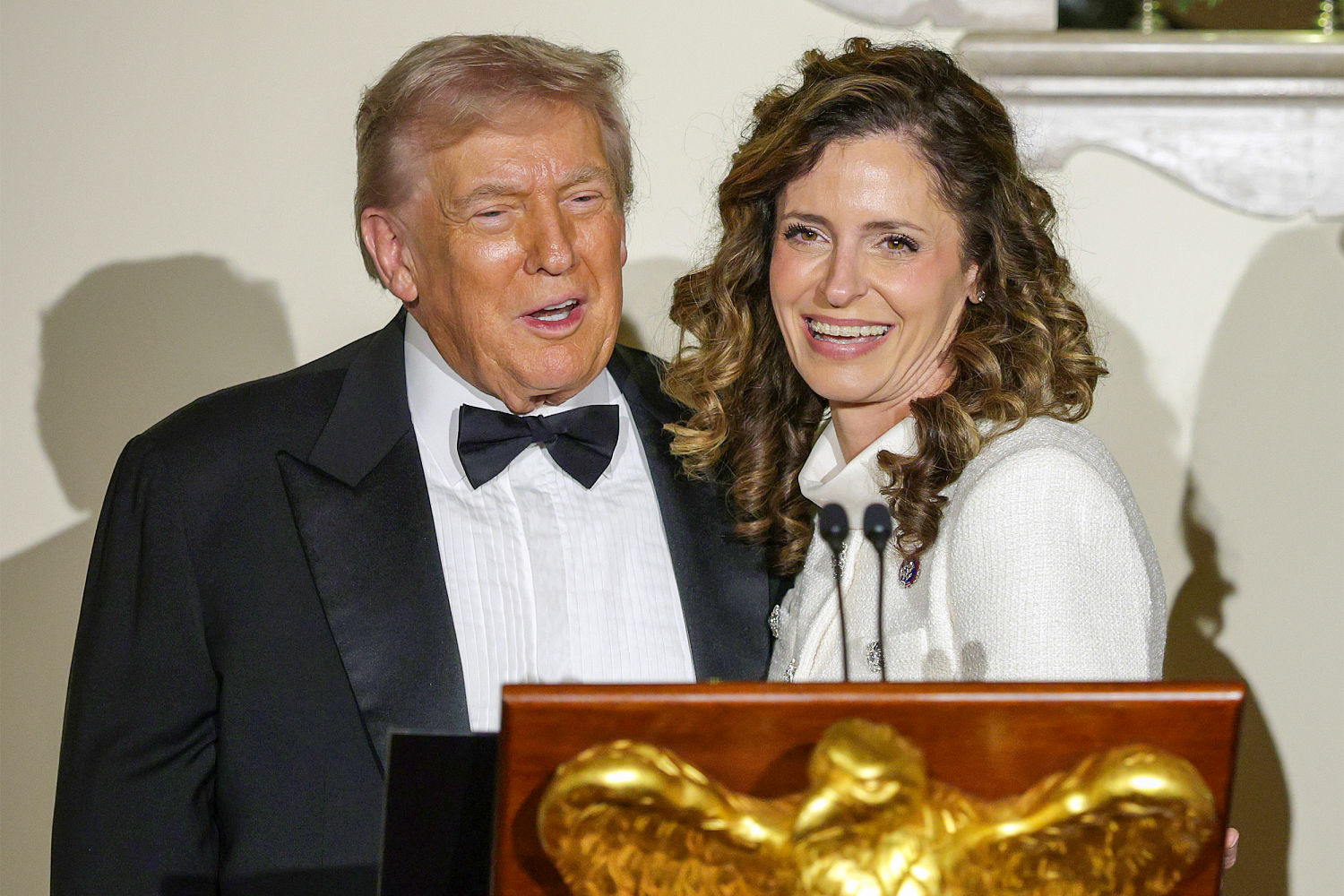
COVINGTON, La. — Sen. Bill Cassidy knows Republican voters won’t forget his decision to convict President Donald Trump in the Jan. 6 impeachment trial. But whether Cassidy is re-elected to another term in Louisiana this year may depend on whether they are willing to forgive him.Subscribe to read this story ad-free Get unlimited access to ad-free articles and exclusive content.During a recent campaign stop at an assisted living home in Louisiana’s Northshore, the first question from the crowd was whether Cassidy regretted his impeachment vote, as well as his vote to confirm Health and Human Services Secretary Robert F. Kennedy Jr.Cassidy acknowledged “those will be two votes that people will remember me for.” But he also defended himself, saying he made his choices based on the best available information he had at the time. And he added that “no,” he doesn’t think Trump should “continue” to be impeached. Asked later by Jattvibe News whether he thinks his impeachment vote will be a liability in his GOP primary, Cassidy said that it “might be.” But he also sought to downplay his rift with Trump as a temporary disagreement, noting he has voted with the president 90% of the time.“I tell people, ‘Hey, you’re married? Did ever your spouse do something that you didn’t really like?’ And you work through it,” he told Jattvibe News in an interview that aired on “Meet the Press NOW.” “I’m focused on the now and the future. If you want somebody delivering for our state, to make Louisiana a place where people move to set down roots, raise their children and grandchildren, I’m your guy.”Cassidy, a physician who has been in Congress for 17 years, is in the fight of his political life as he fends off a primary challenge from Trump-backed Rep. Julia Letlow and Louisiana Treasurer John Fleming in deep-red Louisiana. More than $20 million has been spent on the airwaves ahead of the May 16 primary, according to the tracking firm AdImpact. Sen. Bill Cassidy, R-La., has walked a political tightrope as the chair of the Senate’s health committee.J. Scott Applewhite / APCassidy has the backing of Senate Republican leadership and the benefit of an experienced and prolific fundraising operation. But both Letlow and Fleming have tried to paint Cassidy as anti-Trump, while the president himself has recorded videos in support of Letlow.But those aren’t the only headwinds Cassidy is facing. As chairman of the Senate Health, Education, Labor and Pensions Committee, he has also clashed with the “Make America Healthy Again” movement over his staunch support for vaccines. And while he was the decisive vote in getting Kennedy, a longtime anti-vaccine activist, confirmed, Cassidy has since repeatedly criticized his actions at HHS — including the firing of all 17 members of the Centers for Disease Control’s Advisory Committee on Immunization Practices and replacing them with members of his own choosing, among them several known vaccine skeptics. Those tensions could be on full display once again when Kennedy comes to publicly testify before the panel later this month, forcing Cassidy to walk a delicate tightrope.Cassidy’s pushback and initial hesitation to support Kennedy has not gone unnoticed by the MAHA movement that the secretary champions. Kennedy ally Tony Lyons is supporting Letlow, and pledged $1 million through his “Make America Healthy Again PAC” to help defeat Cassidy before Letlow even entered the race. (So far, the group has spent over $200,000 in support of Letlow.)Cassidy largely downplayed his differences with the MAHA movement, highlighting some of the areas where they are aligned. But he also argued that, on the topic of vaccines, more voters may be on his side now that people have seen the deadly consequences of not getting vaccinated.“MAHA and I are totally united on ultra processed foods, and we’ve had great success there,” he told Jattvibe News. “Clearly, I have differences with some on immunizations, but I think when we see those thousands of people getting measles in these outbreaks, and children dying from measles and other vaccine preventable diseases, folks are kind of open to this. They understand that this is important.”Cassidy, 68, who kicked off the recent campaign event by talking about his career in medicine and saying “being a physician defines who I am,” has tried to lean into his health care credentials in other ways. He told Jattvibe News he spoke recently with Trump’s team about crafting a bill to bring down the cost of health care, which he hopes to roll out “soon.” He spearheaded a separate health care proposal introduced by Senate Republicans in December, which failed to gain the necessary bipartisan support for passage. Heading into this fall’s midterm elections, Republicans are still trying to find their footing on the topic of affordability, which is likely to be a defining issue in a number of key races.“Voters are very concerned about economic issues. We’ve got to speak to affordability. Probably the price of gas will continue to be influenced by the war in Iran,” Cassidy told Jattvibe News. “When I started speaking about health care affordability, heads nodded, and when I spoke about trying to bring down the cost of prescription drugs, heads were nodding yes in agreement that that’s what we need to do.”All three candidates in the Louisiana’s Senate GOP primary may run into another hurdle: Trump’s crusade against mail-in voting. Last week, the president signed an executive order aimed at restricting the practice, though it is facing legal challenges. That has left some Republican voters questioning whether mail ballots are safe to use themselves, which could be a major issue in the Louisiana primary since it takes place on a Saturday. During his town hall-style campaign stop, someone in the crowd expressed concern to Cassidy about voting by mail, noting that Trump has described it as a “way of cheating.” Cassidy assured the room that mail ballots are safe to use in Louisiana.“I like the mail-in ballot,” he said, before pivoting to his support for the SAVE America Act, a Trump priority that seeks to impose national voter ID requirements and require proof of citizenship to register to vote. Speaking to Jattvibe News, Cassidy did not say whether he thought Trump’s rhetoric about mail voting was helpful. But he continued to defend mail balloting in red states like Louisiana, while giving oxygen to Trump’s unfounded claims that the practice can be ripe for fraud in Democratic-run states.“As a doctor, I know there are people who cannot physically go to a voting booth, and you want to make sure they can still vote,” he said. “But I’ll proudly say of my state that people do not speak of corruption in my state’s elections.” Between newly instituted rules that only allow registered Republicans to participate in the GOP primary and the prospect of a lower turnout for a Saturday election, diehard conservatives could play an outsize role in the outcome. And both Letlow and Fleming think that could bode well for their own prospects. President Donald Trump stands with Rep Julia Letlow at the White House on Dec. 11, 2025.Alex Wong / Getty ImagesLetlow, 44, who filled her husband’s seat in Congress after he died of Covid-19 days after winning his race, was recruited heavily by the Trump administration to run for Cassidy’s seat and jumped into the race earlier this year after the president endorsed her on social media. “That endorsement has been a huge source of energy for our campaign, because Louisiana Republicans trust President Trump,” Letlow told Jattvibe News in an interview. “When the president tells you need to step up, and when the voters in Louisiana are really encouraging, saying, we want an alternative, we want another choice, would you consider doing this? Would you pray about it? And you know, when I had that piece about it, I decided to go all in,” Letlow added. But Letlow is facing challenges of her own. Cassidy has criticized her over her past support for diversity, equity, and inclusion (DEI) policies when she was a university faculty member, her late disclosure of personal stock trades, and that none of her bills have been signed into law. Letlow defended her stock trading activity, noting her investments are professionally managed by an independent third party and that the paperwork error was corrected as soon as it was discovered. She also said that she reversed course on DEI after she “saw it for what it was” and spent her time in Congress “fighting against it.”“Cassidy is lying about me because he can’t defend his own record,” she said.If no candidate can secure a majority of the vote on primary day, the top two vote-getters will advance to a June 27 runoff. Fleming, a former congressman, believes he can nudge out Letlow and take on Cassidy head-to-head. Fleming, who served in various positions in the first Trump administration and was a founding member of the conservative House Freedom Caucus, said he is the candidate with the most MAGA credentials. But Fleming’s candidacy has created headaches for Trump’s allies, since it could prolong the race.Fleming told Jattvibe News in an interview that in late January, around the filing deadline, someone “around” the Trump administration offered him a job to drop out of the race as a way to help clear the path for Letlow, but that he declined to take it. Fleming declined to say who made the overture or what the job would have been.“They were trying to entice me to make it easier for her,” Fleming said. “And along the way, President Trump and I had a brief conversation, and it was a very, very good conversation. And as far as I can tell, we’re on great terms.”The White House didn’t immediately respond to a request for comment. Fleming warned that Letlow is becoming “overconfident” that Trump’s endorsement will secure her support from the MAGA base.“While an endorsement like that is certainly, particularly in Louisiana, is popular and helpful … it doesn’t get you elected,” he said.