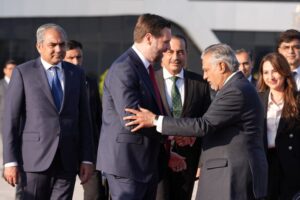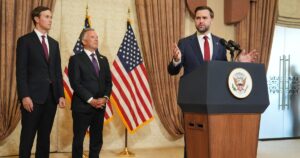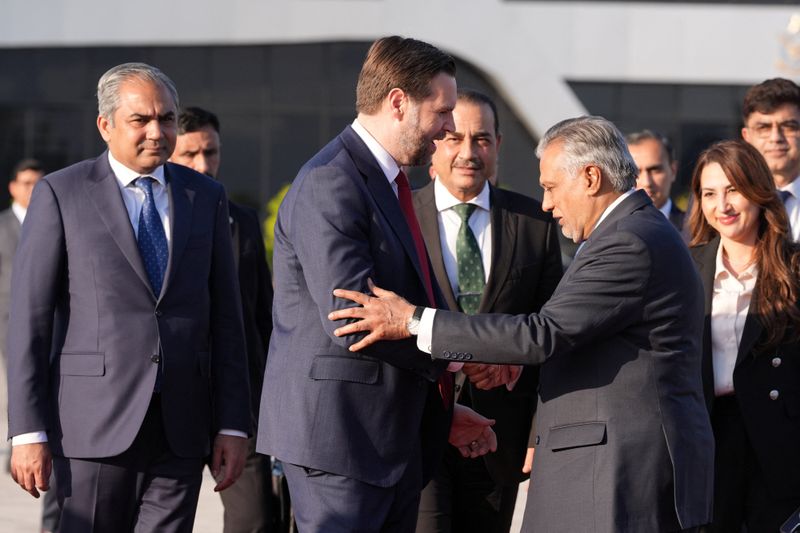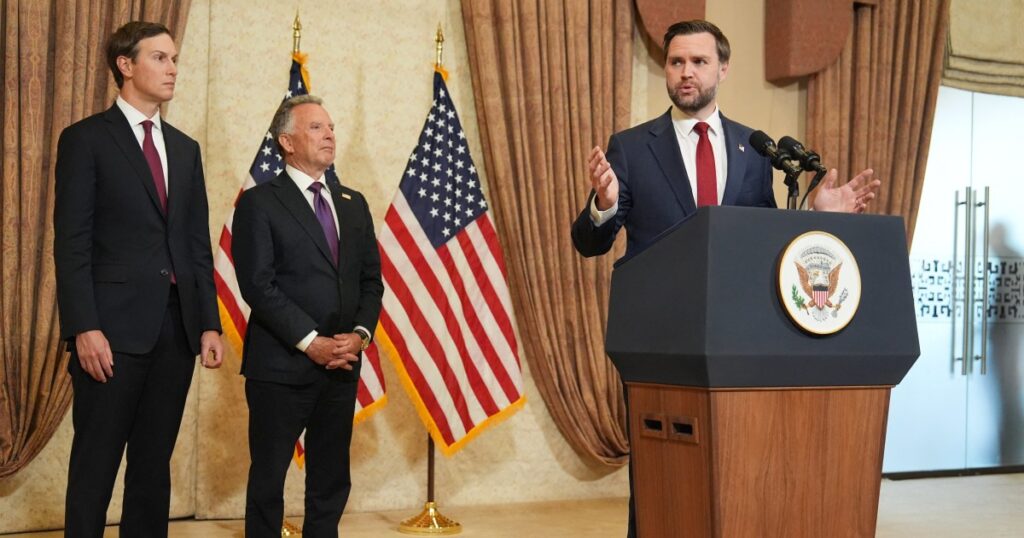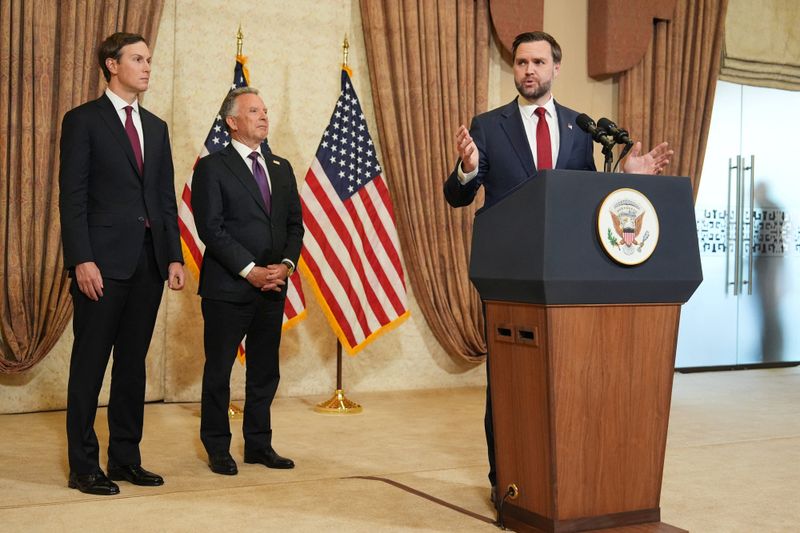

The high-stakes negotiations between the US and Iran in Islamabad ended without a breakthrough, with US Vice-President JD Vance returning to Washington after over 24 hours of intense, Pakistan-mediated talks, even as Tehran underscored that deep-rooted “mistrust and suspicion” made a swift agreement unlikely.Just hours after the failure of negotiations, US President Donald Trump announced that Washington would move to block all ships entering or leaving the strategically vital Strait of Hormuz, in what is being seen as a dramatic escalation which could have far-reaching global implications.Declaring that the move would take effect “immediately”, Trump said the US Navy would begin enforcing a sweeping maritime blockade, marking one of the most aggressive steps taken by Washington in the ongoing confrontation with Tehran.“The meeting went well and most points were agreed to, but the only point that really mattered, nuclear, was not. Effective immediately, the US Navy, the finest in the world, will begin the process of blockading any and all ships trying to enter or leave the Strait of Hormuz,” Trump posted on Truth Social.He also asserted that Iran remained unwilling to abandon its nuclear ambitions, delivering a blunt assessment of the failed Islamabad talks and signalling that Washington’s core objective remained non-negotiable.In a strongly worded remarks following detailed briefings from Vance and senior envoys, Trump said despite prolonged negotiations, Tehran had refused to yield on what he described as the “single most important issue”, its nuclear programme.“The meeting began early in the morning and lasted throughout the night, close to 20 hours. I could go into great detail… but there is only one thing that matters — Iran is unwilling to give up its nuclear ambitions,” Trump said, adding that while several points of agreement were reached, they were ultimately inconsequential when weighed against the risks of a nuclear-armed Iran.Earlier, addressing a press conference before departure from Islamabad, Vance acknowledged that while the discussions were “substantive”, the two sides failed to bridge critical differences.“We’ve had a number of substantive discussions with the Iranians. That’s the good news. The bad news is that we have not reached an agreement, and I think that’s bad news for Iran much more than it is bad news for the US,” he said.Vance stressed that Washington’s core demand remained unchanged — a long-term, verifiable assurance that Iran would neither pursue nuclear weapons nor retain the capacity to rapidly develop them.He added that although Iran’s earlier enrichment infrastructure had been dismantled, concerns persisted over Tehran’s long-term trajectory. “Do we see a fundamental commitment of will from the Iranians?” he asked, identifying what he described as the central question driving the negotiations.Despite the deadlock, Vance said the US had placed its “final and best offer” on the table, leaving room for Tehran to reconsider its position.On the Iranian side, officials struck a calibrated tone — defiant yet open to continued engagement — portraying the outcome as part of a longer diplomatic process rather than a collapse.Foreign Ministry spokesperson Esmail Baghaei said the talks were among the most extensive in recent months, lasting nearly 24-25 hours of continuous engagement, and covering a wide spectrum of issues including Iran’s nuclear programme, sanctions relief, war reparations and regional security flashpoints such as Hormuz.“We reached understanding on a number of points, but key disagreements remained on two to three major issues, and ultimately the talks did not lead to an agreement,” Baghaei said.“The discussions took place after 40 days of imposed war, in an atmosphere of mistrust and suspicion,” he said, adding that “no one expected an agreement to be reached in a single session, and no one did.”Baghaei maintained that Iran remained committed to diplomacy but cautioned that progress would depend on Washington’s approach. “The success of this diplomatic process depends on the seriousness and good faith of the opposing side,” he said, warning against what he described as “excessive demands and unlawful requests.”Reinforcing this stance, Speaker of Iran’s Parliament Mohammad Bagher Ghalibaf, who was also part of the visiting delegation, said Tehran entered the talks with “good faith and will” but remained constrained by past experiences. “Due to the experiences of the two previous wars, we have no trust in the opposing side,” Ghalibaf said.He added that despite what he described as forward-looking proposals from the Iranian delegation, the US side ultimately failed to build confidence. “America has understood our logic and principles, and now it’s time for it to decide whether it can earn our trust or not,” he said.Ghalibaf also framed diplomacy as one element of a broader national strategy. “We consider diplomacy alongside military struggle as a means of upholding the rights of the Iranian nation, and we will not cease efforts to consolidate the achievements of the forty days of Iran’s national defence,” he asserted.At the same time, he expressed appreciation for Pakistan’s role in facilitating the talks, echoing similar sentiments from both delegations, even as the outcome fell short of expectations.The parallel narratives — Washington highlighting missed opportunity and Tehran emphasising structural distrust — underline the persistent gulf between the two sides.