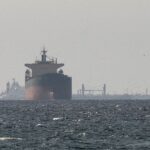

Twenty-two countries have jointly condemned Iran over attacks on commercial shipping and civilian energy infrastructure in the Gulf, warning that the situation threatens global energy security and international peace.In a strongly worded joint statement on the Strait of Hormuz, leaders from countries, including the United Kingdom, France, Germany, Japan and Australia, accused Iran of targeting unarmed commercial vessels, striking oil and gas installations, and effectively attempting to choke one of the world’s most critical maritime corridors.The statement said the countries “condemn in the strongest terms” Iran’s actions, including what it described as the “de facto closure” of the Strait of Hormuz — a vital artery through which a significant share of the world’s oil supplies transit.Calling the developments deeply alarming, the grouping urged Tehran to immediately cease hostile actions, including laying of naval mines, and drone and missile attacks aimed at disrupting commercial shipping.They also called on Iran to comply with obligations under United Nations Security Council resolutions, warning that continued interference with maritime traffic could have far-reaching global consequences. “Freedom of navigation is a fundamental principle of international law,” the statement said, underscoring that any disruption to shipping lanes violates established norms under the United Nations Convention on the Law of the Sea.The coordinated diplomatic intervention comes amid mounting fears that escalating tensions in West Asia could trigger a broader energy crisis, with ripple effects across global markets, particularly for vulnerable economies dependent on fuel imports.The countries warned that the impact of Iran’s actions would not remain confined to the region but would be felt worldwide, especially among developing nations already grappling with economic instability.Linking maritime security directly to global stability, the countries stressed that disruption of energy supply chains constitutes a “threat to international peace and security”, and called for an immediate and comprehensive halt to attacks on civilian infrastructure, particularly oil and gas facilities.In a sign of potential coordinated action, the countries expressed readiness to support efforts aimed at ensuring safe passage through the Strait of Hormuz, including maritime security initiatives and contingency planning.They also welcomed a decision by the International Energy Agency to authorise a coordinated release of strategic petroleum reserves — a move aimed at cushioning global markets against supply shocks.Further, the grouping indicated it would explore additional measures to stabilise energy markets, including working with oil-producing nations to ramp up output and mitigate supply disruptions.Recognising the disproportionate impact on poorer nations, the statement said efforts would also be made to extend support through multilateral channels, including the United Nations and international financial institutions.As tensions continue to mount, the focus is increasingly shifting to the Strait of Hormuz — a narrow but strategically indispensable passage — with fears that any prolonged disruption could trigger cascading effects across global trade, inflation and energy security.