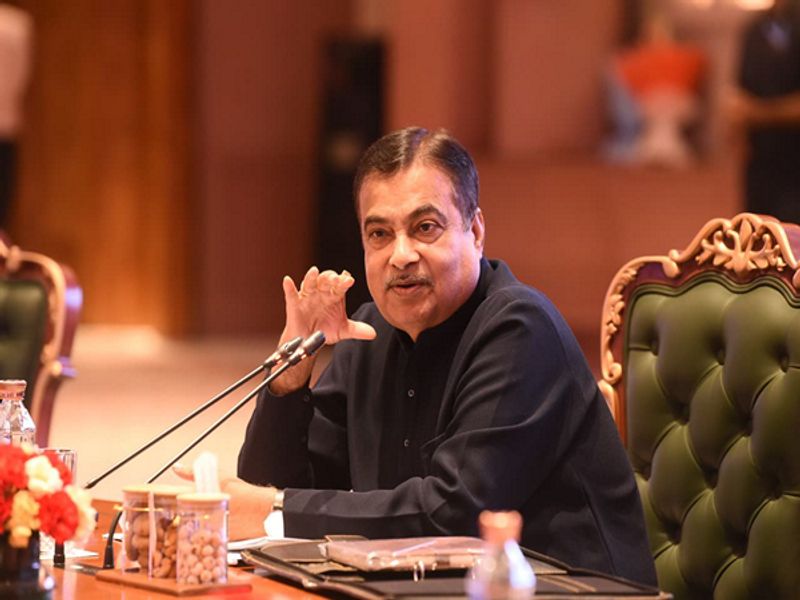
In a significant push to the long-awaited Tricity Ring Road project, the Union Government on Thursday approved the construction of a 10.3-km, six-lane greenfield spur, connecting the under-construction Ambala-Chandigarh expressway on NH-205A with the proposed Zirakpur bypass — filling a critical missing link that had stalled progress on the Rs 12,000-crore mobility network for over two years.The approval delay for over two years pushed costs up by more than half.Union Minister of Road Transport and Highways Nitin Gadkari, announcing the approval, said: “In Punjab, we have approved Rs 1,463.95 crore for the construction of a six-lane, access-controlled greenfield spur linking the Ambala-Chandigarh section of NH-205A with the Zirakpur bypass. As part of the Tricity Ring Road project, the corridor will decongest key urban junctions across Mohali, Chandigarh and Panchkula by diverting through-traffic.”The spur — connecting near Rajo Majra village on the Ambala-Chandigarh Greenfield Expressway to the Zirakpur bypass — had first been conceived in 2023 but languished in the approval pipeline, during which its estimated cost ballooned from Rs 940 crore to Rs 1,464 crore, a sharp escalation of Rs 524 crore or nearly 55.7 per cent.The National Highways Authority of India (NHAI) has already floated bids for the project, with submissions due next week. Senior officials confirmed that the spur’s work order will be awarded simultaneously with the adjacent Zirakpur-Panchkula bypass — for which bids have already been received and are currently under evaluation — with both projects set to be formally awarded and commenced before March 31.The spur is expected to be completed within 18 months of its award.The approved spur is the last major uncleared component of the project, a planned 244-km, eight-project orbital network designed to deflect inter-state and non-local traffic away from the congested urban cores of Chandigarh, Mohali and Panchkula.Without this link, traffic originating from Ambala or Delhi and heading to Zirakpur, Panchkula, Baddi or Shimla had no option but to navigate through the choked arteries of the Tricity. The spur now provides a direct bypass, routing such traffic onto the Zirakpur bypass before it enters the urban grid.Officials said the project would address acute congestion on three of the region’s most stressed national highways — NH-44, NH-205A and NH-152 — by diverting high-volume through-traffic, particularly freight and long-distance vehicles, to the new greenfield alignment.The corridor will also include two major bridges across the Ghaggar river, two interchanges — including one with the Ambala-Chandigarh Greenfield Expressway — and 14 underpasses, ensuring seamless, access-controlled movement without at-grade crossings.STRATEGIC CONNECTIVITY FOR FOUR STATESThe project’s significance extends beyond the Tricity. Once operational, the spur will provide direct, high-speed access to Zirakpur and Panchkula for traffic flowing in from Chandigarh, Ambala and Delhi, enabling faster onward movement toward Himachal Pradesh — particularly the Shimla region — as well as the industrial belt of Baddi-Barotiwala-Nalagarh (BBN).Gadkari underlined this regional dimension, saying the project would ease congestion on multiple national highways while “enabling faster, seamless connectivity towards Himachal Pradesh, particularly the Shimla region — reducing travel time and strengthening regional economic integration”.Connectivity to Aerocity on the outskirts of Mohali will also improve significantly, given the spur’s alignment through that corridor.RING ROAD: THE BIGGER PICTUREThe spur approval comes as major components of the broader Tricity Ring Road advance rapidly. The 61.23-km Ambala-Chandigarh Greenfield Corridor — the ring road’s central spine, built across two packages at a combined cost of over Rs 3,160 crore — is at an advanced stage of construction and is 80 per cent complete with a May deadline, while the IT City-Kurali stretch having already been opened to traffic.The 27.37-km Mohali-Sirhind corridor (NH-205-AG), built at Rs 1,514.54 crore, is 78 per cent complete with a May deadline. Its 106.92-km, Rs 4,598-crore Sirhind-Sehna extension remains pending Cabinet Committee on Economic Affairs (CCEA) approval.The 19.2-km Zirakpur-Panchkula bypass — the Rs 1,878-crore anchor of the ring road’s south-eastern arc, featuring a 6.195-km elevated section, multiple flyovers and a railway overbridge — has already received its final forest clearance, with land acquisition completed in 2020. Its simultaneous award alongside the approved spur before March 31 marks a decisive acceleration in closing the ring.NHAI officials said the full network, once operational, will redirect thousands of vehicles daily from Chandigarh’s internal grid, predicting improvements in air quality, fuel efficiency, road safety and inter-state travel time across Punjab, Haryana, Himachal Pradesh and the Delhi-NCR northern corridor.