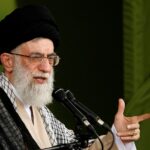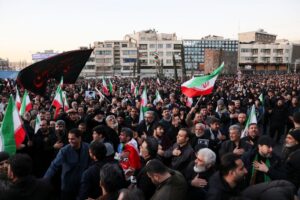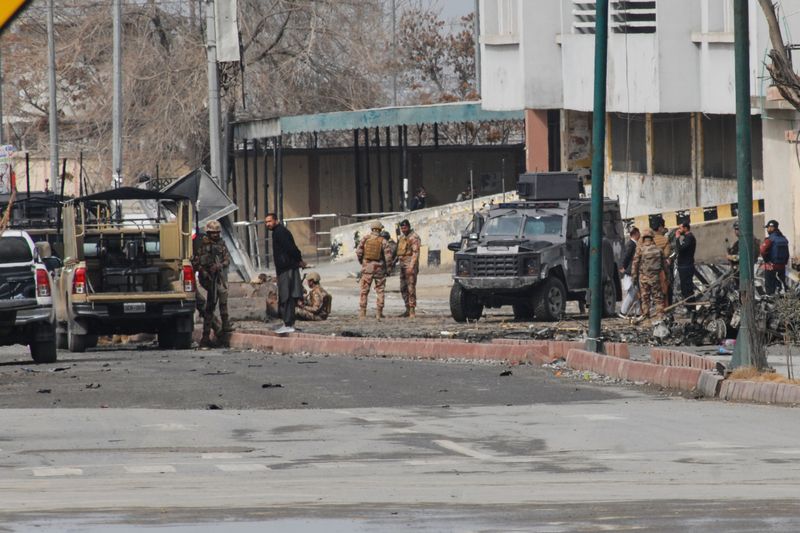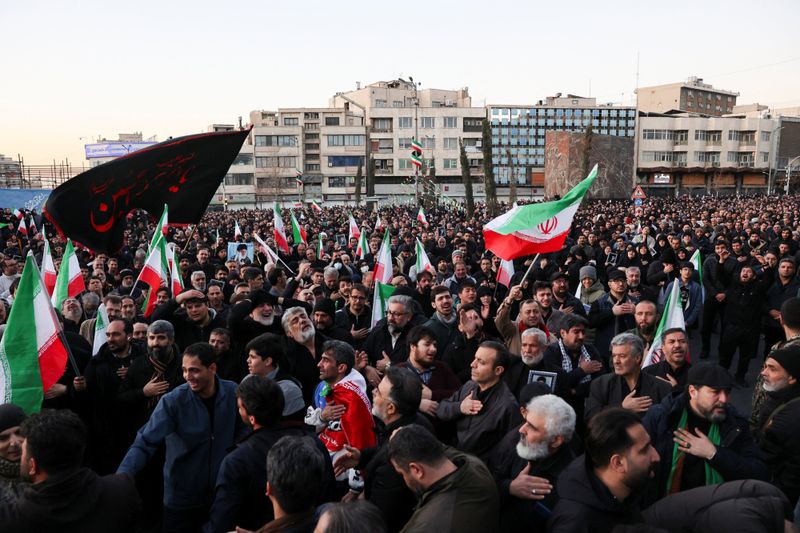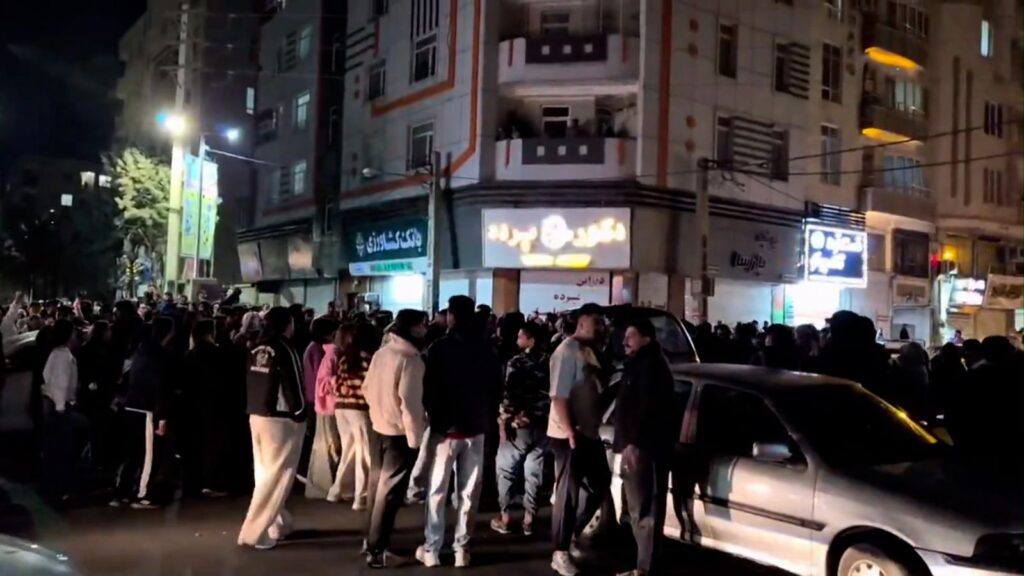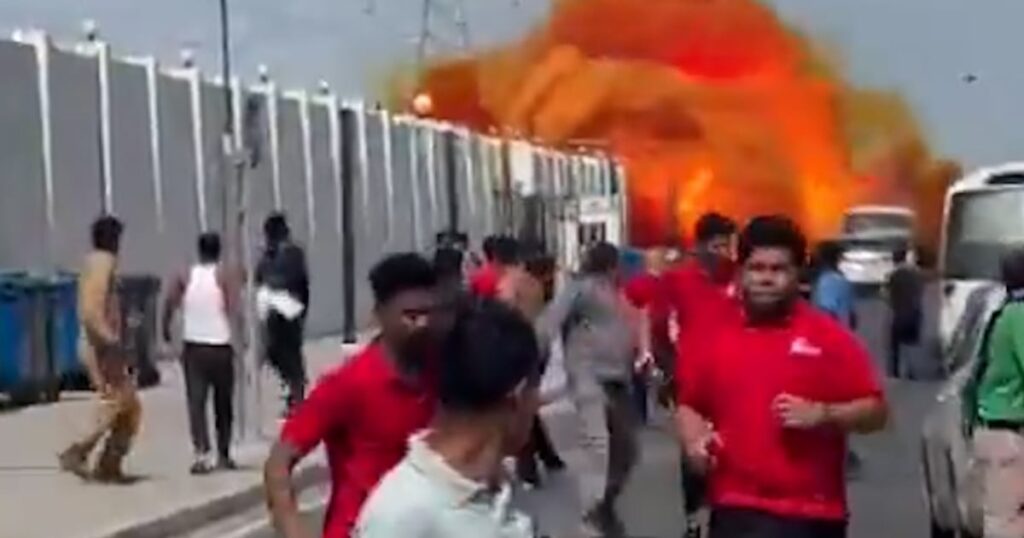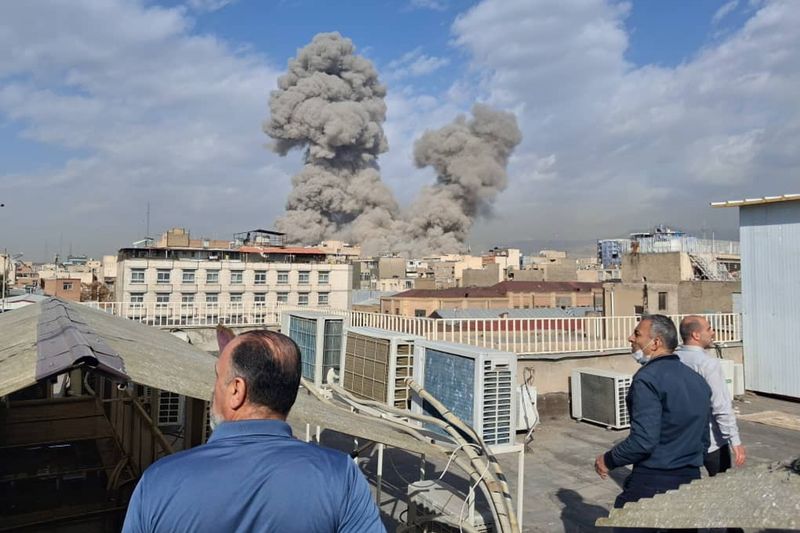

The US and Israel launched a major attack on Iran on Saturday, barely 48 hours after Prime Minister Narendra Modi concluded his visit to Tel Aviv.The first wave of strikes in what the Pentagon named “Operation Epic Fury” mainly targeted areas around the offices of Iran Supreme Leader Ayatollah Ali Khamenei. It wasn’t clear whether 86-year-old Khamenei was in his office when the attack occurred. Over 200 people were killed across Iran, of them 85 at a girls school.India has traditionally maintained a careful balance in West Asia, cultivating close defence and technology ties with Israel while preserving working relations with Iran, a longstanding energy partner and a strategic gateway to Afghanistan and Central Asia. As tensions escalate between Washington, Tel Aviv and Tehran, that balancing act grows more complex.Calling the strikes “unprovoked and illegal”, Iran retaliated by firing missiles and drones towards Israel and US military bases in the region and several Arab Gulf cities, causing waves of blasts, shaking windows and sending people rushing for cover in rare and potentially far-reaching attacks on a region that prides itself on its security. US President Donald Trump called on the Iranian public to “seize control of their destiny” by rising up against the Islamic leadership that has ruled the nation since 1979. Kuwait, Qatar, Saudi Arabia, the United Arab Emirates and Bahrain, all of which have a US military presence, said they had intercepted Iranian missiles. Jordan also intercepted missiles. Iran also fired missiles at Israel.On Dubai’s posh Palm Islands, a fire broke out near a hotel and huge plumes of smoke could be seen from a distance as multiple blasts echoed throughout the day. Missile trails streaked across the sky above several cities as loud blasts rang out, most likely the sound of air defences intercepting barrages of incoming missiles. Residents took cover in windowless bathrooms and closets. Iranian Foreign Minister Abbas Araghchi said Khamenei and President Masoud Pezeshkian were alive “as far as her knew”. The targets included members of Iran’s leadership, according to a US official and another person briefed on the attacks who spoke on condition of anonymity to discuss an ongoing operation. There was no immediate information on whether top officials had been killed.Tensions have soared in recent weeks as American warships moved into the region. Trump said he wanted a deal to constrain Iran’s nuclear programme at a moment when the country is struggling at home with growing dissent following nationwide protests.The immediate trigger for Saturday’s strikes appears to be the unsuccessful latest round of nuclear talks. But they also reflect the dramatic changes across the region that have left Iran’s leadership in its weakest position since the Islamic Revolution nearly half a century ago.In a video announcing “major combat operations”, Trump said, “When we are finished, take over your government. It will be yours to take. This will be probably your only chance for generations. For many years, you have asked for America’s help, but you never got it.” He threatened to destroy Iran’s missile infrastructure and naval capacity.Israeli PM Benjamin Netanyahu framed the joint attacks as necessary to “remove an existential threat”, arguing that without imminent action Iran would become “invulnerable”. He, too, addressed the Iranian people directly, calling on them to establish “a new and free Iran”, even as citizens in Israel took shelter amid retaliatory strikes. But Iran has lived through earlier cycles of external alignment and abandonment. The historical record offers a cautionary frame for reading the current moment.On December 31, 1977, President Jimmy Carter had stood in Tehran and declared: “Iran, because of the great leadership of the Shah, is an island of stability in one of the more troubled areas of the world.” The remark appears in the official Public Papers of the Presidents of the US. Fourteen months later, the Shah had left Iran. He never returned.The alliance between Washington and the Iranian monarchy had deeper roots. In 1953, the CIA and British intelligence backed the overthrow of Prime Minister Mohammad Mossadegh after he nationalised Iran’s oil industry. For decades, Washington avoided formal acknowledgement of its role.In 2013, the CIA released an internal history, stating: “The military coup that overthrew Mossadegh and his National Front cabinet was carried out under CIA direction as an act of US foreign policy.” The restoration of the Shah’s authority was not merely an Iranian political event, but an American strategic intervention.For the next quarter century, Iran became a central pillar of US Cold War policy in the Gulf. The Shah purchased billions of dollars in American weapons and positioned himself as a bulwark against Soviet influence. The relationship appeared durable. Yet durability in geopolitics is conditional.By late 1978, mass unrest and clerical mobilisation had transformed Iran’s political landscape. In his 1982 memoir Keeping Faith, Carter later wrote: “The situation in Iran was far more complex and beyond the power of any outsider to control.” The superpower that had toasted Iran as an “island of stability” acknowledged the limits of its influence.When the Shah left Iran in January 1979, Washington did not intervene militarily to preserve him. Later that year, it hesitated before admitting him for cancer treatment, wary of destabilising the revolutionary government in Tehran. His eventual admission to New York in October 1979 triggered the seizure of the US embassy and the beginning of the hostage crisis. Strategic calculation replaced rhetorical solidarity.Inside Iran, frustration with the clerical establishment has been visible for years. Waves of protest—in 2009, 2017-18, 2019, and most dramatically in 2022 after the death of Mahsa Amini—revealed a society deeply divided from its rulers. Economic stagnation, sanctions, corruption, generational change and social restrictions have eroded the regime’s claim to revolutionary legitimacy. Many Iranians are openly weary of rule by clerics, even if fear and repression limit the expression of that discontent.Yet dissatisfaction does not automatically translate into consensus around an alternative. Reza Pahlavi, Iranian political activist and dissident in exile in the US, has argued that “only the Iranian people can determine their own destiny” and has called for a free referendum on the country’s political system. He has said he does not seek power for himself but a democratic transition. He retains support among parts of the diaspora. Inside Iran, however, he has not demonstrated a sustained organisational base capable of conferring uncontested legitimacy. The monarchy he symbolises remains a divisive memory—for some a period of order and modernisation, for others repression and dependency on foreign power.The experience of his father (the last Shah) offers a structural warning. The Shah’s authority was reinforced in 1953 with the CIA backing and publicly celebrated in 1977. But when domestic upheaval made his position unsustainable, Washington recalibrated.The pattern is structural rather than sentimental. Superpowers attach themselves to interests, not to individuals. Support endures so long as alignment remains advantageous and politically sustainable. When that equation changes, policy shifts—sometimes abruptly.The Shah’s tragedy was not simply exile. It was the illusion that strategic alignment guaranteed permanence. The image of a fallen monarch in a Cairo hospital ward marked the end of a geopolitical relationship that had expired.For India, the lesson is not about choosing sides but about recognising structural realities. Partnerships with major powers can yield technology, defence cooperation and diplomatic leverage. They do not confer insulation from regional upheaval. As confrontation intensifies between Washington, Tel Aviv and Tehran, New Delhi’s long-standing strategy of balance will face renewed strain.