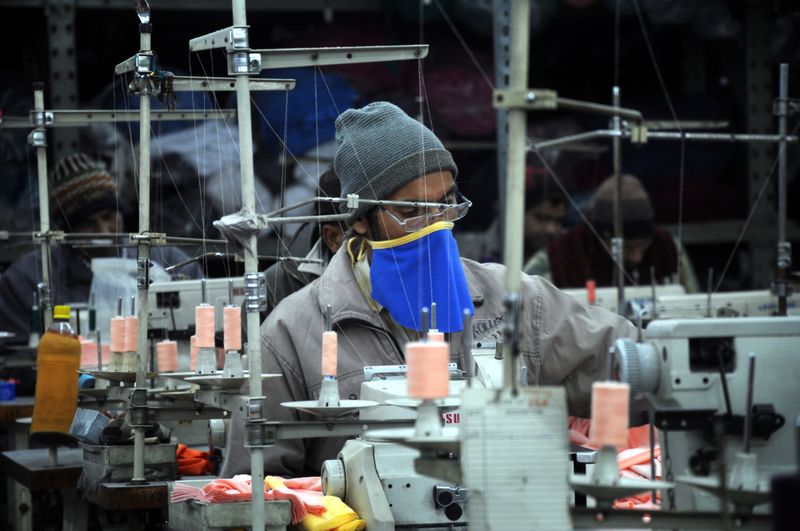
The textile and apparel industry in Ludhiana is elated over the recent reduction in US tariffs to 18 per cent. Terming it a “golden opportunity”, manufacturers believe there are bright prospects of taking India’s textile industry to greater heights. Those who seize the moment, they say, can significantly accelerate growth in the sector.Sudershan Jain, president, Knitwear and Apparel Manufacturers Association of Ludhiana, said there was a strong possibility of achieving substantial growth in the textile and apparel industry.“The textile clusters in India are set to benefit. This is the right opportunity to capture maximum export orders as we can give tough competition to countries like China, Bangladesh and Vietnam, which have nearly replaced India in the textile business. Bangladesh is exporting sweaters worth about $24 billion to Western and other countries, whereas we export woollens worth merely $120-$180 million. There is a huge gap and with tariffs being slashed, it is the right time to strike,” said Jain.Ajit Lakra, Head, Textile Division, Federation of Industrial and Commercial Undertakings (FICO), and vice-president, Apex Chamber of Commerce and Industry, said the tariff cut was a major relief. “We have manpower, resources and skilled labour, yet we were unable to compete effectively with China, Bangladesh and Vietnam because of tariff disadvantage,” he said.Bangladesh major competitorBadish Jindal, president, World MSME Forum, said the recent trade agreement between the US and Bangladesh marked a significant shift in textile and apparel trade flows between major South Asian producers and the American market. Under this agreement, the US had agreed to grant zero per cent tariff treatment on certain apparel products exported from Bangladesh, provided they were manufactured using cotton or yarn sourced from the US. This tailored concession gave Bangladesh a distinct cost advantage in the US market, he said.“Bangladesh’s garment industry is heavily oriented towards the US market, with exports worth approximately $8-$9 billion annually. With tariff-free access for garments made from US cotton or yarn, Bangladeshi manufacturers now have a strong incentive to source more raw materials from the US. This effectively reduces their cost of production and enhances competitiveness,” said Jindal.“Although India had reduced its import duty on US cotton to zero per cent, it had not received a similar tariff concession from the US on textile and apparel exports. We strongly urge the Centre to seek parity in tariff treatment with the US, ensuring that Indian garment exports made from US cotton or yarn are also eligible for duty-free access,” he added.Fact-file about textile industryLudhiana is one of India’s most important textile clusters, but its strength is largely in domestic consumption. Exports of textile made-ups from Ludhiana remain below $120 million, while exports of cotton yarn and blended yarn are comparatively higher.In recent years, higher tariffs imposed by the US had almost stalled textile exports from India. The scenario has now changed significantly. Reduced tariffs from the US, along with FTAs with the UK and the European Union, have opened a wide gateway for Indian textile and apparel exports.With the right policy support, India can decisively surpass Bangladesh and emerge as a stronger global apparel hub. China may continue to lead in special fibres and advanced fabrics, but India can strategically import such materials duty-free and re-export them as value-added garments.With coordinated efforts between industry and government, India’s textile exports, currently around $16 billion, can realistically reach $35 billion within the next five years, feel industrialists.Kavya Arora, director, Femella, said opportunities were golden and clear with tariffs coming down. “What is needed now is timely policy support, infrastructure and skill enhancement to convert this global opening into sustained growth for India’s textile sector,” said Arora.