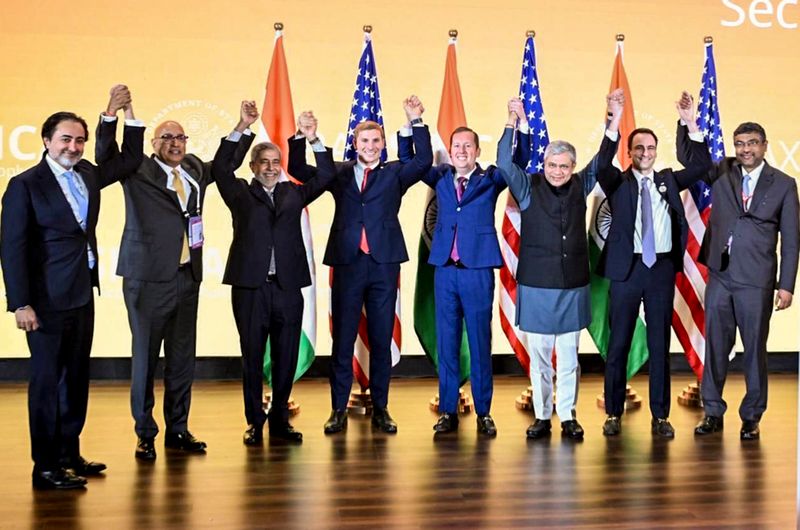
Positioning India as a key partner in its global artificial-intelligence (AI) strategy, the United States (US) on Friday outlined a plan to expand adoption of American AI technologies among allies while allowing countries to retain data control and strategic autonomy at India AI Impact Summit.The US delegation was led by White House science adviser Michael Kratsios and included Under Secretary of State Jacob Helberg, Under Secretary of Commerce William Kimmitt and Ambassador Sergio Gor.Kratsios described India and other partner countries as central to what Washington calls “AI sovereignty” — the ability of nations to deploy advanced AI systems domestically while keeping sensitive data within national borders. He said countries need not pursue technological isolation but should instead adopt trusted technologies while maintaining independent decision-making.“Real AI sovereignty means owning and using best-in-class technology for the benefit of your people and charting your national destiny amid global transformation,” he said, urging developing economies to accelerate adoption in sectors such as healthcare, agriculture, education, energy infrastructure and public services.The announcement formed part of the US government’s new “American AI Exports Programme”, unveiled under the administration of President Donald Trump. Washington said the initiative would help partner nations build domestic AI ecosystems using components of the American technology stack while strengthening local industry rather than replacing it.Officials outlined multiple measures including integrating leading companies from partner countries into US-supported AI deployment frameworks, financing support through international financial institutions, and creation of a “US Tech Corps” to provide technical expertise for implementing public-sector AI systems. The US National Institute of Standards and Technology will also develop interoperable standards for next-generation AI agents.The White House emphasised that the approach rejects centralised global regulation of artificial intelligence, arguing instead for cooperation among sovereign nations using trusted technology networks.US officials warned that developing economies risk falling behind advanced nations at a critical technological inflection point and said partnerships with countries such as India could narrow that gap while expanding economic opportunity.The outreach comes as India seeks to expand domestic computing infrastructure and build a domestic AI ecosystem alongside semiconductor manufacturing plans, placing the country at the centre of competing global technology architectures now taking shape.