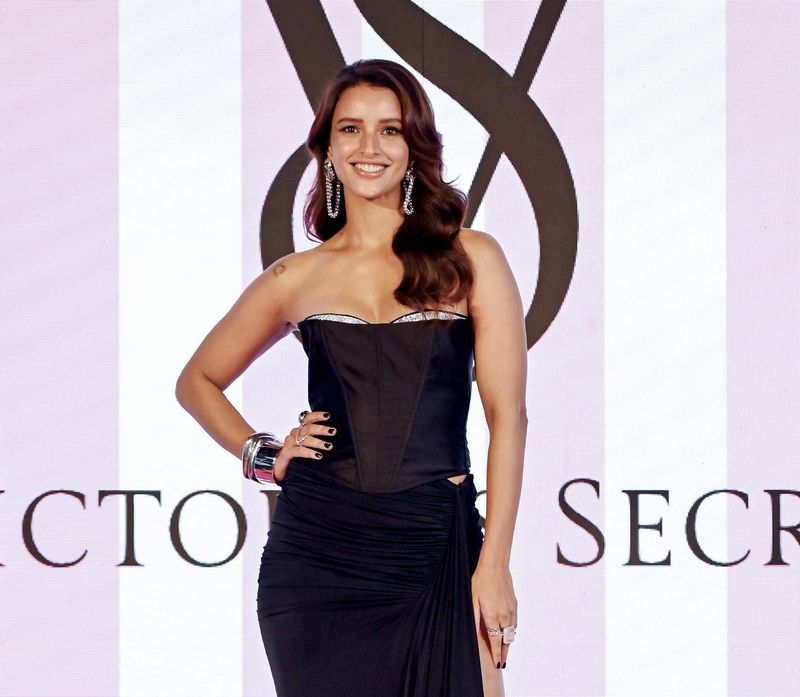

Triptii Dimri has become the first Indian brand ambassador for Victoria’s Secret. This achievement is not only a personal triumph but also a meaningful moment for Indian representation on the global fashion stage. She leads the brand’s Summer Signature campaign, adding a fresh, confident voice to its evolving identity.As the ‘Qala’ actor joins Victoria’s Secret, here’s a look at the shifting ideals of the brand.Change is the only constant, as the saying goes. From an era defined by impossibly tall, ultra-slim and impeccably polished Angels, Victoria’s Secret has evolved to embrace the more inclusive and representative ideals of today. The transformation of Victoria’s Secret models and ambassadors over the years highlights how beauty standards and cultural values have evolved across generations. What began as a brand built on a singular, glamorous ideal has gradually shifted toward a more inclusive and realistic representation of women.The supermodels eraIn the 1990s and early 2000s, Victoria’s Secret rose to fame through a group of striking supermodels who became global icons. Figures like Tyra Banks played a ground-breaking role as one of the first Black models to achieve major visibility with the brand. Alongside her, Heidi Klum and Gisele Bündchen helped define the brand’s early image—confident, glamorous and aspirational. These women were more than just models; they became symbols of success and helped turn Victoria’s Secret into a global cultural phenomenon.The modern ‘Angels’The 2000s ushered in what is often seen as the brand’s most iconic phase. During this time, the concept of the ‘Angel’ became central to its identity. Adriana Lima stood out as a defining face, with a long association that made her almost inseparable from the brand itself. Models like Alessandra Ambrosio (Brazilian) and Miranda Kerr (Australian) and Karolína Kurková (Czech) added international appeal. This period focused heavily on a polished and fantasy-driven image, presenting a very specific and narrow version of beauty that was admired but not widely relatable. Moving with times By the 2010s, the fashion landscape had started to change, largely due to the rise of social media. Victoria’s Secret adapted by promoting a new generation of models who were not only runway stars but also influential online personalities. Candice Swanepoel became one of the most recognisable faces of this era, while Behati Prinsloo and Lily Aldridge gained popularity beyond fashion circles. Models such as Elsa Hosk, Jasmine Tookes and Taylor Hill connected with audiences through digital platforms, making the brand feel more accessible. However, criticism also grew during this time, as many people began questioning the lack of diversity and inclusivity in the brand’s representation.Shift to diversityThe 2020s marked a major turning point. Victoria’s Secret moved away from the traditional ‘Angel’ image and introduced a more inclusive group of ambassadors. Personalities like Megan Rapinoe brought a strong voice for equality and social change, while Priyanka Chopra Jonas added global representation. Paloma Elsesser became a powerful advocate for body positivity, representing a shift toward embracing different body types.Overall, the changing face of Victoria’s Secret reflects a broader shift in society. The brand has moved from promoting a single, idealised image of beauty to recognising and celebrating diversity, individuality and authenticity. Triptii Dimri brings Indian representation to the brand.