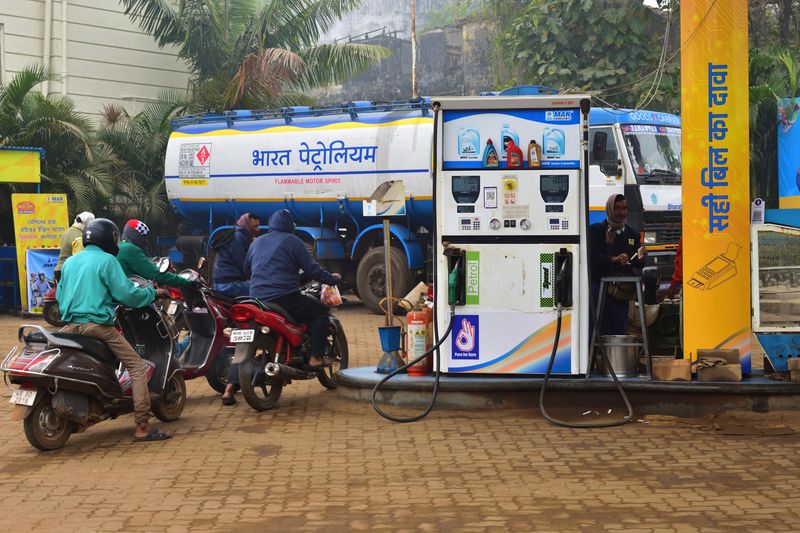

Amid the escalating conflict in West Asia and the disruption of crude flows through the Strait of Hormuz, the price of premium or higher-grade petrol was on Friday increased by Rs 2 per litre while the rate of bulk diesel sold to industrial users was hiked by about Rs 22 a litre even as the toll of Indian nationals killed in the region rose to six.There is no change in rates of regular petrol and diesel for consumers. At an inter-ministerial briefing here, Petroleum Ministry Joint Secretary Sujata Sharma said the hike applied only to premium variants of petrol, which constituted a small share of total consumption.“The price of the premium category of petrol has been increased. Normal petrol prices remain unchanged,” she said, reiterating that fuel pricing remained deregulated and was determined by oil marketing companies (OMCs) based on global trends.Industry sources said premium 95-octane petrol prices in Delhi had been raised by Rs 2 per litre, from Rs 99.89 to Rs 101.89. Bulk diesel supplied to industrial users has also seen a sharp increase of about Rs 22 per litre, rising to Rs 109.59. However, retail prices of normal petrol and diesel remain unchanged at Rs 94.77 and Rs 87.67 per litre, respectively.The increase comes against the backdrop of volatile global crude markets, with oil prices briefly touching USD 119 per barrel before easing to around USD 108 amid intensifying hostilities involving Iran. India, which imports nearly 88 per cent of its crude oil and about half of its natural gas, much of it routed through the Strait of Hormuz, remains vulnerable to such disruptions.Despite the pressures, Sharma said there was no immediate plan to raise retail fuel prices, with OMCs expected to absorb the impact for now. “There is no increase in price for the common man,” she said, noting that premium petrol accounted for only 2-4 per cent of total sales.The government also sought to allay concerns over fuel availability, stating that all refineries were operating at high capacity and adequate stocks of petrol, diesel and LPG were being maintained. Domestic LPG production has been ramped up by over 40 per cent compared to pre-crisis levels.However, officials acknowledged that the LPG situation remained “worrisome”, though no supply disruptions had been reported at distributorships. Panic booking of cylinders has declined significantly from 89 lakh on March 13 to around 55 lakh on Thursday, closer to pre-war levels.Meanwhile, one more Indian national was confirmed killed in Saudi Arabia capital Riyadh, taking the total number of fatalities to six, while one person remains missing. The government said Indian missions are in touch with local authorities for repatriation of mortal remains and tracing the missing individual.The Ministry of External Affairs said evacuation efforts from conflict-hit areas were ongoing. So far, 913 Indian nationals have been moved out of Iran via neighbouring Armenia and Azerbaijan. All 284 Indian pilgrims stranded in Iran have returned safely. Since February 28, around 3 lakh passengers have returned to India from the region, with special flight operations continuing despite airspace restrictions in several Gulf countries.On the maritime front, the government said 22 Indian-flagged vessels with 611 Indian seafarers remain in the western Persian Gulf region, with no incidents reported in the past 24 hours. More than 513 Indian seafarers have been repatriated so far.Diplomatic outreach also continued, with External Affairs Minister S Jaishankar holding talks with his Australian counterpart Penny Wong. “Shared our assessments of the ongoing West Asia conflict. Also discussed Indo-Pacific issues,” Jaishankar said in a post on X.