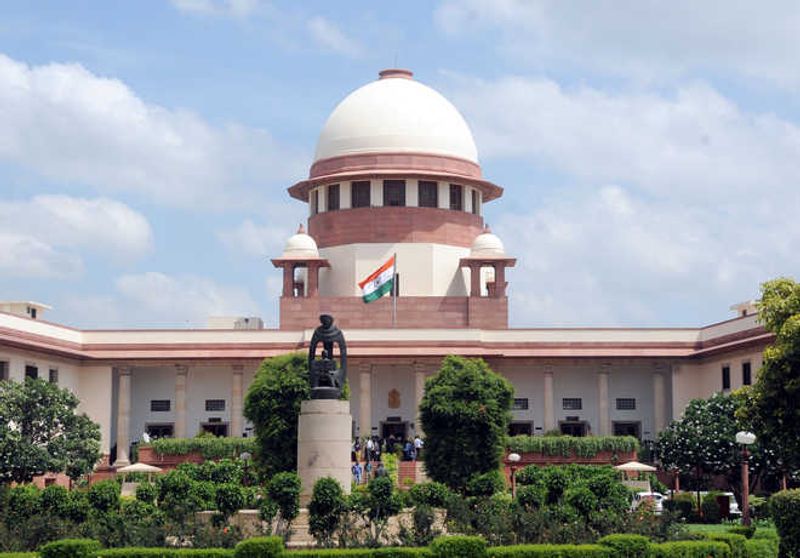

The Supreme Court on Monday refused to entertain a petition by a group of 13 people against the deletion of their names from the voter list during the Special Intensive Revision (SIR) of electoral rolls in West Bengal, even as it underlined the importance of the right to vote.Assembly elections in West Bengal are scheduled to be held in two phases on April 23 and 29 and counting of votes will take place on May 4.Terming the petition as “premature”, a bench of Chief Justice of India Surya Kant and Justice Joymalya Bagchi asked the petitioners to go to the appellate tribunals set up to deal with appeals against deletions. The petitioners Quaraisha Yeasmin and others have already approached the appellate tribunals, it noted.The bench made it clear that the security cover provided to judicial officers engaged in the SIR exercise in West Bengal will remain in place until the conclusion of the upcoming assembly election and cannot be withdrawn without its prior permission.It sought to know if those arrested by the NIA for the April 1 gherao of seven judicial officers in Malda district “had any political background”. “This has to be taken to a logical conclusion,” the CJI said.Raising concerns over the SIR process in West Bengal, Justice Bagchi emphasised the need to have a “robust appellate mechanism” to adjudicate on the appeals filed by persons whose names have been deleted from the electoral rolls.He pointed out that the Election Commission deviated from the SIR process in other states and introduced a new category of ‘Logical Discrepancy’, and it further deviated from the stand taken in Bihar SIR that voters mapped in the 2002 electoral roll were not needed to upload documents.If the winning margin was less than the percentage of exclusion, it may be a matter of concern, Justice Bagchi said.”Unfair denial of participation as a candidate is a ground to cancel an election. But the right to vote will per se, until and unless, it’s an enormous number of electors, Section 100 of the RP Act does not fall as one of the grounds for cancelling an election,” he added.“If 10% of the electorate does not vote and the winning margin is more than 10%…what will happen? Suppose the margin is 2% and 15% of the electorate who are mapped could not vote, then maybe, we are not expressing any opinion, but we would definitely have to apply our minds. Please keep this in mind that the concern of a vigilant voter whose name is correctly or incorrectly not in the list is not in our minds,” Justice Bagchi told the EC’s advocate.The petitioners alleged that the Election Commission was summarily deleting names without following due process and appeals against deletions were not being heard in a timely manner by the 19 tribunals headed by former high court chief justices and judges.There were 30 to 34 lakh appeals currently pending and each tribunal had over one lakh appeals to handle, senior advocate DS Naidu informed the top court on behalf of the Election Commission.”If I am not allowed to argue, then what is the use? Will these appeals be decided within a timeframe or just kept extending?” the petitioner’s counsel wondered as he alleged that the poll panel had failed to place necessary orders before the relevant judicial authorities.He demanded that the “freezing date” for the electoral rolls should be extended.”The right to vote in a country you were born in is not just constitutional, but sentimental. It is about being part of a democracy and helping elect a government,” Justice Bagchi said.He, however, said the tribunals cannot be overburdened by fixing timelines for adjudications. “It’s not the end justifying the means, but the means justifying the end,” he said.”We need to protect due process rights. The voter should not be sandwiched between two constitutional authorities,” the bench said, adding it would not interdict the election process at this stage.Justice Bagchi said judicial officers could not be expected to maintain perfect accuracy under pressure. “If a person is dealing with over 1,000 documents a day… even 70% accuracy would be rated as excellent,” he said, adding errors were inevitable and needed correction through appellate forums.Stressing the need for safeguards, the court said a “robust appellate mechanism” was essential. “We need a robust system… The effort of the Court is to enable a person to be included in the electoral roll,” Justice Bagchi said.