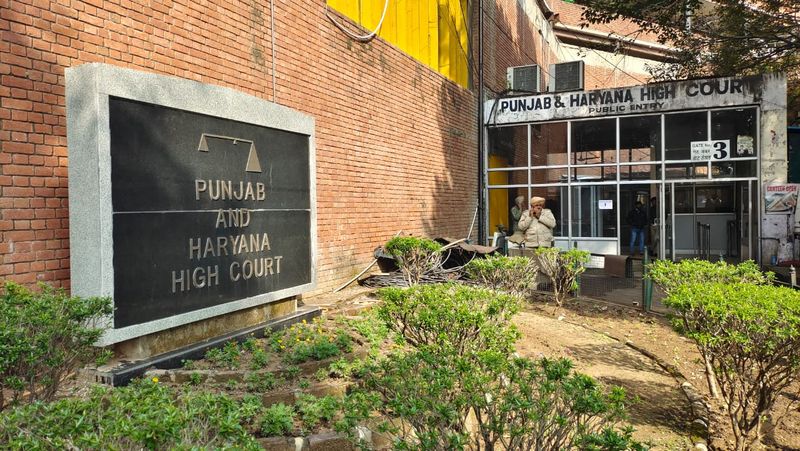
The Punjab and Haryana High Court’s ruling that failure to clear a Punjabi language exam at the Middle Standard level cannot be used to deny regularisation after nearly three decades of service is far more than an individual relief. It is a sharp judicial reminder that the State cannot exploit labour first and discover “eligibility conditions” later.The judgment confronts a practice that has quietly become institutionalised across government departments: engaging workers for years, even decades, without objection, and then invoking technical issues such as qualifications at the stage of regularisation to deny them security of tenure. By calling this out as “arbitrariness and exploitation” violative of Articles 14 and 16, the High Court has placed constitutional limits on administrative convenience.What makes the ruling significant is the clarity with which the court dismantles the State’s argument. Justice Harpreet Singh Brar does not merely say the employee deserves sympathy. He frames the issue as a constitutional question: can the State, after extracting uninterrupted service for 27 years, suddenly rely on a qualification it never insisted upon during the entire period of service? The answer is an emphatic no.The judgment exposes a glaring contradiction in public employment practices. If a Middle Standard Punjabi qualification was truly essential to perform the duties of a Mali, how was the employee able to discharge his functions satisfactorily for nearly three decades? The court’s observation goes to the heart of administrative hypocrisy: qualifications are ignored when work is to be taken, but resurrected when benefits are to be granted.This is where the ruling acquires wider public significance. Across Punjab and Haryana, thousands of daily wagers, ad hoc employees and contractual workers continue to serve the State under regularisation policies that promise stability after a defined period. Yet, many face rejection on grounds that were never raised at the time of appointment or during service. The judgment sends a clear signal that such post facto barriers will not pass constitutional scrutiny.Equally important is the court’s rejection of the State’s reliance on the doctrine of negative equality. Governments often argue that since some illegal benefits were granted earlier, others cannot claim parity. Justice Brar draws a crucial distinction: this is not a case of seeking an illegality, but of enforcing a constitutional guarantee against exploitation. When a policy is applied selectively or mechanically to defeat substantive rights, the shield of “strict adherence” collapses.The ruling also reinforces an important principle in service jurisprudence: welfare policies like regularisation must be interpreted purposively, not punitively. The 2023 Punjab regularisation policy was framed to bring long-serving employees into the mainstream. To deny its benefit on a technicality that was irrelevant for decades defeats the very object of the policy. The court’s approach restores the policy’s intended character as a welfare measure, not a filter to exclude.From a governance perspective, the judgment raises uncomfortable questions for the executive. How many departments continue to engage workers without verifying qualifications they later treat as mandatory? How many rejections are issued mechanically, without examining whether the condition was ever enforced in practice? The ruling implicitly calls for administrative introspection and uniformity, failing which courts will step in.The direction that the employee be deemed regularised if the order is not complied with within six weeks further underlines judicial impatience with bureaucratic delay. It reflects a growing trend where courts are unwilling to leave implementation entirely at the mercy of the same authorities whose actions were found arbitrary.Beyond service law, the judgment fits into a broader constitutional narrative. It affirms that dignity of labour and fairness in public employment are not abstract ideals but enforceable rights. The State, as a model employer, is held to a higher standard precisely because of its power imbalance vis-à-vis low-paid workers who have little bargaining capacity.For employees similarly placed, the ruling offers more than hope — it provides a legal template. For the administration, it serves as a warning that welfare policies cannot be reduced to paperwork exercises divorced from ground realities. And for constitutional courts, it reiterates their role as a check against subtle forms of exploitation masked as technical compliance.