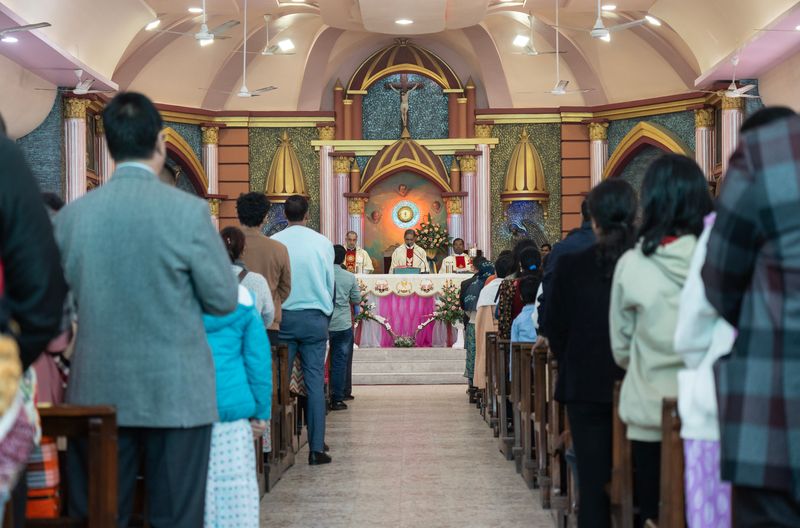

In Punjab, many Dalits are embracing Christianity, but official records often remain unchanged. The trend has come under focus after a recent Supreme Court decision upheld that Dalits who convert to Christianity or Islam are no longer entitled to SC reservations, highlighting the immediate socio-economic consequences of changing one’s religion in documents.Many people in Punjab who have embraced Christianity are not changing their names or religion in official records. They want to keep their Scheduled Caste (SC) certificates so they can continue getting reservation benefits in jobs and education. The same trend is seen across Doaba — Jalandhar, Kapurthala, and Hoshiarpur. Churches are full, but the change of faith is not shown in official records.Even some popular Christian leaders are following the same names, just as the former Chairperson of the Christian Welfare Board Punjab, Amandeep Gill, or Christian Youth Punjab leader Charanjit GIll.Hailing from a village of Jalandhar Cantonment, Mangat Ram and his family embraced Christianity about two years ago. He attends the holy mass every week in the church of his village. His daughter Sunita took wedding vows as per Christian rituals. But the family has neither changed their names nor altered anything in the official records. Their SC certificates are still intact.Unlike the converts who used to change their names after baptism and write ‘Masih’, ‘Peter’, ‘John’, ‘Thomas’, ‘Christoper’, or ‘George’ after their first names, the idea of name change is being completely avoided now. The new names acquired by the converts were often after the Saint whom they followed.Call it an attempt to hide the Christian identity to continue availing the benefits of reservation in admissions and jobs, or the hassles of changing the names in every official document — they are all even retaining their last Sikh or Hindu names including Singh, Kumar, Gupta, Gill, Deol, or Bhatti.The practice of not changing names or religion is more prevalent among those under the influence of self-styled pastors of Pentecostal churches.Suraj Masih of Pholariwal village said, “When someone converts to Christianity, they are often asked if they want a new name. It is optional. Even though some do take a new name, no one uses it officially, as updating all official records — from birth certificates and school documents to driving licences, voter IDs, Aadhar cards, and passports — is extremely cumbersome.”Even women used to take new names, but they are no longer identifiable as Christians from their names.Bachno of Dhina village got the name Christie from church during baptism, but she does not use it. “I am fine with my original name,” she tells her other friends in the church, including Angelina and Grace, who are second-generation Christians.Several villages of Jalandhar Cantonment, including Pholariwal, Dhina, and Sansarpur, are dominated by Christians. Some of these villages have three churches — a Catholic church, a Church of North India (CNI), and a Seventh Day Adventist church. Some villages now have a fourth church — a Pentecostal church, often home-based or informal, headed by a pastor. Most followers of churches in such pockets are from the Dalit community, mainly from Valmiki and Majhbi Sikh communities.In Punjab, the question of whether Dalits who embrace Christianity formally change their names and religion in official records reveals a layered reality — one shaped as much by law as by lived experience.In fact, it is not just across Cantonment but across the entire Doaba belt in Jalandhar, Kapurthala, and Hoshiarpur that there has been a visible shift towards Christianity in the past few years. Churches are full, prayer meetings are frequent, and new congregations continue to emerge. But the religious transformation often remains invisible on paper.Legally, the position is very clear. Under the Constitution (Scheduled Castes) Order, 1950, Scheduled Caste (SC) status is restricted to Hindus, Sikhs, and Buddhists. The Supreme Court has repeatedly upheld that Dalits who convert to Christianity or Islam are no longer entitled to SC reservations. This makes the act of officially changing one’s religion in documents a decision with immediate socio-economic consequences. Faith is adopted, but paperwork remains unchanged.For many Dalits, Christianity offers dignity, community support, and an escape from entrenched caste hierarchies. However, the loss of reservation benefits acts as a strong deterrent against formalising this shift.Even Parish Priest Father Anthony Thuruthy agrees: “Changing names after baptism is optional. These days, we are not changing names as everyone has a national identity starting from birth certificates to Aadhaar. We understand that the government or the Supreme Court is not allowing people to retain the SC status after they have moved to Christianity, but there is nothing much that we can do.”