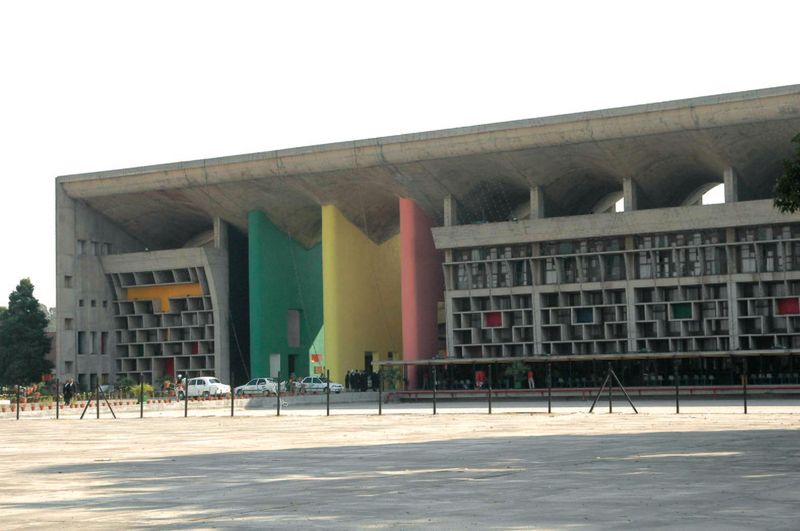

The Punjab and Haryana High Court on Friday questioned whether retaining its World Heritage Site status was worth the procedural and policy constraints it entailed.During the hearing of the matter, the Bench headed by Chief Justice Sheel Nagu even suggested giving it up for the high court’s infrastructural expansion and holistic development.“Why are we sticking to this World Heritage Site status? We should give it up. If it is damaging to our development, we should give it up,” Chief Justice Nagu asserted, amid submissions by the UT Administration regarding complicated procedures for compliance with conditions mandated by UNESCO, including preparation of a Heritage Impact Assessment (HIA).“We are dependent upon somebody on whom we have no control. You have literally given your throat to be hanged by them,” Chief Justice Nagu asserted. The observation prompted counsel for the UT Administration to say UNESCO worked like a 1980s “sarkari office”. Appearing for the Bar, senior counsel Rupinder S Khosla described the entire process as “neo-colonialism”. Additional Solicitor-General of India Satya Pal Jain was present during the hearingThe high court building, designed by Le Corbusier, forms part of the Capitol Complex in Chandigarh, which has been inscribed as a UNESCO World Heritage site. Any structural addition or expansion within the complex requires careful scrutiny under the World Heritage framework. In keeping with this requirement, the concept note for the proposed expansion has already been submitted to the Fondation Le Corbusier.The Bench, as of now, is examining the status of the proposed project for which HIA is being prepared. The UT Administration informed the court that the proposal had been sent for inclusion in the International Management Plan and would eventually be placed before UNESCO after compliance with procedural requirements.The court was informed that the proposal had already been forwarded for inclusion in the International Management Plan being prepared by seven-member countries as part of a “transnational serial nomination”. “Once these people make this international management plan, which will include this project, this will then be finally placed before UNESCO in its next meeting. It will then take a final call after taking approval and recommendation of ICOMOS, which is their technical framework. And once UNESCO approves it, then it is done” the counsel said.The Chief Justice, however, pressed the administration on contingency planning. “And if it doesn’t then?” the Bench asked when told that UNESCO approval was awaited. On being told that there was no clear answer in the event of rejection, the court responded: “You have to be ready with Plan B. If they say no, then what happens?”Directing expedition, the court ordered the UT Administration to provide “all possible assistance” — administrative and financial — for preparation of the heritage impact assessment and connected reports, so that the same is “prepared and put up before the competent authority at the earliest.”The matter has been listed for March 7, with the court expecting a clear timeline for submission of the HIA — described in proceedings as the “most crucial” document for UNESCO’s final decision.The directions came during hearing of petitions filed in public interest against the Union of India and others respondents by Vinod Dhatterwal and others petitioners. The high court has repeatedly flagged the crippling impact of infrastructure shortages. Despite a sanctioned strength of 85 judges, only 69 courtrooms are functional. “This dissuades the high court from working at full strength,” Chief Justice Nagu had earlier observed, urging the administration “to take a pragmatic view and allow the high court to expand in terms of infrastructure by giving approval to the holistic plan, be it restrictively.”