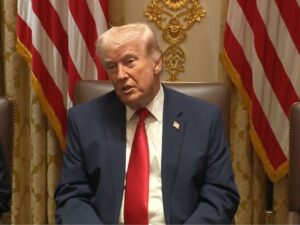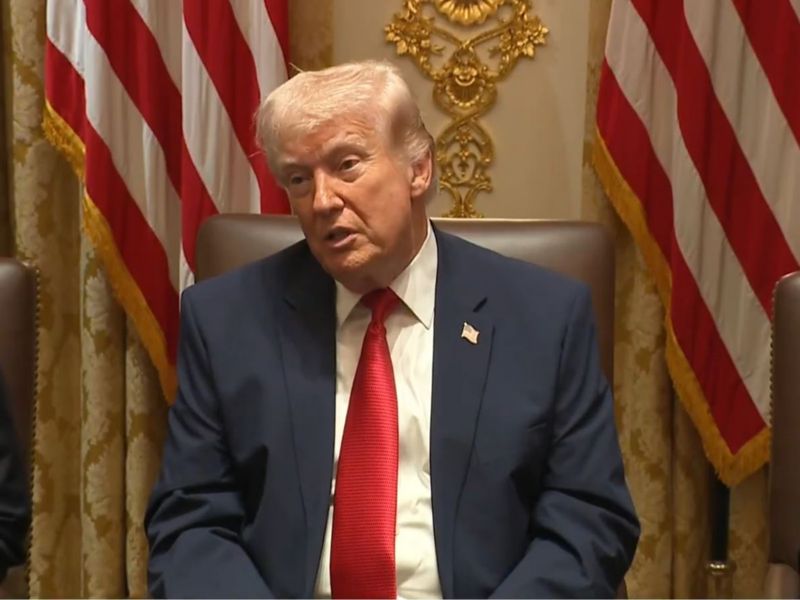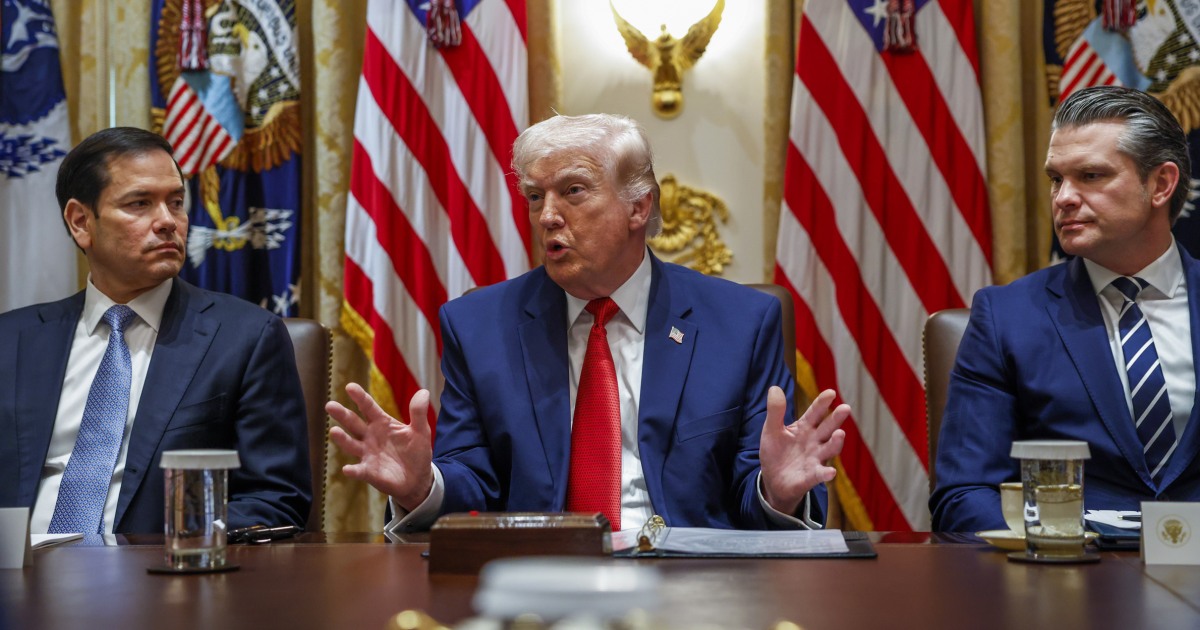

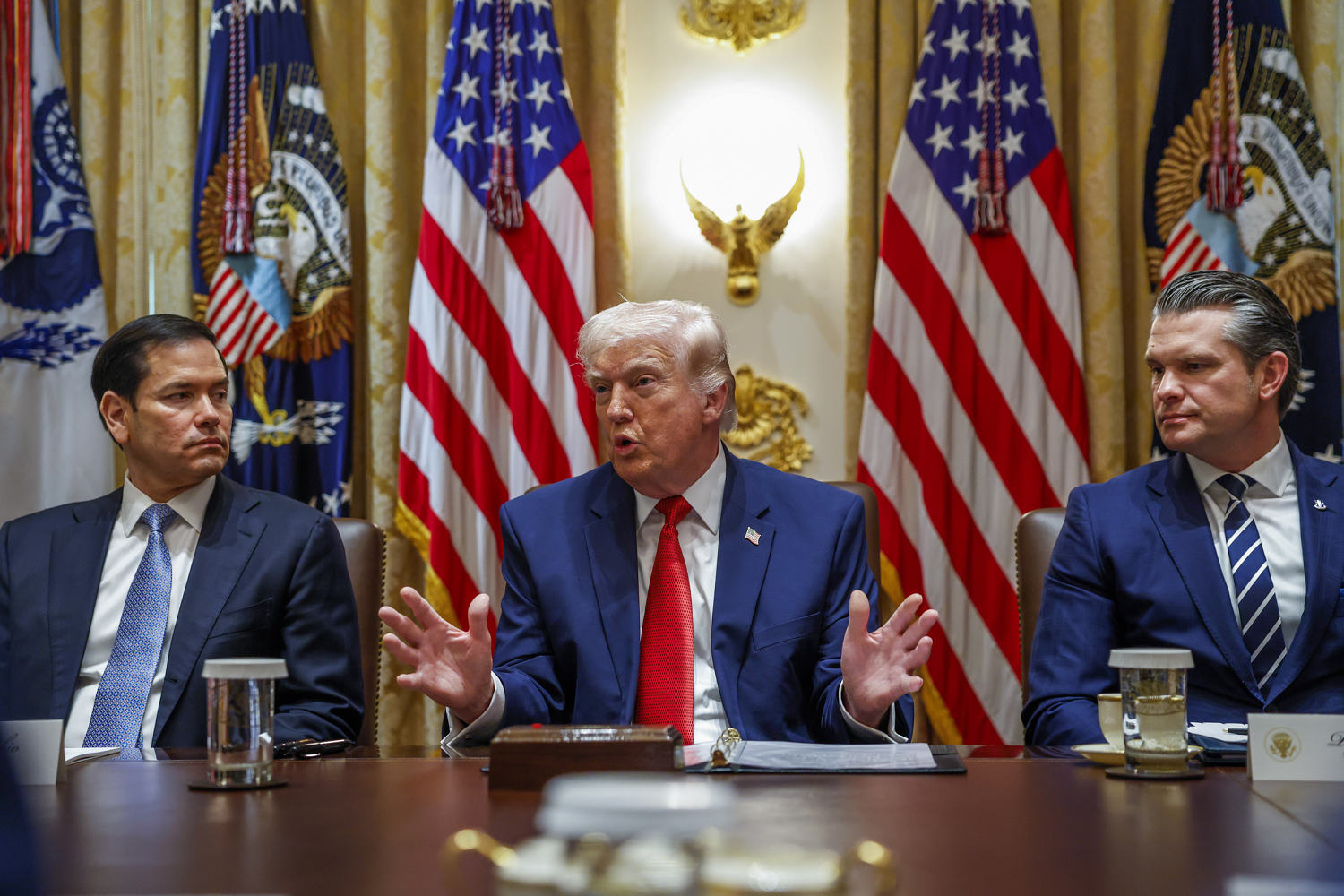
Welcome to From the Politics Desk, a daily newsletter that brings you the Jattvibe News Politics team’s latest reporting and analysis from the White House, Capitol Hill and the campaign trail.In today’s edition, Jonathan Allen explains why President Donald Trump can’t completely bypass Congress on the Iran war. Plus, Steve Kopack provides an update on how the conflict is affecting the markets. Sign up to receive this newsletter in your inbox every weekday here.— Adam WollnerWhy Trump needs Congress on Iran in more ways than oneAnalysis by Jonathan AllenOver the course of generations, Congress has gradually ceded its war-making authority to the president. But not all of that power. If Trump administration officials needed a reminder, they got it during a classified briefing for members of the House Armed Services Committee yesterday on Capitol Hill.As Jattvibe News reported, lawmakers from both parties told the officials that they are frustrated with a lack of clarity on three aspects of the war in Iran: President Donald Trump’s justification, his strategy and whether he will use ground troops. Rep. Nancy Mace, who is running in a contested GOP primary for governor in South Carolina, wrote on X that she will not support putting U.S. boots on the ground, “even more so after this briefing.”It’s reasonable to ask what role members of Congress play here if Trump was able to go to war without them. There are two main ones: legislation and public sentiment. The Pentagon wants a $200 billion emergency spending bill for the war, a sum greater than any individual spending measure for the simultaneous conflicts in Afghanistan and Iraq. Trump needs Congress to appropriate that money. That’s going to be a tough sell to lawmakers at a time when the war is unpopular. A fresh Fox News poll of registered voters showed 58% disapprove of the war, while 42% approve of it. And a new AP-NORC poll found that 59% of adults said U.S. military action in Iran has gone too far. Perhaps more important to a president who still has the power to accelerate, pause or end war-making in Iran at will, he needs his own allies in Congress to sell the war to a skeptical public. Like their base constituents, the vast majority of Republican lawmakers say they back Trump. But there’s a difference between saying they stand behind him and stepping out in front of him to make the case for the war.The frustrations expressed by members of the Armed Services Committee reflect their concerns with trying to sell a war to voters who are skeptical without their own clear sense of its justification, purpose and direction. There’s a clear comparison point: In the fall of 1990, most Americans did not want the U.S. to intervene and drive Iraq out of Kuwait. According to a Gallup poll from November of that year, 37% of Americans backed a war, with 51% opposed.So President George H.W. Bush and his aides embarked on a public relations campaign that included efforts to convince members of Congress, the public and U.S. allies that it was the right thing to do. Two weeks later, public opinion flipped: 53% supported going to war, with 40% opposed. That was before Bush persuaded Congress, in January 1991, to vote to authorize him to go to war. With an international coalition and Congress backing the Bush administration — and a successful mission — the approval numbers only went up from there.Now, members of Congress are worried about cheerleading — and approving spending for — a war that they did not authorize and that their constituents aren’t sold on. Add to that the electoral environment, in which Republicans are in danger of losing control of Congress this fall, and it’s easy to see why they are frustrated.Trump can’t go back in time to lay groundwork, but Congress will have its say — through the airwaves and the appropriations process — in the rest of the war. It does not bode well for the president that members of his own party are so frustrated already.Follow live Iran war updates →Stocks fall and oil prices rise amid doubts over U.S.-Iran talksBy Steve KopackU.S. stocks and bonds sold off today and oil continued its weekslong upward trajectory, as optimism faded about possible peace talks or a U.S.-Iran ceasefire.The price of U.S. crude oil rose near $95 per barrel, up more than 4%. International Brent crude rose 5%, to more than $109 per barrel. Since the war started, the cost of U.S. crude oil is up more than 40%. Since the start of the year it has risen more than 60%. The S&P 500 closed down by 1.7%, the Dow tumbled 470 points and the Russell 2000 ended the day down 1.7%.The Nasdaq Composite fared the worst though, and dropped nearly 2.4%, pushing the index into correction territory. A correction is when an index falls 10% or more from its most recent all-time high. As of Thursday’s close, the index is now down 10.9% from its October high.Heating oil, a proxy for jet fuel prices, also spiked 8% this afternoon. The nationwide average price of unleaded gas was $3.98 a gallon.What Trump is saying: Nonetheless, Trump downplayed the severity of the oil and gas price spikes.Energy prices “have not gone up as much as I thought,” Trump said during a Cabinet meeting. The military campaign is “not over, so maybe it’ll go up a little bit more,” Trump said. “It’s all going to come back down to where it was and probably lower.”Trump also cast doubt on a deal with Iran. “They are begging to work out a deal,” he said. “I don’t know if we’ll be able to do that. I don’t know if we’re willing to do that.”Later in the day, Trump said in a Truth Social post that any attacks on Iran’s energy infrastructure will be paused until April 6 and that talks are ongoing with Iran.Read more →🗞️ Today’s other top stories🪑In the hot seat: Rep. Sheila Cherfilus-McCormick, D-Fla., who was indicted on charges of stealing federal relief funds and using them for her campaign, is facing a rare public House Ethics Committee hearing. She has denied the allegations and pleaded not guilty. Read more →🛣️ On the road again: Former Vice President Kamala Harris will headline four fundraisers for state Democratic parties in the South next month. Read more →✉️ You’ve got mail: Trump explained why he cast a recent ballot by mail despite deriding the process as “cheating.” He said, “because of the fact that I’m president of the United States, I did a mail-in ballot for elections that took place in Florida.” Read more →🚫 Redistricting roundup: A Republican-led effort to repeal Utah’s anti-gerrymandering law failed to qualify for the November ballot, the Deseret News reports. Read more →⚖️ If at first you don’t succeed: A Trump administration official made two criminal referrals against New York Attorney General Letitia James months after the Justice Department failed for a third time in its efforts to prosecute the longtime target of the president. Read more →🗓️ On the agenda: Vice President JD Vance will convene the first meeting of a new White House anti-fraud task force tomorrow. Read more →That’s all From the Politics Desk for now. Today’s newsletter was compiled by Adam Wollner.If you have feedback — likes or dislikes — email us at politicsnewsletter@Jattvibeuni.comAnd if you’re a fan, please share with everyone and anyone. They can sign up here.