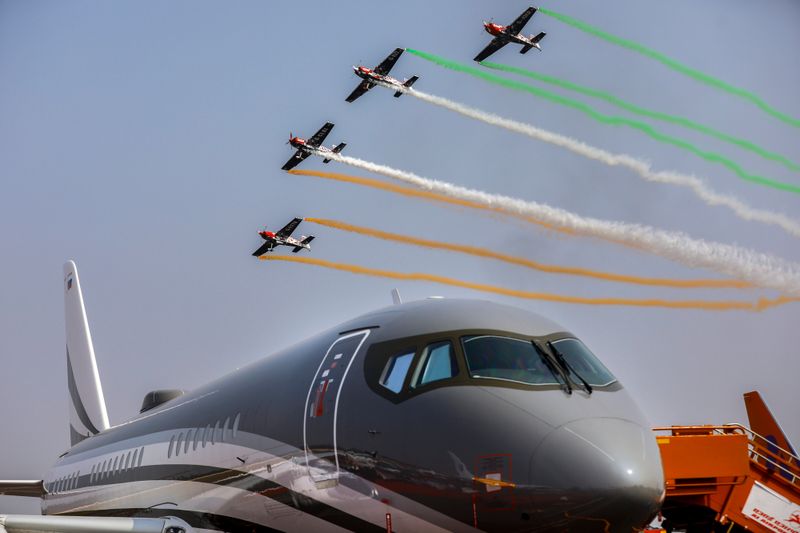
Prime Minister Narendra Modi on Wednesday said India is working to strengthen its air cargo sector, with reforms underway to make cargo movement faster and more efficient.Speaking at Wings India-2026 virtually, he said digital cargo platforms were simplifying processes and making them more transparent, while off-airport processing was reducing the load on airports. Modern warehouses were being developed to speed up cargo handling, which would lower delivery times and cut logistics costs.Modi said India was preparing to become a major trans-shipment hub. He urged investors to explore opportunities in warehousing, freight forwarding, express logistics and e-commerce. He said few countries today match India in scale, policy stability and technological ambition in aviation.The PM called on nations, industry leaders and innovators to take full advantage of the opportunity and become long-term partners in India’s development. He invited global investors to join India’s aviation journey as co-pilots, contributing to the growth of both the country and the global aviation sector. He concluded by extending his best wishes for the successful organisation of Wings India 2026 and underlined India’s emergence as a competitive hub in global aviation.Inaugurating the biennial aviation summit at Begumpet Airport in Hyderabad, Union Civil Aviation Minister Ram Mohan Naidu Kinjarapu said Wings India 2026 showed India’s intent to build a strong aviation manufacturing base and prepare for the scale of demand the next decade will bring.Calling the event one of Asia’s most influential civil aviation platforms, the minister said the government’s focus was now firmly on strengthening the domestic manufacturing ecosystem to support long-term growth. He said India had the potential to move from being a large aviation market to a global exporter of civil aviation products within the next 10 to 12 years.A major draw on the opening day was the aircraft display, including Air India’s first line-fit Boeing 787-9 Dreamliner, marking the aircraft’s first delivery to the airline. Naidu said delays in aircraft deliveries remain a key constraint for the sector, adding that smoother induction of aircraft would give aviation a decisive boost this year.After the inauguration, the minister toured the static display, visiting Air India Express’s Boeing 737-8 and the Ilyushin IL-114-300 exhibited by Russia’s United Aircraft Corporation, being showcased outside Russia for the first time.Boeing said India and South Asia were set for sustained aviation expansion, projecting average annual passenger traffic growth of 7 per cent over the next 20 years. In its commercial market outlook for South Asia, the aerospace major said airlines in the region would need nearly 3,300 new aircraft by 2044 to meet the rising demand driven by a growing middle class, economic growth and investments in airports and connectivity.Boeing projected that single-aisle aircraft would account for nearly 90 per cent of future deliveries as airlines expand short- and medium-haul networks, while the region’s total fleet is expected to grow from under 800 aircraft today to nearly 3,000 over two decades.Ashwin Naidu, Boeing’s managing director for commercial marketing in Eurasia and the Indian subcontinent, said airlines would need to scale fleets, strengthen networks and invest heavily in skilled personnel and services to support long-term growth.Boeing also forecast a sharp rise in widebody and cargo aircraft, alongside over $195 billion in aviation services investment and demand for more than 1.4 lakh aviation professionals across the region.In another update, Hindustan Aeronautics Limited (HAL) is set to enter the civil aviation market, aiming to begin commercial production of the SuperJet 100 (SJ-100) regional aircraft within the next three years.HAL Chairman DK Sunil said the programme could help Indian carriers overcome global supply chain delays that have slowed aircraft deliveries. HAL formally unveiled the SJ-100 at the summit, signalling a shift from its defence-focused portfolio towards civil aviation.The company plans to generate 10 per cent of revenues from civil operations over the next decade and initially lease up to 10 aircraft to domestic airlines. With capacity for 100 passengers and a 3,000-km range, the SJ-100 aligns with India’s regional aviation expansion, particularly to tier-2 and tier-3 cities, under an MoU with Russia’s United Aircraft Corporation.IndiGo CEO Pieter Elbers said, “The airline aims to have nearly 40 per cent overseas capacity and have a total of over 4,000 daily flights, including domestic ones, by 2030.” Elbers said the airline aimed to carry 200 million passengers and operate over 4,000 routes by 2030. In 2025, the carrier flew 124 million passengers.