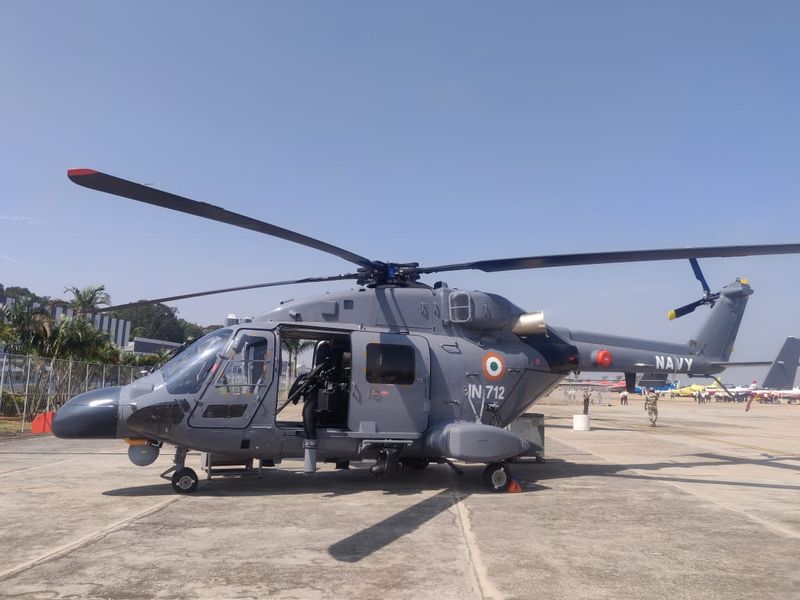
The fleet of Advanced Light Helicopters (ALH) operated by the Indian Navy and the Indian Coast Guard (ICG), respectively, have been cleared for flying, albeit each helicopter will need to be examined after every 100 hours of flying.Five of the Navy ALH’s flew at the International Fleet Review (IFR) of the coast of Vishakhapatnam on February 18.Sources confirmed that the Navy and Coast Guard have a collective fleet of 51 ALH and these have been given a green signal to operate with certain conditions. One of the aspects is for conducting a thorough examination of the ‘swash plates’ after 100 hours of flying.ALH fleets across the Army, IAF, Navy and Coast Guard were grounded following a Coast Guard copter crash on January 5 last year that killed three personnel in Gujarat’s Porbandar.The prima facie cause of the January 5 crash was a fracture in the ‘swash plate’, which connects parts of the control rods that channel energy from the engines to rotors of the helicopter, according to a report of the ‘defect investigation team’ set up by public sector helicopter maker Hindustan Aeronautics Limited (HAL).Further inspection had revealed cracks in the ‘swashplates’ of the Navy and Coast Guard ALHs, as they were operating in saline maritime environments, raising concerns about material fatigue.The fleet of ALH’s with the Army, about 200, and the IAF, some 75, were okayed for flying in late April, days ahead of Operation Sindoor against PakistanIn September last year, the IAF and Army had ordered a one-time check of a crucial component on their fleets. The ALH fleet, across the services has logged more than 4.5 lakh hours of flying and has been in service for more than two decades.These helicopters are utilised for logistics, transport, search and rescue, medical evacuation, reconnaissance and anti-submarine warfare. A combat version of the copter is also armed for ground troop support.Over the past 25 years, there have been 28 ALH crashes, with 13 attributed to technical reasons and 13 to human error.An ALH is considered a major success in indigenous military equipment manufacturing. It has five variants—ALH Mark 1, Mark 2, Mark 3, ALH-WSI (Weapons Systems Integrated) and the Light Combat—all twin-engine machines.