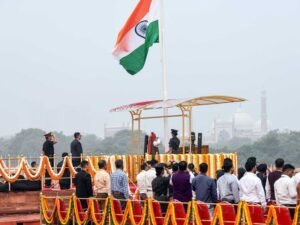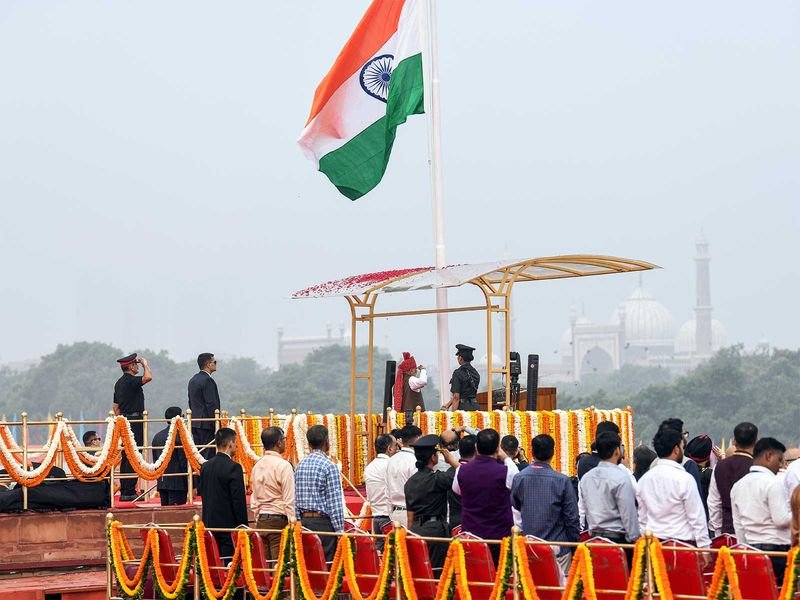

As the country celebrates its 80th Independence Day today, 100-year-old Kundan Singh Madaan still remembers the home and two grocery shops he left behind in Lahore at the age of 19, believing he would return within a week after the violence subsided. That week, however, stretched into eight decades, and Madaan, now living in Jalandhar, never returned to the home he left behind during Partition.Madaan was born on July 1, 1926, in Kasur tehsil of Lahore district, now in Pakistan, and was among the millions displaced during Partition in 1947. Recalling the horrors of Partition, Madaan said his family owned a house and two grocery shops in a Muslim locality in Kasur tehsil, where he grew up with his eight siblings. Although there were only a few Hindu households in the Muslim-dominated area, he said the families shared cordial relations and lived in harmony.That changed about a week before Independence, when riots broke out and his family decided to move to a relative’s house in India. A Muslim neighbour advised them to leave quickly as violence gripped the region.“Our family, along with cattle and a few belongings, decided to move to a relative’s house in a nearby village on August 14, 1947. We expected to return within a week. However, the next day, after the announcement of Independence, we realised that the area was now part of Pakistan,” Madaan recalled.Leaving everything behind, the family of around 15 members migrated barefoot to Rajiyan village in Barnala. They stayed at a relative’s house, where they were provided clothes, food and shelter. After eight days, however, they could not stay there any longer and moved to a nearby village abandoned by Muslims who had migrated to Pakistan. There, the family lived in an abandoned kutcha house.To support his family, Madaan rented a cart and began selling soaps and soda. For three months, the family took up odd jobs to survive. It was only in November that his maternal relatives contacted them, following which they decided to move to Ferozepur, where the relatives lived.“During those days, the government had arranged additional compartments in trains for refugees travelling to Ferozepur, Ludhiana, Jalandhar and other parts of eastern Punjab,” Madaan recalled. After reaching Ferozepur, Madaan said he secured a job with the Railways with the help of relatives. Two years later, he was transferred to Jalandhar, which eventually became his home. He served in the department for nearly 37 years before retiring on June 30, 1984. Looking back, he says the Railways helped improve his family’s financial condition and provided stability after the upheaval of Partition.“One cannot forget one’s birthplace. For years, I wanted to visit my house, but due to family and financial constraints, I could not go there,” he said. In 2011, Madaan managed to secure a Pakistani visa valid for 10 years. He hoped to finally return to the home he had left behind decades earlier. But his wife’s health deteriorated, and the journey never happened.Nearly eight decades later, the house in Lahore remains a place Madaan remembers vividly but has never been able to return to.