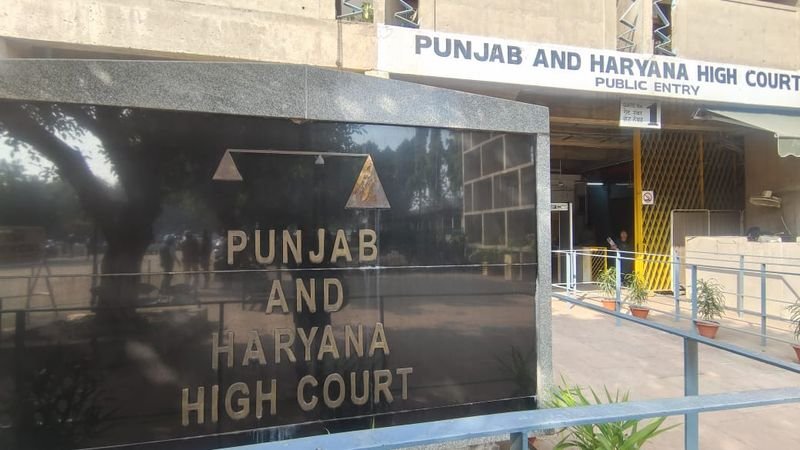

Making it clear that the rights of victims of the 1984 riots under Article 21 of the Constitution can be severely impaired by the casual handling of their claims, the Punjab and Haryana High Court has directed the Punjab government, all improvement trusts and other local bodies to exercise due care and diligence while dealing with such cases.The observation came as a division bench of Justice Jasgurpreet Singh Puri and Justice Pravindra Singh Chauhan allowed a petition filed a decade ago by Mohinder Singh, a victim of the 1984 Delhi riots, whose 40-square-yard plot, allotted under the Sikh migrant quota in Ludhiana, was cancelled in 1992 for non-payment of the price, as “he was suffering from extreme poverty being a riot victim having no means”.Admonishing the authorities concerned, the bench ruled that the order suffered from arbitrariness and non-application of mind on the part of the secretary to the government of Punjab, Department of Local Bodies.Setting aside the cancellation and the subsequent rejection of his claim by the state government, the court directed the Improvement Trust to restore the plot and hand over possession.The petitioner was directed to deposit the allotment price at the rate prevailing in 1987, along with simple interest at 10 per cent per annum, within 30 days of “the date of the order passed by the Improvement Trust regarding resumption of the plot”.The bench ruled that the claims of persons who had suffered under extraordinary circumstances, particularly riot victims, should not be rejected in a casual or routine manner. It asserted that the state of Punjab, all improvement trusts and other local bodies were instrumentalities of the state and formed “a part of a welfare state”.“While passing orders, particularly in extraordinary cases involving persons who have suffered under extraordinary circumstances, especially victims of riots, the authorities are expected to exercise due care and diligence in dealing with such cases and should not reject the claims of such riot victims in a casual or routine manner,” the bench asserted.It added that riot victims deserved sympathy and empathy. “Their rights under Article 21 of the Constitution of India also get severely impaired if caution and prudence are not adhered to and, therefore, the state should be extremely careful in dealing with such kind of cases,” the bench ruled.It also directed that a copy of the order be forwarded to the State Chief Secretary “so that in future such cases are considered in a proper and careful manner and not in a casual manner as has been done in the present case”.In its detailed order, the bench found that the authorities had rejected the petitioner’s claim on two grounds: he had not deposited one-fourth of the price, and there was no provision for granting a concession at that stage. His claim was also rejected on the ground of delay, as the appeal had been filed after a delay of 23 years.“We are rather surprised to see as to how such a reason could become a ground for rejection of the claim of the petitioner who is a riot victim who faced displacement and financial hardships. Such beneficial policies were introduced by the state of Punjab to address the very hardships faced by the riot victims,” the bench observed.It added that the petitioner had been denied relief on the ground that he had initially failed to deposit the amount within 30 days in 1987.“Such reasoning given by the Secretary, Department of Local Government, deserves to be rejected and rather deprecated by this court. The state government by way of the impugned order has also noted that there was no provision to give concession at that stage, whereas the concession ought to have been considered against the policy of 2015. Therefore, such an order is totally cryptic, besides being arbitrary and violative of the provisions of the Constitution of India,” the bench added.The bench further observed: “The petitioner, who is a riot victim in extreme poverty without the means to pay by reason of the very hardship for which the state had undertaken rehabilitation, should not be visited with the consequence of non-payment so as to be denied the benefit of a scheme framed for persons so placed. In fact, the policy was widely publicised by the state itself and such a representation to a class of persons give rise to a legitimate expectation that their claims shall be considered fairly and on merit by the state.”The bench added that the right to life and personal liberty guaranteed under Article 21 of the Constitution included the right to shelter, and that the allotment of a plot to a riot victim under the rehabilitation scheme was a measure intended to give effect to this very right.The objection raised by the Improvement Trust that the petitioner had not disclosed his economic condition in his representation was untenable, as his status as a riot victim was admitted and the law did not “demand proof of what is evident from the admitted facts”.“The state in such like cases should not stand as an ordinary litigant but should rather act while keeping in mind the principles of the doctrine of parens patriae that the state is under an obligation to act as the guardian of those citizens who by reason of extraordinary calamity, displacement and deprivation are unable to protect their own interests,” the bench added.