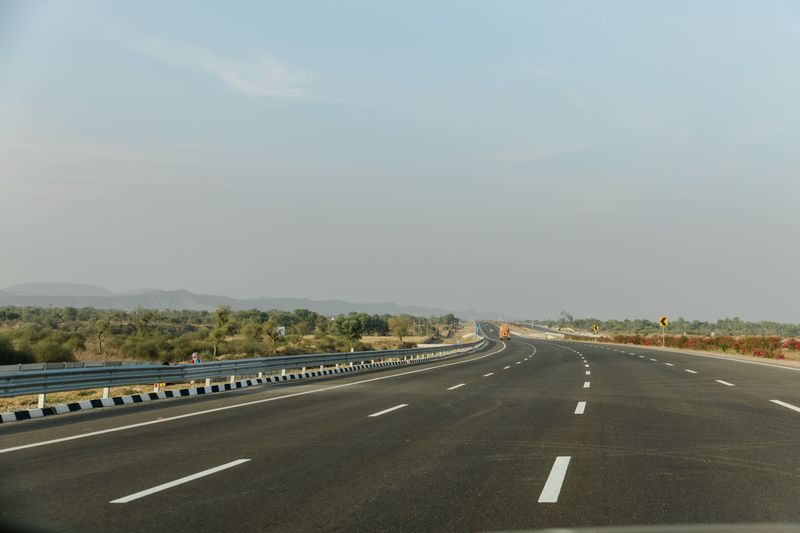

A recently released road safety report has revealed that five major highways and expressways passing through the Millennium City claimed 228 lives and recorded 206 fatal crashes in a single year. Amongst them, the Delhi-Jaipur Highway emerged as the most dangerous stretch in the district, killing an average of 3.34 people per kilometre.The 44-kilometre corridor of NH-48, the Delhi-Jaipur Highway passing through Gurugram district, alone accounted for 147 deaths and 133 fatal accidents in one year. The numbers translate to a grim reality: a serious accident occurs roughly every 300 metres on this stretch. Taken together, the five highways account for 53 per cent of all road fatalities recorded across Gurugram district in the same period — meaning more than half the district’s road deaths are concentrated on these five corridors alone.The other four deadly corridors are equally alarming.The Gurugram-Alwar Road or Sohna Road (NH-248A), spanning 26 kilometres, recorded 31 deaths and 30 fatal crashes at an average of 1.20 deaths per kilometre. The Sohna-Rewari Road (NH-919) saw 21 deaths and 17 fatal crashes across 15 kilometres, averaging 1.44 deaths per kilometre. The Dwarka Expressway (NH-248BB) recorded 16 deaths and 15 fatal crashes over 19 kilometres at 0.84 deaths per kilometre. The Jhajjar Road state highway logged 13 deaths and 11 fatal crashes across 17 kilometres, averaging 0.78 deaths per kilometre.Experts from traffic police and road safety organisations point to illegal cuts made by local residents and dhaba owners as a primary cause of accidents. Wrong-way driving in pursuit of shortcuts on the Dwarka Expressway, Sohna Elevated Highway, and Delhi-Jaipur Highway has become routine. Residents of housing societies and villages along these corridors face a severe shortage of foot overbridges and underpasses. Poor street lighting across several stretches leaves sudden bends and potholes invisible at night.The government’s response has now been escalated. The district administration has directed NHAI and PWD officials to submit a detailed implementation roadmap within 21 days, initiate immediate high-impact interventions within 30 days, and commence medium-term infrastructure work within 90 days. Directions include installation of new signboards, road marking, speed control measures, designated bus stops, bus-bay lanes, and safe pedestrian crossings. Works at critical junctions, including Jharsa Chowk, Atlas Chowk, IFFCO Chowk, and Sector 33 are to be completed by June 30.”Road safety is our top priority and we will not allow these black spots to keep claiming lives. The district administration is working in close coordination with NHAI, PWD and traffic police to identify and fix every dangerous stretch on our highways. We have given clear deadlines and expect results on the ground within 30 days,” said Uttam Singh, Deputy Commissioner, Gurugram.Gurugram has been included under the Central Government’s Zero Fatality District programme, under which district administration, traffic police, and road construction agencies are mandated to work together to reduce accident numbers.