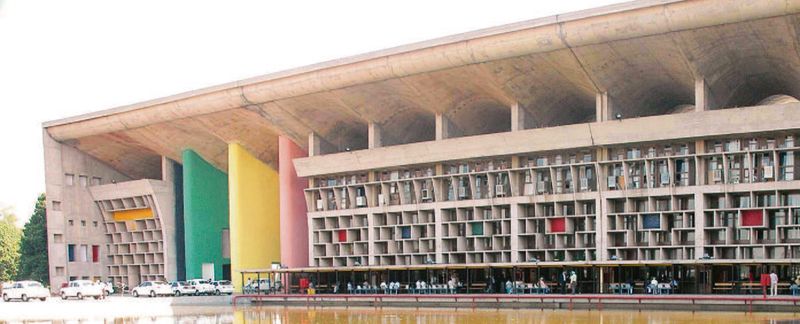

Admonishing bureaucratic apathy that stalls criminal trials, the Punjab and Haryana High Court has directed the Punjab Chief Secretary to examine the conduct of an officer who sat over a sanction-for-prosecution file and to “take an appropriate action within four weeks.”The censure came in a case where a judicial officer wrote to a government officer to expedite the decision on an application filed by prosecuting agency seeking sanction to prosecute a public servant and also to look into the matter. The petitioner’s stand in the matter was that a judicial officer might pass order on the judicial side. But he cannot ask authorities by way of letter to expedite the decision on the application seeking sanction to prosecute.“The entire problem has been created by bureaucrats who are least bothered of problems faced by judicial officers,” Justice Bansal asserted, while taking note of the facts. Flagging a systemic pattern, the court underlined how prosecuting agencies filed police reports without prior sanction and authorities then sat over such applications, leaving trials in limbo, and resulting in repeated adjournments and wastage of judicial time and public resources.Dismissing a petition challenging a trial Judge’s communication to the state government, Justice Jagmohan Bansal made it clear that delays in deciding sanction applications reflected a “lethargic, lackadaisical and irresponsible attitude,” and could not be allowed to derail the course of justice.The case has its genesis in a petition seeking directions to restrain authorities from acting on a September 1, 2025, letter written by an Additional District and Sessions Judge-cum-Special Judge to the Additional Chief Secretary, Department of Local Government, Punjab. The judicial officer, through the letter, had sought expeditious consideration of an application filed by the prosecuting agency for sanction to prosecute a public servant.Court backs trial judge, flags systemic delaysRejecting the petitioner’s contention that the judicial officer overstepped jurisdiction, Justice Bansal held that no direction to grant sanction had been issued. Instead, the officer had merely sought a decision on the pending application so that the trial could proceed. “The judicial officer has not asked authorities to grant sanction whereas he has simply asked to adjudicate the question of sanction so that trial may proceed in one or another way,” the court observed.Placing the issue in a wider perspective, Justice Bansal called attention to how executive inaction crippled trial proceedings. “The prosecuting agency files police report without sanction and bureaucrats sit over the matter. They do not adjudicate the application seeking sanction in one or another way. On every date, matter is taken up by the trial court and in the absence of adjudication of application seeking sanction, it is adjourned. It entails wastage of valuable time, energy and public resources,” the court observed.‘Unavoidable and compelled circumstances’Justice Goel observed that the trial judge’s communication was necessitated by circumstances beyond control, especially given the constraints under which the subordinate judiciary functioned. “The judicial officer has authored impugned letter under unavoidable and compelled circumstances. Most of the judicial officers are working without proper infrastructure and in a charged atmosphere,” the court noted, before squarely attributing the situation to administrative indifference.Timeline exposes inactionThe court’s censure was rooted in the timeline placed on record. The prosecuting agency had moved an application seeking sanction on June 10, 2025, followed by filing of the police report on June 13, 2025. Despite this, the competent authority failed to take a decision even by the date of hearing in April 2026. “Even as on day, the respondent has not decided the fate of the application. This shows lethargic, lackadaisical and irresponsible attitude of the officer,” Justice Bansal held.Petition dismissed, accountability fixedFinding no infirmity in the trial court’s communication, the high court dismissed the petition, holding that no interference was warranted. “There is no infirmity in the impugned order warranting interference… petition deserves to be dismissed,” the court concluded.Before parting, Justice Bansal ensured accountability at the administrative level by directing the Chief Secretary to examine the conduct of the officer concerned and report compliance within four weeks — signaling that executive delay in sanction matters would not go unchecked.