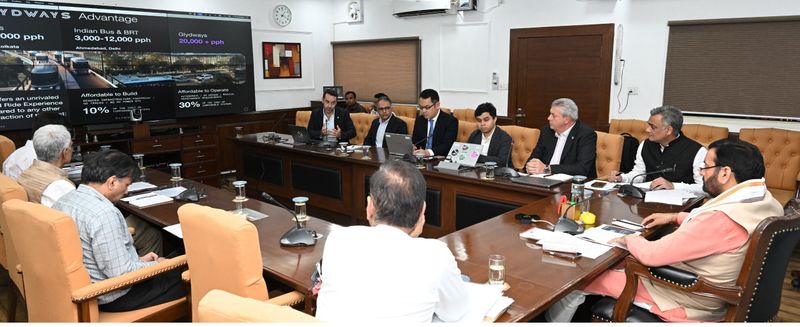

If everything goes according to the plan, Haryana could be the first state in the country to have an advanced pod taxi transit system, also known as the Personal rapid transit (PRT) network.In this regard, a high-level delegation from Japan’s reputed company, Suzuki Motor Corporation and Glydways called on Chief Minister Nayab Singh Saini at Sant Kabir Kutir, Chandigarh, today.Aiming to avoid rising traffic congestion, shorten travel time and provide an environmentally sustainable mode of transport in urban areas, the Haryana Government has been exploring the possibility of introducing this advanced pod taxi (Glydways) transit system.Sources said Gurgaon had been chosen as the first destination to have this new era of smart mobility in Haryana, in collaboration with the National Highway Authorities (NHAI), which will provide the logistics to build the special guideways on which the pods run.It can be a good alternative to the Delhi-Gurgaon NH8, keeping in view the jam-packed ridership of the Delhi metro. The introduction of the pod taxis will help out in making traveling easier.This public transportation is going to save fuel, cost of transportation, pollution and it will be fully air-conditioned. The fare of pod taxis is also expected to be fixed on a par with the current public transport mode.An official said, during the meeting, a detailed discussion was held on various aspects of a potential partnership between the Haryana Government and the companies for the Glydways transit project.The main discussion included the feasibility of this mode of transport, identification of potential dedicated corridors, route planning, investment modules, possibilities under Public-Private Partnership (PPP) and timelines for implementation.The delegation, through a presentation, apprised the CM about Glydways offering an advanced, automated, driverless and on-demand public transport system being developed using cutting-edge technology.What is a Personal rapid transit (PRT) network?Personal rapid transit (PRT) is a transport mode combining small automated driverless vehicles, known as pods, operating on a network of specially built guideways. The network consists of a number of stations or stops for passengers to board and get off. The average speed of the pods is estimated to be around 60 kilometres per hour. Every pod taxi can accommodate up to five passengers.