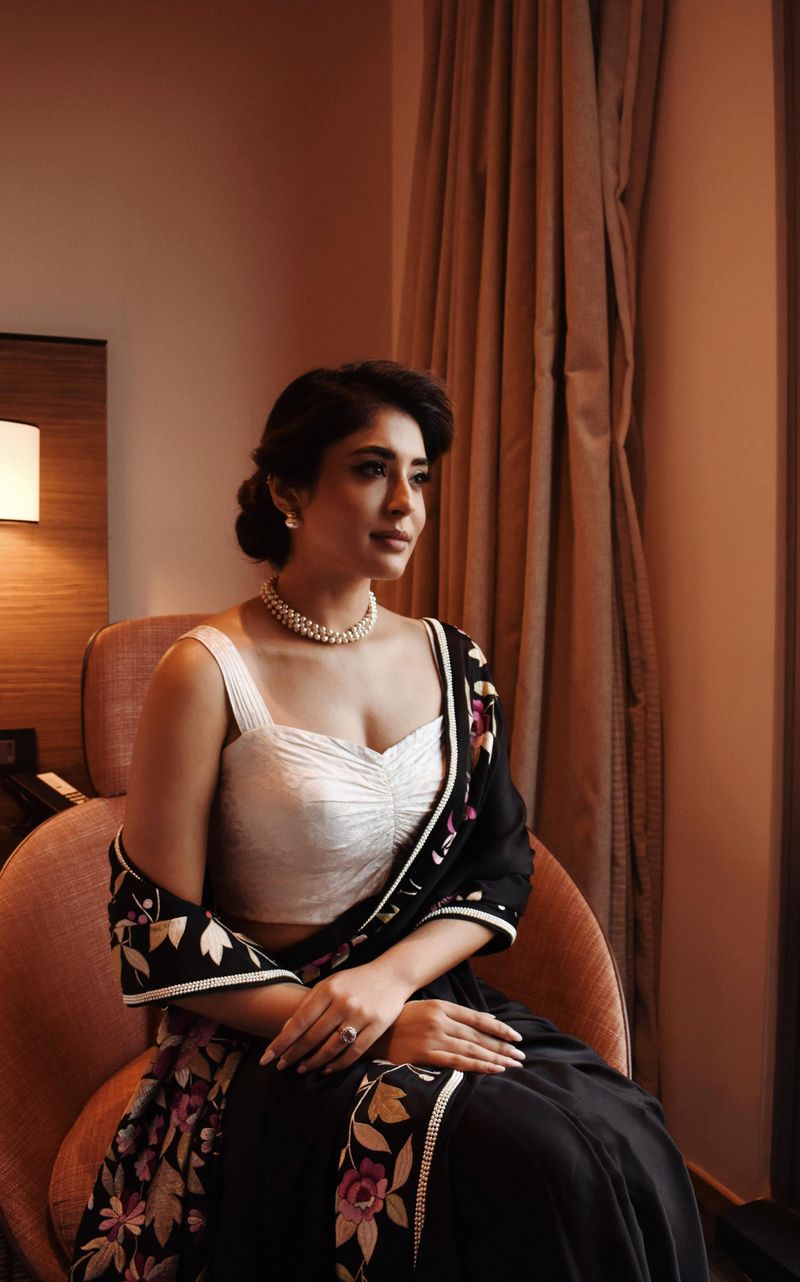

After playing restrained, rooted characters back-to -back, Kritika Kamra is stepping into an entirely new space with Matka King—one that allows her to explore glamour and a dramatically different world.Set against the backdrop of 1960s and 70s’ Bombay, the series dives into the rise of the Matka gambling culture, a phenomenon that once gripped the nation with its promise of quick money.For Kritika, the shift is both refreshing and creatively fulfilling. Known for her naturalistic performances, the actor found herself embracing a more expressive, visually rich character this time. “I’ve done period dramas before, but I’ve never had a character, who could really play with fashion or lean into glamour,” she shares. The elaborate costumes, makeup and hairstyling—though time-consuming—became an enjoyable part of her process. It was, as she describes, a “welcome change” from the simplicity that defined many of her recent roles.But Matka King is more than just visual indulgence. Directed by National Film Award recipient Nagraj Manjule, the series carries the filmmaker’s signature depth—blending entertainment with social observation. Kritika was immediately drawn to the project upon learning that Manjule was venturing into the web series format. “His stories are always about more than just entertainment,” she says. “They reflect reality, they show contrast, and they stay with you.”That contrast is central to the world of Matka King. The show explores a side of Bombay rarely depicted on screen—the stark divide between privilege and poverty. “That divide is still visible today, which makes the story feel relevant even though it’s set decades ago.”In this world is Kritika’s character—a young Parsi woman from a wealthy, sheltered South Bombay family. On the surface, she has everything: comfort, protection and privilege. Yet, beneath that lies a sense of incompleteness. “We often assume that people who have everything must be happy and fulfilled,” Kritika reflects. “But there’s also loneliness and a lack of lived experience. Sometimes, what they crave is adventure, purpose or simply the thrill of the unknown.”Her character’s journey is one of discovery and defiance. Drawn into the world of Matka, she begins to understand the power of money—not just as wealth, but as agency. In doing so, she challenges the norms of her time. “For a traditional girl in the 60s, especially from a conservative Parsi family, stepping into a space like gambling—working with men—was completely frowned upon,” Kritika notes. “But she does it anyway because it gives her a sense of independence and meaning.”Interestingly, Kritika points out that her own life trajectory mirrors her character’s in reverse. Raised in a small town in Madhya Pradesh, she moved through cities like Delhi before eventually finding her footing in Mumbai. “My journey has been about stepping into bigger worlds,” she says. “Her journey is about stepping out of a protected one. In that sense, our arcs are completely opposite.”Kritika describes the collaboration with Vijay Varma as effortless, rooted in mutual respect and professionalism. “We didn’t need to sit and break the ice or rehearse extensively. We were both in character from the start and everything just flowed,” she says.Beyond Matka King, Kritika’s approach to her career remains fluid and instinct-driven. She avoids setting rigid goals or chasing specific genres, preferring instead to respond to what excites her in the moment. “I don’t want to limit my imagination by making a checklist,” she explains. While she remains tight-lipped about details, she reveals that her next project is an independent film requiring significant physical transformation. “I have to look and be strong and I am training hard for it.Even as her professional life expands into new territories, Kritika remains grounded in simplicity off-screen. Recently married, she describes the transition with characteristic ease and humour. “It feels the same,” she says. “Sometimes I wake up and think—oh, I have a husband now.” Her wedding was intimate and deeply personal, shaped by meaningful choices. For her wedding, she chose a deeply personal route by wearing a custom saree from her label Cinnabar. Designed as a modern heirloom, the Chanderi weave featured a striking sindoor-red hue with minimal embellishment, letting the fabric’s texture shine. Woven with a blend of cotton and tussar silk and finished with real silver zari, the saree reflected understated elegance. Crafted by artisans and envisioned with her mother, it held emotional value beyond just bridal fashion.As she looks ahead, Kritika is focused on the release of Matka King and the audience’s response to it. It releases on Amazon Prime Video today.