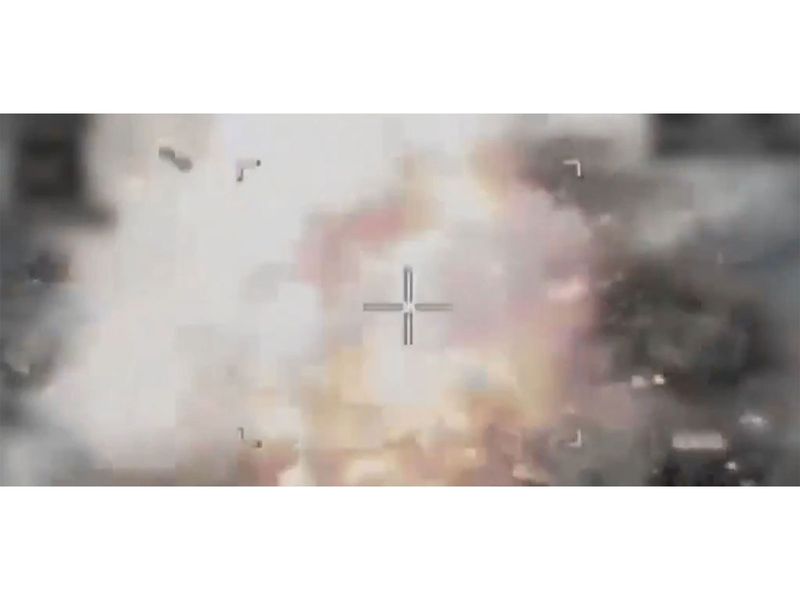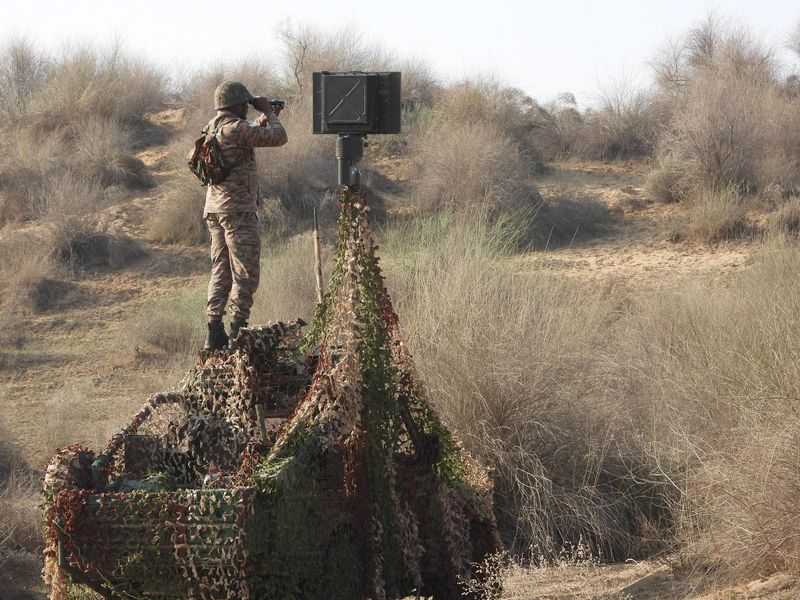

Long-range drones for precision strikes are replacing big guns in some artillery regiments, while foot soldiers are now operating small, AI-enabled unmanned aerial systems for tactical reconnaissance and targeting.Along with this, the Indian Army has raised integrated all-arms brigades and light commando battalions for rapid response and operations in a multi-domain, technology-dominated environment. These developments come in the year following Operation Sindoor, which triggered significant structural, doctrinal and technological changes within the force.Conducted in May 2025, Operation Sindoor was a five-day tri-service military confrontation between India and Pakistan, launched in retribution to an attack by Pakistan-supported terrorists in Pahalgam in April 2025 that killed 26 tourists. The conflict was dominated by non-contact warfare, primarily through unmanned aerial systems (UAS) or drones, counter-drone systems and precision strikes in an inter-service networked command-and-control environment, even as there was no noticeable troop mobilisation on the ground.The operation’s success and the lessons it threw up for the entire security establishment have accelerated the push for an organisational revamp, doctrinal upheavals, system modifications and induction of new equipment. Amongst the three services, the transformation has been most visible in the Army, which is striving towards proactive, technology-integrated warfare to meet present and future operational requirements. This involves new war waging concepts as well as new war fighting units and equipment.“Operation Sindoor has significantly impacted operational thinking in the Army,” said Lt Gen DS Hooda, former GOC-in-C Northern Command. “Three areas stand out – The first is drone warfare where we are seeing significant inductions of drones and counter-drone technologies at various levels. The second is the need for networking centricity and data management for effective employment of AI solutions. Finally, given that the Army needs to be prepared for a rapid response and escalation, it has to remain in a high state of operational readiness,” he added.“The Army has initiated a wide spectrum of initiatives for transformation but the real challenge lies in operationalising the new architecture around the Theatre Commands that are being established,” points out Lt Gen KJ Singh. “Another constraint is to modernise and induct technology within the limited fiscal allocations,” he added.From ‘Cold Start’ to ‘Cold Strike’After Operation Parakram, the massive mobilisation of the Army along the western borders in response to a terrorist attack on Parliament in December 2001, the Army developed the Cold Start doctrine to reduce the massive time of three weeks it took to deploy troops to the frontline.The doctrine called for rapid, limited conventional strikes and shallow incursions to seize territory within 48-72 hours in response to terror attacks or provocations, without triggering a full-scale war or crossing Pakistan’s nuclear red lines. It focused on speed over numbers, requiring smaller, mobile formations pre-positioned near the borders.Operation Sindoor resulted in further doctrinal evolution into what is referred to in some circles as Cold Strike, a pre-emptive and multi-domain military strategy involving instant punitive precision strikes on strategic or high value targets deep inside enemy territory using long range or stand-off weapons without the need for forces to cross the border.This was in the backdrop of the government’s post-Pahalgam doctrinal shift stating that terrorist attacks would be considered as an act of war and responded to accordingly. “From our traditional strategic restraint, India graduated to a punitive and effective response,” Lt Gen Kamal Davar, former Director General of the Defence Intelligence Agency, remarked.Cold Strike encompasses multi-domain operations and simultaneous action across land, air, cyber, electromagnetic spectrum, space, information and psychological spheres, with jointness and inter-service coordination being its fundamental aspect.‘Rudra’ All-Arms BrigadesBeginning July 2025, two Rudra Brigades, which are all-arms formations integrating infantry, mechanised infantry, armour, artillery, special forces, and unmanned aerial systems, supported by specialised logistics and combat support elements have been operationalised.The Rudra brigades are structured to be operationally flexible and have the intrinsic capability to deter and respond to varied threats with greater speed, technological prowess and lethality. These are adequately equipped with force multipliers like drones’ surveillance equipment and area saturation weapons.A traditional brigade is formed with three battalions or regiments drawn from a single arm like the Infantry, Artillery or Engineers, but Rudra Brigades comprise a mix of battalions or regiments from different arms and their composition can be flexible depending on the operational requirements and tasks at hand.For example, in the mountains, it may have two infantry battalions and an artillery regiment or in the plains it may have a mechanised infantry battalion, an armoured regiment and a self-propelled artillery regiment more suited for offensive operations. Elsewhere it could be infantry battalions along with Special Forces (SF) elements, more suited for operations along the Line of Control (LoC).‘Bhairav’ Light Commando BattalionsAnnounced at the Infantry Day in October 2025, Bhairav battalions were publically showcased at the Army Day Parade in Jaipur in January 2026. These are light commando units comprising about 300 troops, primarily from the infantry with embedded elements from support arms, to bridge the gap between the traditional line infantry and the SF.Specializing in targeted disruption missions, drone operations, surveillance and swift independent actions, these compact, technology intensive and highly mobile units come under the ambit of Corps and Division Commanders, providing field commanders in the tactical battle area a sword arm without involving the SF, which are meant for strategic and high stake missions.Bhairav battalions are structured, trained and equipped designed for reconnaissance, rapid-response and hybrid warfare that involves simultaneous operations in multiple domains. Each such battalion also has a dedicated platoon for drone and loiter munitions operations. Cyber warfare and information warfare are other specialties of these battalions.The Army intends to raise 25 Bhairav battalions, with 15 already operational by the beginning of the year and the remaining scheduled to be complete later this year. All 26 Infantry regiments are expected to field a Bhairav battalion which will have troops drawn from their existing manpower and class composition.‘Ashni’ Platoons and ‘Shaurya’ SquadronsAshni platoons, the Army’s newly raised specialist drone sub-units, have an integral part of all 380 infantry battalions in the Army, Shaurya squadrons are their counterparts that are being raised for the Army’s 65-plus Armoured regiments, with a handful of such sub-units becoming operational so far.These platoons, comprising about 30 personnel specially training in drone operations, are equipped with different types of drones and loiter munitions for tactical surveillance, reconnaissance and attack.Ashni and Shaurya empower combat units to become more technology-enabled and enhance their real-time intelligence and precision strike capability, giving frontline troops greater operational flexibility and reducing the time loop and decision making process involved in depending on higher echelons for information and firepower.Over the past few months, various Army formations have conducted several field exercises to validate the surveillance and targeting capabilities of Ashni platoons and Shaurya squadrons, besides testing counter-UAS defences.Artillery’s ‘Shaktibaan’ UnitsThe Regiment of Artillery, with about 200 regiments, is also undergoing a doctrinal shift by raising Shaktibaan regiments, which are units that have replaced traditional artillery guns with different types of unmanned aerial systems like swarm drones, loitering munitions and long-range unmanned aerial vehicles.Operationalised in early 2026, the Army intends to raise 15-20 such specialised units to spearhead drone-based warfare and precision strike capability. This marks a change from the gunners’ earlier philosophy of massed firepower to ‘smart’ precision strikes.Unlike the Infantry’s Ashni platoons that are designed to operate within a range of a few kilometres, the Shaktibaan units have a much longer reach and pack a heavier punch, capable of strikes from 5 km to 500 km. The Army battle-tested the efficacy of its newest combat units during Exercise Kharga Shakti – 2026, a large-scale corps level field drill in the deserts of Rajasthan.Training Tech-enabled WarriorsIn 2025, the Army extended the periodicity of the Chief of Army Staff’s (COAS) Training Directive from two years to four years to provide a reasonable timeframe for structuring and validating the absorption of niche technologies, maintain correct operational focus by de-cluttering the training calendar and ensure continuity and coherence over a longer time horizon, sources added.The emphasis on training is now on the employment of automated and unmanned systems, rapid sensor-to-shooter loops, electronic and cyber warfare resilience and seamless jointness across all hierarchical levels.The Army Training Command is integrating 34 niche technologies into its curriculum by 2030. Multiple memorandums of understanding have also been signed with leading institutions, including Indian Institutes of Technology, to promote joint research and innovation.