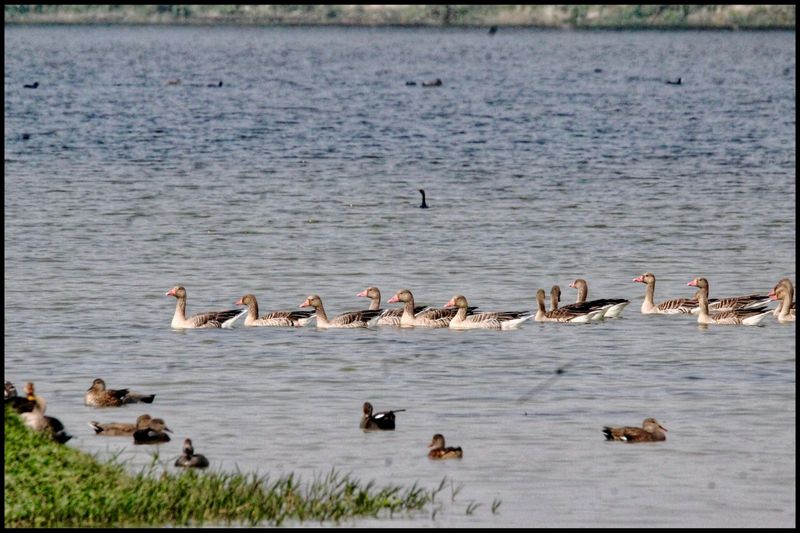

The designation of Shekha Jheel Bird Sanctuary as a Ramsar site has taken India’s tally of wetlands of international importance to 99.Announcing the development, Union Environment Minister Bhupender Yadav said Uttar Pradesh now has 12 Ramsar sites. “Uttar Pradesh takes the score to 99. Delighted to announce the designation of Shekha Jheel Bird Sanctuary (Aligarh, Uttar Pradesh) as a Ramsar site,” he said.The minister said the recognition was expected to support local livelihoods while strengthening biodiversity conservation, water security and climate resilience. He added that the wetland serves as a key stopover along the Central Asian Flyway, providing habitat to migratory species such as the bar-headed goose, painted stork and several species of ducks during winter. The designation, he said, brings India closer to a “historic century” of Ramsar sites.However, concerns over environmental degradation persist. A study published last year highlighted that rapid urbanisation and industrial expansion in Aligarh have led to habitat loss, pollution, encroachment and hydrological disruptions at Shekha Jheel, threatening both its biodiversity and ecological functions.The Central Pollution Control Board has also flagged the discharge of untreated effluents from nearby industries, including heavy metals and toxic chemicals, into the wetland, adversely affecting aquatic life.The study further noted that illegal construction around the wetland has altered natural water flows, reducing its retention capacity. Additionally, excessive groundwater extraction in Aligarh has lowered water tables, disrupting the wetland’s hydrological cycle.A Ramsar site is a wetland recognised as being of international importance under the Ramsar Convention, adopted in 1971 for the conservation and sustainable use of wetlands. Globally, more than 2,400 such sites have been designated to protect biodiversity, particularly waterfowl habitats, and sustain ecosystem services.Countries that are party to the convention can nominate wetlands that meet one or more of nine criteria, including regularly supporting at least 20,000 water birds.