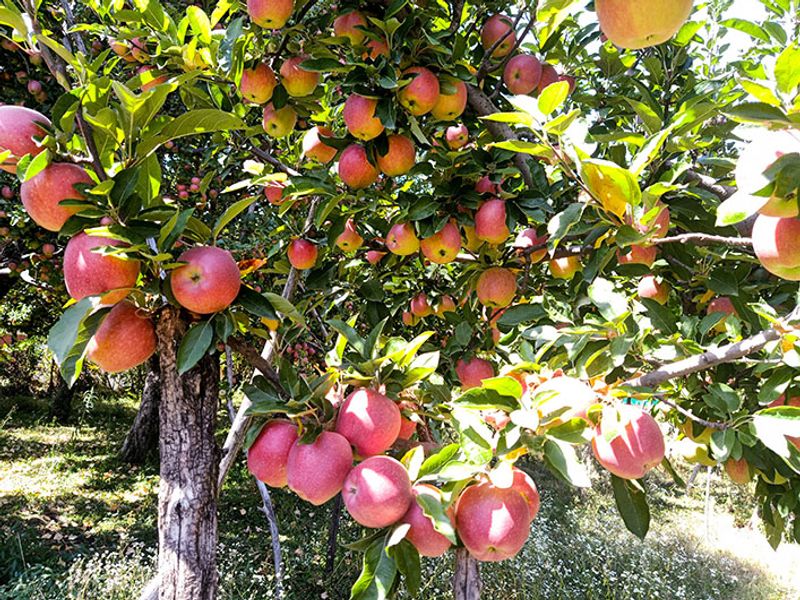

Himachal Pradesh appears to be heading towards a below-average apple production this year due to erratic weather. Apple production, in particular, is likely to take a significant hit. Most growers believe that warm winters, followed by extreme cold in late March and early April, when orchards at middle and higher altitudes were in bloom, will severely impact overall production.Experts are also not optimistic about the yield. According to Usha Sharma, head of KVK, Shimla, orchards located between 5,000 and 7,000 ft, have been the hardest hit by extreme weather events. “Due to excess rainfall, most orchards experienced premature leaf fall last year. This led to sparse flowering in low-altitude orchards this year. As a result, these orchards are witnessing a poor crop,” she said.Orchards at middle and higher elevations were affected by a sudden and significant drop in temperatures in late March and early April. “Most of these orchards were in bloom when temperatures dipped, which affected pollination and fruit set,” she said, adding that orchards above 8,000 ft are likely to see a good crop.Meanwhile, growers feel that warm winters have also contributed to erratic flowering and poor fruit set. Apple trees, depending on the variety, require sufficient chilling hours during winter for uniform blooming and proper fruit set. “For a prolonged period this winter, temperatures remained around 10 degrees above normal. The chilling-hour requirement was not met, leading to sparse and weak flowering and poor pollination,” said Lokinder Bisht, president of Progressive Growers Association, one of the largest apple growers’ bodies in the state.In addition, fungal diseases such as alternaria and marssonina have become increasingly rampant in recent years, and growers are struggling to control them. These diseases not only affect the current year’s crop and fruit quality but also reduce yields the following year. “For many growers, it is difficult to endure consecutive crop failures. One loses the motivation to continue routine farm practices, such as applying pesticides and fertilisers, when the expected yield is very low,” Bisht added.