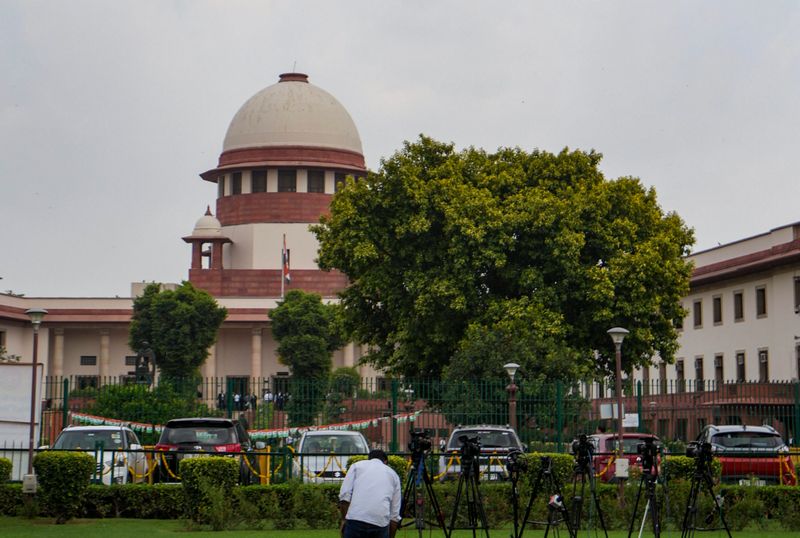

The Supreme Court on Wednesday said the existing framework of criminal law adequately addresses the issue of hate speeches and no “legislative vacuum” exists warranting intervention.”The contention that the field of hate speech remains legislatively unoccupied, is misconceived,” a Bench of Justices Vikram Nath and Sandeep Mehta said.The top court delivered its verdict on a bunch of petitions seeking action against those involved in hate speeches and also for mechanism to deal with such instances.The Bench said it would be open to the Centre and the competent legislative authorities to consider in their wisdom whether any further legislative or policy measures were warranted in light of the evolving societal challenges or to bring about suitable amendments as suggested by the Law Commission’s 267th report of March 2017.”While we decline to issue directions of the nature sought, we deem it appropriate to observe that the issues relating to hate speeches and rumour-mongering bear directly upon the preservation of fraternity, dignity and constitutional order,” Justice Nath said while pronouncing the verdict.The apex court said creation of criminal offences and the prescription of punishments lies squarely within the legislative domain.It said the constitutional scheme founded upon the doctrine of separation of powers did not permit the judiciary to create new offences or expand the contours of criminal liability through judicial directions.”The precedents of this court consistently affirm that while constitutional courts may interpret the law and issue directions to secure the enforcement of fundamental rights, they cannot legislate or compel legislation,” the Bench said.It said the existing framework of substantive criminal law, including the provisions of the erstwhile Indian Penal Code, and allied legislations adequately addresses acts that promote enmity, outrage religious sentiments, or disturb public tranquillity.”The field is, therefore, not unoccupied,” the Bench said.It said the statutory framework under the erstwhile Code of Criminal Procedure (CrPC), now the Bharatiya Nagarik Suraksha Sanhita (BNSS), 2023, provides a comprehensive and layered mechanism to set the criminal law in motion.