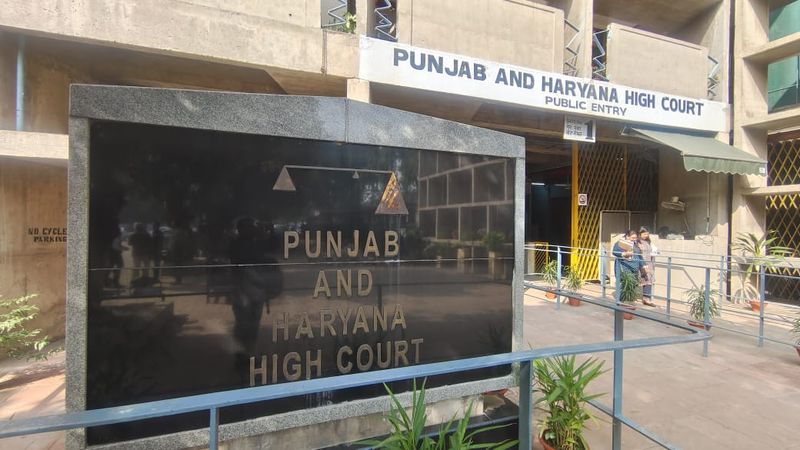

The Punjab and Haryana High Court on Friday held that the Punjab Pollution Control Board (PPCB) had failed, at this stage, to demonstrate any emergent situation involving pollution of stream water, land or environment by poisonous effluents from Trident Limited’s unit, while directing that coercive steps could be taken only after affording the company a reasonable opportunity of 30 days to rectify “minor defects/deficiencies”.Among other things, the company had alleged that the action was guided by political vendetta following a change in affiliation by its founder Rajinder Gupta — a claim strongly contested by the PPCB.Disposing of the petition, the Bench of Chief Justice Sheel Nagu and Justice Sanjiv Berry also granted liberty to the company to approach the National Green Tribunal in case any coercive action was initiated by the Board.Pronouncing the order in open court, the Chief Justice observed: “Since the Board has failed to show any emergent situation where any stream water, land or environment is being polluted by poisonous effluents, it would be appropriate to allow the respondent-Board to take coercive steps only after affording reasonable opportunity of 30 days to the petitioner-company for rectifying any minor defects/deficiencies.”The Bench added: “The petitioner-company is at liberty to approach the NGT in case any coercive steps are taken.” The order came days after the high-voltage face-off between Trident Limited and the PPCB over an April 30 inspection conducted at the company’s premises. The company had alleged procedural violations, intimidation and political targeting following a change in the political affiliation of its founder Rajinder Gupta, while the Board had denied any bias and maintained that it was merely carrying out a routine statutory inspection.During the earlier hearing, senior advocate Munisha Gandhi, counsel Viraj Gandhi and counsel Adarsh Dubey, appearing for Trident, had questioned the timing of the inspection, asserting that consents had been granted to the company only weeks earlier and alleging non-compliance with mandatory safeguards for collection and sealing of samples under environmental law provisions.On the other hand, senior advocate D S Patwalia, appearing for the PPCB, had termed the allegation of vendetta a “figment of imagination” and argued that the petition itself was premature as no adverse order had yet been passed against the company.The Bench, during the course of hearing, had referred to surrounding circumstances, indicating that the timing of the inspection — coming soon after recent regulatory clearances — could give rise to an apprehension, even if that by itself was not determinative. “The timing is such that it gives an apprehension in your mind, no doubt about that,” the Bench had observed.The Bench had also indicated that regulatory action, if taken, must conform to law and due process, including adherence to statutory procedure and availability of remedies.