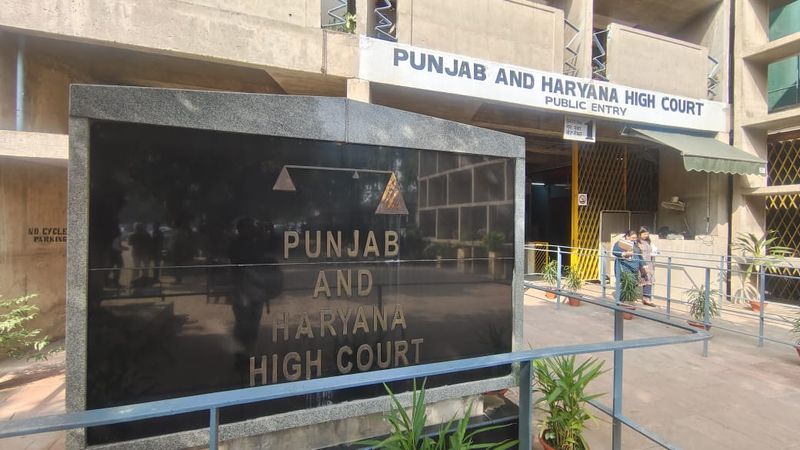

When a hospital says a patient cannot be treated by a routine heart procedure and must undergo a newer, more complex technique to survive, can the state still refuse reimbursement by saying — “this is not in the package list”? Deprecating the state’s stand, the Punjab and Haryana High Court has directed the reimbursement of a patient’s entire medical bill with interest after holding that medical policy cannot be applied like a rigid billing chart when life itself is at stake. The bench also directed authorities concerned to consider the inclusion of the IVL technique within the package rates for coronary artery disease, including stenting and ballooning procedures, and to amend the policy accordingly.The bench asserted “compassion had been sacrificed at the altar of technicality” as denying reimbursement of a life-saving cardiac procedure defeated the very purpose of a medical aid policy. Justice Harpreet Singh Brar also made it clear a welfare policy for preserving life could not be allowed to become a “procrustean bed of rigid literalism”.The ruling by Justice Brar came in a case of the patient suffering from severe coronary artery disease. The doctors found that standard angioplasty would fail because the arteries were heavily calcified. The only viable treatment was an advanced procedure — Rotablation and Intravascular Lithotripsy (IVL) — a technique using a specialised catheter to break hardened blockages using shockwaves.State admonished for hollow approachJustice Brar asserted: “Shockingly, what can be inferred from the respondents’ stand is that, had the petitioner undergone conventional angioplasty, regardless of it being ineffective for his heavily calcified coronary blocks, the respondents would have happily reimbursed the same, because it finds mention in the package list, regardless of whether it saved the petitioner’s life or not. This court cannot accept such a hollow approach.”Justice Brar asserted the court was not dealing with a matter of mere administrative reimbursement of a routine nature. It concerned the life and health of a person suffering from critical coronary artery disease — a life threatening cardiovascular condition that leaves no room for error or experimentation.“Every lock has its own key; every ailment its own cure. The test cannot be what is listed, the test must be what is medically necessary to save a life. If conventional angioplasty would not work, and IVL would work, the respondents cannot insist upon the former simply because it finds mention in a list,” Justice Brar asserted.Medical necessity undisputed, but reimbursement denied on technical classificationGoing into the background of the matter, Justice Brar observed there was no dispute regarding the medical condition or necessity of the procedure. The petitioner was suffering from critical coronary artery disease requiring immediate angioplasty and stenting. The doctors found heavily calcified coronary blocks, which could not be cured by routine balloon angioplasty and stenting. As such, IVL was required to be adopted.Despite this, the state rejected reimbursement on the ground that IVL was not part of the approved angioplasty package and was separately classified as consumables rather than implants. “The ground relied upon by the respondents to deny the petitioner for their claim is that the coronary balloons used in IVL are not the same Balloons used in normal and routine angioplasty, therefore IVL is not part of angioplasty package…”Court on state’s hyper-technical approachRejecting the state’s stand, Justice Brar observed that denial of reimbursement was purely hyper-technical and contrary to the objective of medical welfare schemes. “It seems that the respondents have chosen to adhere to the policy in its letter, while turning a blind eye to its spirit and true objective. In doing so, they have forgotten that a policy meant to preserve life cannot be allowed to become a procrustean bed of rigid literalism.”Justice Brar asserted the true aim and objective of providing medical support to employees and retirees was rooted in the constitutional vision of a welfare state. “As such when life hangs in balance, the policy must bend toward the living, not stand rigid upon its lexicon. The policy, designed to heal, cannot be permitted to become an instrument of denial on hyper-technical grounds.”Compassion sacrificed at the altar of technicalityJustice Brar asserted the court could not “countenance the hyper technical approach adopted by the respondents to deny the reimbursement of a valid medical claim of the treatment which was essential and necessary to preserve the life of the petitioner”. The respondents could not be allowed to refuse to acknowledge an advanced and specialised form of treatment.Rejecting the state’s classification of IVL as unrelated to angioplasty, the court relied on medical literature and held: “IVL is an endovascular angioplasty technique employing a balloon catheter that delivers acoustic shockwaves to modify heavily calcified plaques…”