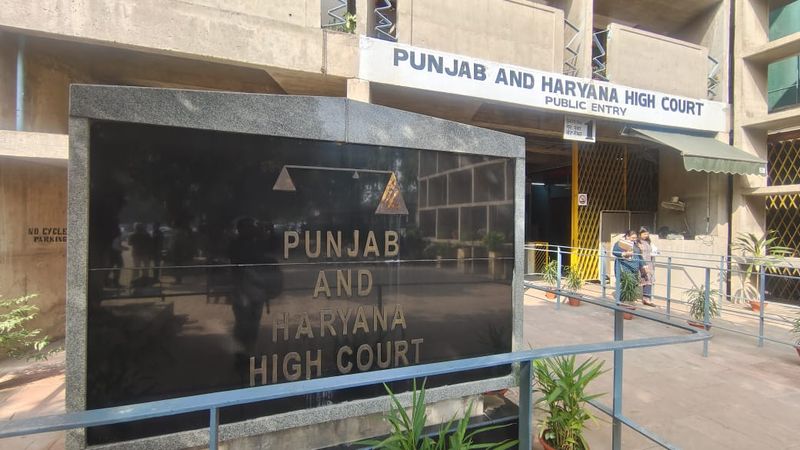

Condemned by confusion, not conviction—a man remained behind bars for a crime he was no longer held guilty for. It was in 2006 when a case of murder and other serious offences was registered at a police station in Kaithal.Nearly two decades after the alleged crime, the Punjab and Haryana High Court has stepped in to correct the “incredibly grim situation” and grant bail to an accused after exercising its suo motu powers.The bench observed that the accused was virtually restored to “acquitted” status after the Supreme Court remanded the matter back to the high court for fresh adjudication. Nonetheless, he continued in custody for nearly 15 years even though, in law, there was no operative sentence against him.The bench of Justice Anoop Chitkara and Justice Sukhvinder Kaur was dealing with an application moved by an accused in the case registered on March 17, 2006. He was seeking suspension of sentence under the provisions of Bharatiya Nagarik Suraksha Sanhita, 2023.At the very threshold, the court was confronted with a disturbing custody record. A certificate dated May 6 showed his custody in the present case is 14 years, 10 months, and eight days”. But the matter was not merely about the length of incarceration—it was whether, in the eyes of law, incarceration could have continued at all.As the matter came up for hearing, the bench traced the entire litigation history—from the FIR registered under multiple IPC provisions and the Arms Act to the trial court judgment dated March 9, 2009, where 33 accused were tried but only one was convicted. The applicant, along with 32 others, was acquitted.The state and one convict challenged the outcome and the appellate proceedings followed a complex trajectory —dismissals, partial reversals and convictions.A coordinate division bench did not find merit in the appeal filed by the convict; however, the state appeal was allowed in part. Out of the acquitted respondents, eight were convicted. The matter eventually reached the Supreme Court, where the judgment passed by the division bench was set aside, and the matter was remitted to the high court.Referring to the paradox, the bench observed the application before it was filed by an accused for seeking suspension of his sentence, “whereas the judgment passed by the co-ordinate bench of this court which had convicted and sentenced the applicant was already reversed and remitted by the Supreme Court, which amounts to restoring the status of the applicant as of an acquitted accused, and not undergoing any sentence.”The bench added application for suspension of sentence was maintainable only when there is a sentence.Rejecting the application as not maintainable, the bench reiterated that the person was acquitted by the trial court. The acquittal was reversed by the high court, but the Supreme Court remanded the matter.“It means is status is that of an acquitted person, and he has not been sentenced. Once he was not sentenced, the application under Section 430 BNSS is not maintainable.”However, the matter did not end there. What weighed heavily on the court was the continued incarceration despite the absence of a valid sentencing order being in force. The bench recorded that this situation necessitated judicial correction beyond procedural technicalities.“Since he is still in custody despite being represented by counsel, it is a fit case where we must exercise our inherent jurisdiction under Section 528 BNSS, 2023, to prevent the abuse of the process and to secure the ends of justice.”The court invoked its inherent powers and proceeded to grant relief.“Exercising our inherent powers under Section 528 BNSS, 2023, we are considering granting bail by resorting to Section 431 of BNSS 2023.”Acknowledging the layered procedural history, the Bench referred to a fundamental principle – “Liberty is not cosmetic, it is real.”The court accordingly directed the release of the applicant on bail, subject to furnishing bonds and surety, while imposing standard conditions of appearance and compliance.The court also dealt with ancillary developments, noting the deaths of certain accused and consequently dismissing appeals as abated, while directing remaining accused to furnish bonds to ensure procedural continuity.