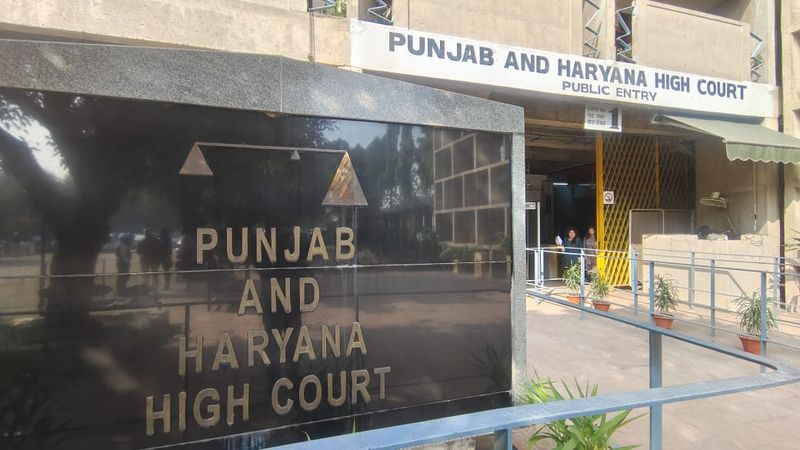

The Punjab and Haryana High Court has held that the non-availability of Annual Confidential Reports (ACRs) cannot be made the sole basis to deny Assured Career Progression (ACP) benefits. Justice Harpreet Singh Brar asserted that selective denial to similarly situated employees on this ground was arbitrary and violative of Articles 14 and 16 of the Constitution, when juniors had already been granted identical benefits.“The absence of Annual Confidential Reports (ACRs) in an employee’s service record cannot be cited as a valid ground to deny service benefits, particularly when such absence is attributable to the employer’s own administrative practice,” Justice Brar asserted.Referring to a “precedent” judgment, Justice Brar asserted ACRs were not “earned” by an employee, but are required to be recorded by the competent authorities. Any failure on the part of the reporting officers cannot operate to the prejudice of the employee.The case before Justice Brar’s Bench was filed by two employees who initially joined the Punjab Urban Planning and Development Authority (PUDA) on November 1, 1986, and December 18, 1990, respectively. They were later deputed to Ludhiana Municipal Corporation. Their services were regularised from November 6, 2001, upon their repatriation. After regularisation, they became eligible to be considered for ACP benefits in the cadre of Pump Operator, which provided financial upgrade upon completion of specified years of satisfactory service.Their claim, however, was rejected through an office order dated December 18, 2025, primarily on the ground that ACRs were not available in their service records, and, therefore, the employees could not be assessed for grant of ACP benefits. The petitioners challenged the decision, contending that the very basis of rejection was flawed since similarly situated employees, including a junior, had already been granted the benefit despite identical circumstances.Justice Brar added once the benefit of ACP had been extended to a junior employee regularised from the same date, “there exists no justifiable basis to deny the same to the petitioners”. Such action is ex facie arbitrary and violative of Articles 14 and 16 of the Constitution of India.“In order to uphold the constitutional mandate of equality under Article 16, the respondents were under an obligation to adopt a fair and uniform method of assessment. In cases where ACRs for a particular period are unavailable, a pro-rata evaluation based on available records or an average assessment ought to have been undertaken,” Justice Brar asserted.Justice Brar observed that the respondents had not filed a detailed para-wise reply on merits and instead relied upon a short affidavit. They took the stand that claims of similarly placed employees, including the petitioners, were rejected due to non-availability of ACRs. But he Court found that this position stood contradicted by a categorical admission in the same reply.“It is evident from the record that the respondents have taken mutually inconsistent and self-contradictory stands. On the one hand, in the impugned order, the claim of the petitioners has been rejected on the ground of non-availability of ACRs while on the other hand, in the short reply as well as in the affidavit filed by the Municipal Corporation, Ludhiana, it has been unequivocally admitted that, as a matter of settled administrative practice, ACRs were never maintained in respect of daily wage/work-charged employees,” Justice Brar assertedHolding the rejection order to be unsustainable in one such matter, Justice Brar quashed the same and directed grant of ACP benefits along with consequential arrears and interest at six per cent per annum. Elaborating, the Bench directed the State of Punjab and other respondents to extend ACP benefits on completion of four, nine and 14 years of service.Setting three-month deadline for completing the entire exercise, Justice Brar made it clear that financial consequences, including arrears with interest, would follow as a natural consequence of impugned order’s quashing.