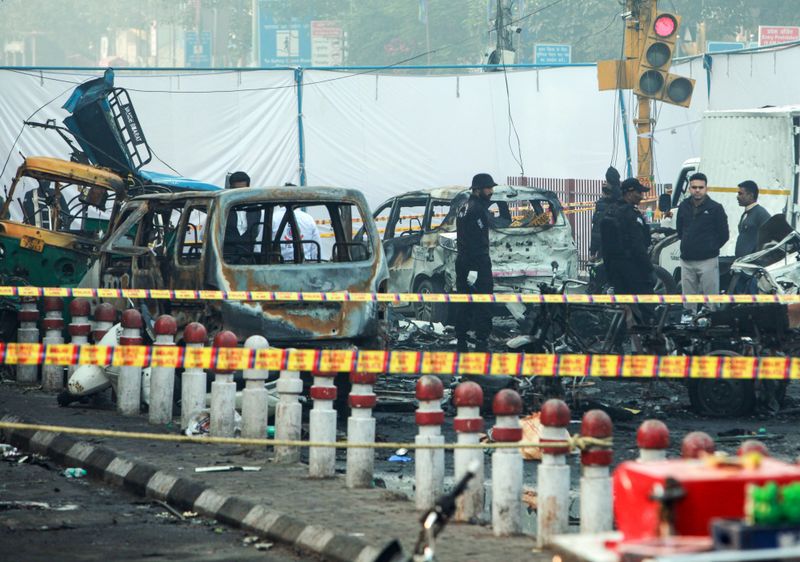

Six months after the Red Fort car explosion incident, in which 11 persons were killed and several others were injured on November 10, 2025, the NIA on Thursday filed a 7,500-page chargesheet in the matter in a special NIA court at Patiala House Courts in the national capital.All 10 accused, including the main perpetrator, the deceased Umar Un Nabi (who was purportedly driving the explosives-laden car), were linked to the organisation Ansar Ghazwat-ul-Hind (AGuH), an offshoot of Al-Qaida in the Indian Subcontinent (AQIS), as per the charges.The Tribune had earlier reported that the NIA was looking at the possibility of the involvement of a relatively unknown outfit behind the incident. AQIS and all its manifestations were notified as a terrorist organisation by the Ministry of Home Affairs in June 2018.The chargesheet has been filed under relevant sections of the UAPA, BNS, Explosive Substances Act, Arms Act and the Prevention of Damage to Public Property Act.Charges against Pulwama-based Umar Un Nabi, an ex-assistant professor of medicine at Al-Falah University in Faridabad, have been proposed to be abated.Apart from Nabi, others named in the chargesheet are Aamir Rashid Mir, Jasir Bilal Wani, Dr Muzamil Shakeel, Dr Adeel Ahmed Rather, Dr Shaheen Saeed, Mufti Irfan Ahmad Wagay, Soyab, Dr Bilal Naseer Malla and Yasir Ahmad Dar.The chargesheet is based on an extensive investigation spanning Jammu & Kashmir, Haryana, Uttar Pradesh, Maharashtra, Gujarat and the Delhi-NCR region. It includes detailed evidence in the form of 588 oral testimonies, more than 395 documents and over 200 seized material exhibits.The NIA has unravelled a major jihadi conspiracy through scientific and forensic investigation and found that the accused, some of whom were radicalised medical professionals, were inspired by AQIS/AGuH ideology to carry out the attack.At a clandestine meeting in Srinagar in 2022, the accused had reconstituted the AGuH terror outfit as “AGuH Interim” following a failed Hizrat to Afghanistan via Turkey. Under this banner, they launched “Operation Heavenly Hind” aimed at overthrowing the democratically elected Indian government and imposing Sharia rule.The NIA investigation revealed that, as part of Operation Heavenly Hind, the accused recruited new members, actively propagated violent jihadi ideology, stockpiled arms and ammunition and manufactured explosives on a large scale using commercially available chemicals. The explosive used in the blast was triacetone triperoxide (TATP), which was manufactured by the accused after clandestinely procuring ingredients and conducting experiments to perfect the mixture.A total of 11 persons have so far been arrested in the case, and the NIA continues efforts to track absconders whose roles surfaced during the investigation.Earlier, on February 13, 2026, a Delhi court had granted the NIA an additional 45 days to submit its chargesheet even as the agency had sought a 90-day extension. The revised deadline ended on March 30, with the chargesheet now filed on May 14.