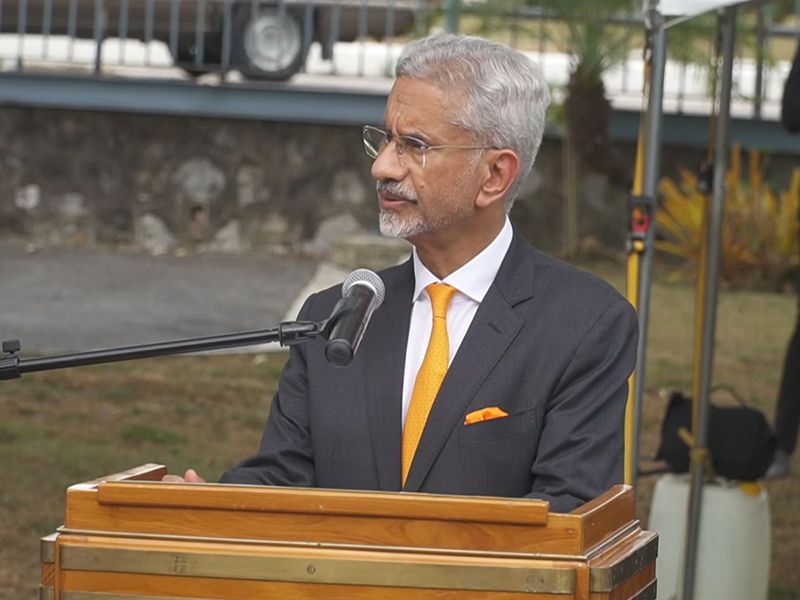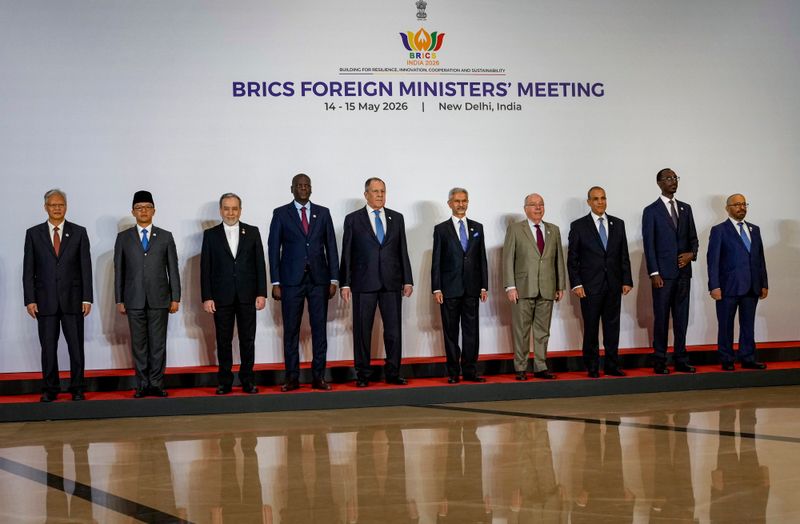

An India-flagged commercial vessel reportedly sank after it came under attack in the Omani waters even as New Delhi on Thursday hosted several foreign ministers, including Iran’s Abbas Araghchi, for the BRICS meeting.It was not immediately known who carried out the strike on the vessel. All its 14 crew members were rescued safely. At the BRICS foreign ministers’ meeting, India raised the alarm over the escalating conflict in West Asia, warning that tensions in the region were threatening global economic stability and maritime security. It said dialogue, diplomacy and adherence to international law was the only sustainable path to peace.External Affairs Minister S Jaishankar said the continuing instability in West Asia, particularly around key maritime routes such as the Strait of Hormuz and the Red Sea, had exposed the fragility of the global order and intensified pressure on developing economies. “The conflict merits particular attention. Continuing tensions, risks to maritime traffic and disruptions to energy infrastructure highlight the fragility of the situation,” Jaishankar said.The minister also expressed serious concern over the humanitarian situation in Gaza, reiterating India’s support for a sustained ceasefire, unhindered humanitarian access and a credible pathway towards a lasting resolution of the Palestine issue through a two-state solution.The EAM said India, as BRICS Chair, had already hosted over 80 meetings under the grouping and was working to strengthen institutional mechanisms following the expansion of the bloc.Iran urged BRICS nations to explicitly condemn the US and Israel over “attacks on its sovereignty”. Araghchi said the “western powers were pushing the world towards instability and conflict”. “Iran calls upon BRICS member states and all responsible members of the international community to explicitly condemn violations of international law by the US and Israel, including their illegal aggression against Iran, a member of BRICS,” Araghchi said.The Iranian Foreign Minister accused Washington and Tel Aviv of pursuing “illegal expansionism and warmongering”. Meanwhile, the Ministry of External Affairs (MEA) thanked the Omani authorities for rescuing the Indian crew. “The attack on an India-flagged ship off the coast of Oman yesterday is unacceptable. We deplore the fact that commercial shipping and civilian mariners continue to be targeted,” it said.The MEA said: “India reiterates that targeting commercial shipping and endangering innocent civilian crew members, or otherwise impeding freedom of navigation and commerce, should be avoided.” While the vessel was sunk, two foreign-flagged LPG carrier ships carrying cargo for India crossed the Strait of Hormuz safely last night.The Indian dhow, Haji Ali, was sailing from Somalia to Sharjah when it was hit in Omani waters during the early hours of Wednesday. Officials said the incident triggered a fire on board, leading to the sinking of the vessel.Meanwhile, Prime Minister Narendra Modi met foreign ministers and senior representatives of BRICS nations as India sought to position the grouping as a major voice of the Global South amid deepening geopolitical tensions, economic uncertainty and escalating conflict in West Asia.Among those who called on Modi was Araghchi and the discussions focused on bilateral ties, regional developments and strengthening cooperation within multilateral frameworks.Russian Foreign Minister Sergey Lavrov also called on Modi and briefed him on progress achieved in bilateral cooperation since the meeting between Modi and Russian President Vladimir Putin during the 23rd India-Russia Annual Summit in December 2025.The two leaders exchanged views on regional and global developments, including the conflicts in Ukraine and West Asia. During the meeting, Modi reiterated India’s longstanding position that dialogue and diplomacy remained the best way forward in resolving conflicts. The PM also conveyed warm greetings to President Putin through Lavrov, underlining the continued strategic importance of India-Russia ties despite shifting geopolitical alignments.