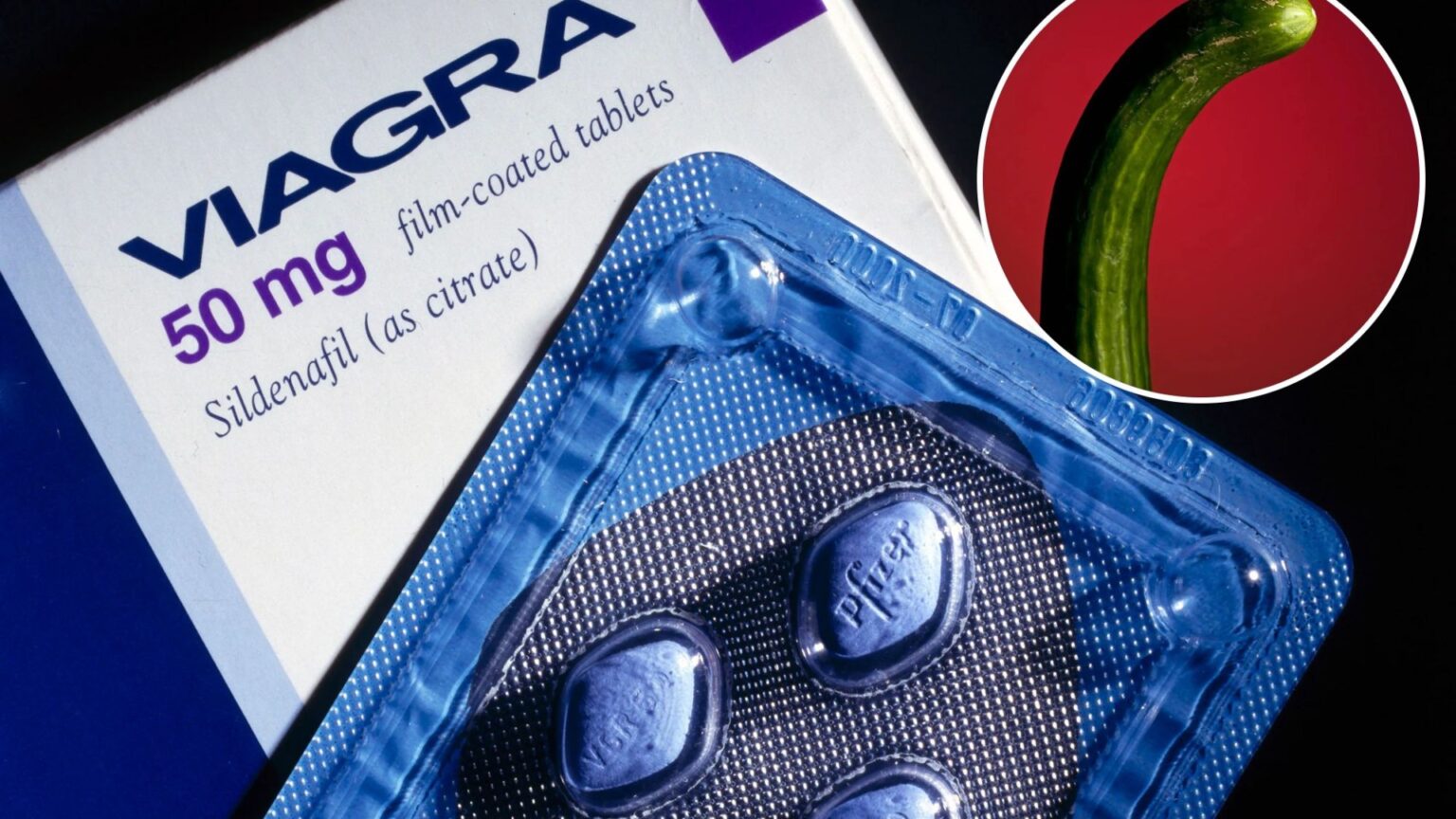


TAKING Viagra could prevent men from developing a disease that slowly changes the appearance of their penis.
Peyronie’s disease is a condition that causes your penis to curve when it’s erect, but new research by Anglia Ruskin University and University College London Hospital suggests that taking Viagra with another drug can slow or even stop disease progression when taken early.
Sign up for the Health newsletter
Thank you!
Combining an erectile dysfunction medicine like Viagra (sildenafil) or Cialis (tadalafil) with selective oestrogen receptor modulators (SERMs) – hormone therapies that manage how oestrogen works in the body – could provide the “first effective treatment for early-stage Peyronie’s disease”, the study says.
Peyronie’s disease is caused by the development of fibrotic scar tissue within the penis, leading to pain, curvature, and sexual dysfunction.
In many cases, the disease can also lead to significant psychological distress.
Published today in the Journal of Sexual Medicine, the study found that 43 per cent of patients on the drug combination experienced an improvement in penile curvature.
BOOZE TRUTH
Alcohol linked to 60 diseases & injuries – but is little still ‘good for you’?
WHOLE STORY
‘Happy eating’ derails weight loss just as much as binging – 4 ways to stop
This was almost three times higher than in the standard-care group, researchers said.
Peyronie’s disease affects an estimated 10 per cent of men during their lifetime.
According to the NHS, it mainly affects men over 40, but younger men can get the disease too.
Symptoms include painful erections that can make having sex difficult and problems getting or keeping an erection.
The disease can be treated with medication, a procedure that uses sound waves or surgery to straighten the penis.
The study, carried out by Professor David Ralph of University College London Hospital (UCLH), evaluated outcomes in 133 men diagnosed with acute Peyronie’s disease who were treated with the drug combination for three months.
Their results were then compared with a smaller group of patients receiving standard care, which included giving vitamin E or no treatment at all.
At the start of treatment, 65 per cent of patients in the combination group reported pain during erections.
But after three months, that figure had fallen to just 1.5 per cent. By comparison, pain prevalence in the standard‑care group fell from 50 per cent to 27 per cent.
This new research builds on earlier work led by Professor Selim Cellek at Anglia Ruskin University’s Fibrosis Research Group.
His team screened 1,953 FDA-approved drugs over the course of several years to identify compounds capable of blocking the transformation of fibroblasts into myofibroblasts, the key cells responsible for fibrosis.
Erectile dysfunction drugs like Viagra and Cialis – which are referred to as PDE5 inhibitors – and SERMs were found to be particularly effective, and when used together demonstrated an effect greater than either drug alone.
There are currently no approved oral therapies proven to prevent early progression of Peyronie’s disease.
This forces patients in acute phases of the condition to wait until it stabilises before they can be offered treatments including injections or surgery.
Taking viagra in combination with selective oestrogen receptor modulators could slow down progession of Peyronie’s disease Credit: Getty
What is Peyronie’s disease?
Peyronie’s disease is a condition that causes your penis to curve when it’s erect. It can be painful but there are treatments to ease the symptoms and stop it getting worse.
Peyronie’s disease mainly affects men over 40, but younger men can also get it.
Symptoms of the disease include:
Swelling that later causes a hard lump to develop on the shaft of your penis and stops it stretching during erections
A curve in your penis when it’s erect (if the hard area is on the top of your penis it will curve upwards, if it’s on the bottom it will curve downwards)
Painful erections that can make having sex difficult
Problems getting or keeping an erection (erectile dysfunction)
Other changes to your penis – for example, you may have a hard area on the top, bottom and side of your penis, shortening it and making it narrower in the middle
If you have Peyronie’s disease, your skin may also be thicker and less flexible in other parts of your body, such as in your hands and feet.
Treatments for Peyronie’s disease include:
Medicines to slow down the growth of the hard area on your penis or to treat erectile dysfunction
A procedure that uses sound waves to break down the hard area on your penis
Surgery to straighten your penis (it’s not usually possible to straighten it to how it was before it curved)
The cause of Peyronie’s disease is not always known.
It can sometimes happen if you injure your penis.
You’re also more likely to get Peyronie’s disease if you:
Have diabetes
Have high blood pressure
Have high cholesterol
Have coronary heart disease
Have thickened blood vessels in your heart (arteriosclerosis)
Are taking certain medicines, such as beta blockers or antidepressants
Source: NHS
Professor Cellek said the study “shows how repurposing well‑known medicines can accelerate progress in areas of unmet clinical need“.
“Because both PDE5 inhibitors and SERMs are already widely used in clinical practice and have established safety profiles, the approach could be readily adoptable if confirmed in larger studies.”
He added that these results suggest early intervention targeting fibrosis could change how Peyronie’s disease is treated.
Professor Cellek continued: “Repurposing existing drugs may allow us to move from managing symptoms to modifying the disease itself.”
Professor Ralph said: “This paper confirms the basic science research with regards to halting the progression of Peyronie’s disease.”
It shows that when SEMRs and a PDE5 inhibitor are combined, “there is statistically less progression of the disease and improvement in curvature” compared to the control group, he said.
Professor Ralph added: “Hopefully now a prospective clinical trial can be initiated.”