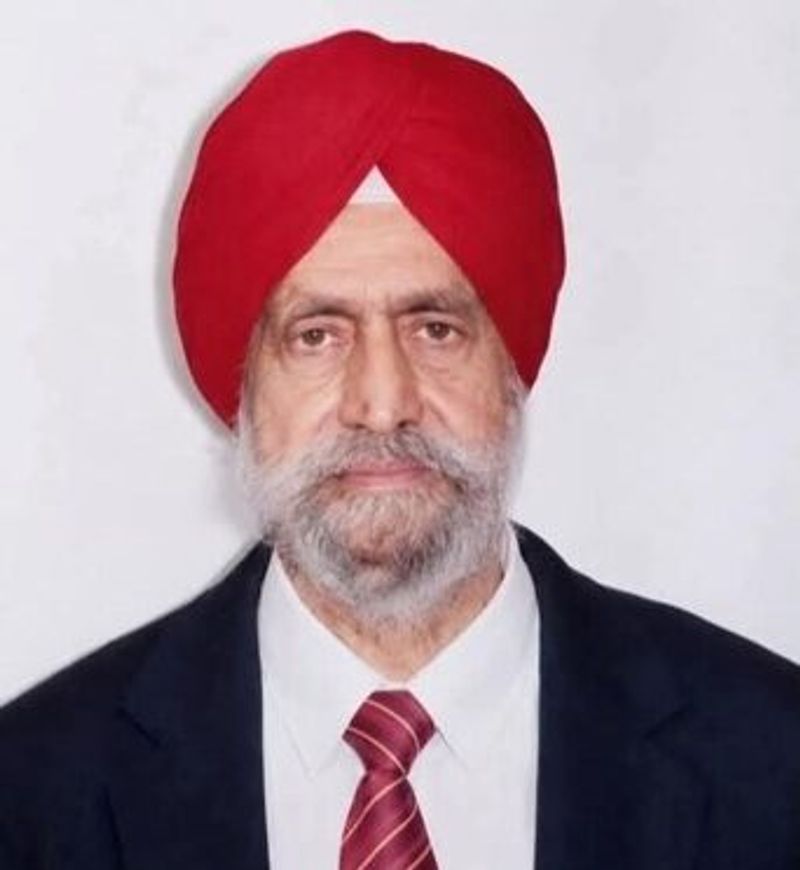

What he always called himself was perhaps the most accurate description of his life’s work: “Ghadari Babian da Munshi” — the clerk of the old Ghadarites. There was humility in the phrase, but also an entire philosophy. He never claimed to be a historian in the institutional sense, nor a public intellectual seeking recognition. He saw himself simply as a custodian of memory, preserving papers, photographs, testimonies, proceedings, and scattered fragments of a revolutionary past often neglected in Independent India.For more than three decades, I worked with him, learned from him, and slowly understood what a life of commitment without noise or self-advertisement truly meant. With his passing, I have lost not merely a friend, mentor, and guide, but a living archive of an entire tradition of revolutionary remembrance.Malwinder Jit Singh Waraich belonged to that rare generation that still had direct access to the fading world of the Ghadarites and revolutionaries of the early 20th century. Beginning in the 1960s, while teaching at Guru Nanak Engineering College, Ludhiana, he travelled through villages on his bicycle, meeting old Ghadarites, recording memories, collecting photographs, preserving letters, and documenting whatever survived in trunks, cupboards, and fading family recollections.Malwinder Jit Singh Waraich lived for 97 years, fully and meaningfully. Even in death, he remained true to his ideals. His body was donated to PGI.He possessed qualities indispensable for archival work but rarely celebrated publicly: patience, discipline, orderliness, and trustworthiness. He catalogued and indexed material with astonishing care. Yet what distinguished him equally was his generosity. He never treated documents as private possessions or instruments of prestige. Anyone who approached him sincerely for research found his doors open.His association with the family of Bhagat Singh and with figures connected to the revolutionary movement deepened over time. Through the martyr’s nephew Jagmohan Singh and others, he came into close contact with the surviving memory-world of the Lahore Conspiracy Case generation. He remained connected with revolutionaries and family members, including Shiv Verma and Kishori Lal.My association with him began around 2002, when he, along with Prof Kuldeep Puri, came to my office carrying a manuscript based on papers collected by Giani Kesar Singh of Canada. He was uncertain whether the material could become a meaningful book. The manuscript eventually became a volume on the trial of Madan Lal Dhingra, published in 2003, but more importantly, it began a collaboration that profoundly shaped my own intellectual life.Before meeting him, my interest in revolutionary history was largely that of an enthusiastic reader and collector. With him, it became disciplined work, almost a mission. He possessed the material, the instinct for preservation, and the patience to pursue obscure leads for years. I perhaps brought editorial organisation, and a different kind of analytical restlessness.Some of our most significant work emerged from this collaboration: the publication of the Lahore Conspiracy Case Tribunal judgment; volumes on the Ghadar Movement, the Babbar Akalis, and the Komagata Maru episode; records of proscribed literature; memoirs and biographies of revolutionaries; and perhaps most remarkably, the recovery and publication of proceedings of the Bhagat Singh Tribunal carrying Sukhdev’s handwritten remarks.Waraich’s role in obtaining documents from Pakistan relating to confessions, exhibits, and proceedings unavailable in India was invaluable.Among his important works was the biography ‘Bhagat Singh: The Eternal Rebel’. Waraich approached Bhagat Singh through letters, proceedings, testimonies, and ideological evolution, recovering him not as a slogan or mythic icon, but as a disciplined political thinker.Equally significant was the multi-volume documentary project on Bhagat Singh and the revolutionary movement that he helped initiate and nurture. The project reflected his lifelong belief that revolutionary history must rest on documentary foundations rather than mythology.What made him unforgettable personally was the combination of firmness and simplicity. Once he arrived at a conclusion, he would not easily move away from it. Many times I argued with him, bringing newer evidence or alternate interpretations and insisting that historical understanding must remain open to revision. He listened patiently, but often remained unconvinced. Then, in his characteristic manner, he would quietly say: “Stop somewhere and move further on to something new. Otherwise, you will remain stuck there forever.” Behind that advice lay decades of experience with archives, ambiguities, and the endless incompleteness of historical reconstruction.Outside scholarship and archives, he lived with remarkable simplicity. He was disciplined in his habits, modest in lifestyle, and astonishingly dependable.Yet, like many who do foundational work, he remained largely outside formal recognition.He lived for 97 years, fully and meaningfully. Even in death, he remained true to his ideals. His body was donated to PGI. It was entirely in character: practical, purposeful, and free from ritual display.— The writer is a publisher and author