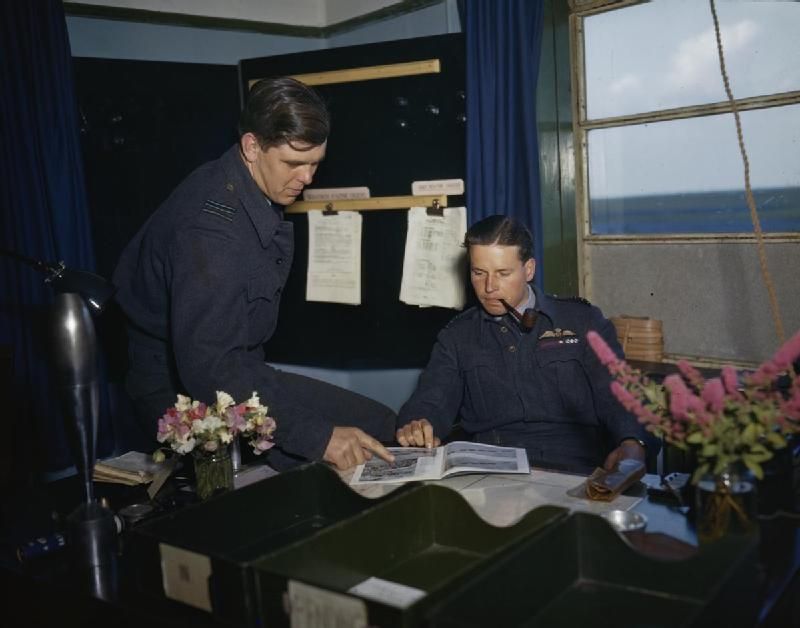

Exactly 83 years back, on the night of May 16-17, 1943, a legendary exploit of World War II (1939–1945) took place. This was the night of the ‘Dam Busters Raid’ when two critical dams of Germany, the Mohne and Eder, were bombed and breached. Nazi Germany’s powerful military machine was fed by propaganda and racial arrogance — it epitomised what the historian and philosopher Hannah Arendt called “the banality of evil”.The Nazi political system was backed by a formidable industrial base. In turn, this industrial base relied substantially on the water, electric power and transportation provided by the hydro dams that fed Germany’s industrial heartland in the Ruhr valley.Codenamed ‘Upkeep’, in a technique similar to that of skimming a stone over water (something that most of us have tried as children), in 1942, a bomb had been developed that could skip over protective nets and once it hit the walls of a dam, it would sink and detonate like a depth charge, causing maximum damage. In early 1943, the 617 Squadron of Britain’s Royal Air Force (RAF) had been formed with the specific purpose of destroying these dams. The squadron was led by its Commanding Officer, Guy Gibson — who became something of a legend.By the age of 26, Gibson had completed 170 airborne operations. He was awarded Britain’s highest military honour, the Victoria Cross, and in his time was one of the most highly decorated RAF officers. Gibson had joined the RAF in 1936, and by the age of 23, he held the rank of Wing Commander.That night, Gibson first did a dummy run over the Mohne Dam and stated that he ‘liked the look of it’. After a series of failed sorties, the dam was finally breached. Led by Gibson, the aircraft that still had their bombs flew towards the Edersee and just short of 2 am, the Eder Dam was also breached.Years back, a friend who retired as one of India’s seniormost Army officers somewhat rhetorically asked me: “Do you know what is the first thing taught to a soldier?” As a somewhat ignorant civilian, I bumbled a bit, till he broke in and answered his own question: “It is — identify the target and destroy it.”Published in 1951, Paul Brickhill’s bestselling book, which went through several reprints, ‘The Dam Busters’, carried a Foreword by ‘Marshal of the RAF’ Lord Tedder. He wrote: “…scientist, commander and operator working together as a close-knit team… it shows efficiency interpreted in the short term as ‘accuracy’, and in the long term as ‘maximum effect with minimum effort’.”The sources of this book may have been somewhat limited as at that time, many documents and details were not available or were still classified. While the impact these raids had on Germany’s war machine was meagre, the psychological impact was enormous and was a major morale booster for the Allied Forces.So why this story? And why here? There is a small village in Cornwall named Talland. Perhaps, derived from this hamlet, Talland is the headquarters of Himachal’s Forest Department in Shimla — and this is where this extraordinary story began.Born at Talland, Shimla, on August 12, 1918, Guy Penrose Gibson was the son of Alexander James and Norah Gibson. His father was an officer of the Imperial Indian Forestry Service who was posted in Shimla and who, in 1922, became the Conservator of Forests for the Shimla Hill States. The parents separated when Guy was barely six and custody of Guy and his two siblings was given to his mother, who moved back to Britain.Unfortunately, on their return to Britain, Gibson’s mother began drinking heavily and subsequently, became an alcoholic. Almost needless to add, the childhood of the young Guy and his elder brother, Alexander, and sister, Joan, was unstable. The mother’s occasional violence towards the children also reared its soul-destroying head. Relatives pitched in with money and moral support, while their school also helped where it could. Almost nothing is known of the father after the separation.Guy Gibson was a mediocre student and from an early age, wanted to fly. After initially failing to join the short service commission on medical grounds — it is believed that the reason given was that his legs were too short — he was later accepted. Apart from the famous ‘Dam Busters Raid’, he also conducted daring single-handed attacks on the formidable German battleship, Tirpitz. Gibson was killed during a sortie in 1944.While it was disbanded periodically, the 617 Squadron is still part of the RAF. Its insignia in a roundel shows a dam being fractured by bolts of lightning and marks the moment when the dams were hit in 1943. The squadron’s motto is in French: ‘Apres moi, le deluge’, and translates as: ‘After me, the flood.’— The writer is an author based in Shimla