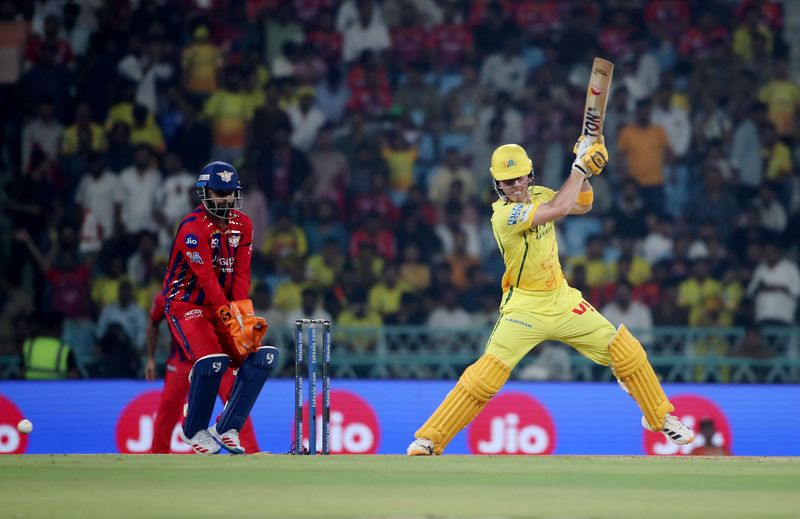

An image imprinted in my mind goes back many years: a young crowd at Delhi’s Jawaharlal Nehru stadium suddenly coming alive, their raw collective roar rising like a volcanic eruption. This dramatic surge of energy arrived the moment “Triple H”, that near-mythic figure of the World Wrestling Entertainment (WWE), made his entrance amid flashing lights and the piercing throb of music. The guttural outburst, ecstatic in its intensity, felt like a wave of supporters worshipping a cult figure.In my long years of writing on cricket, I had witnessed nothing like this in stadiums worldwide, where thousands of boisterous fans in comparison appeared staid and sombre while appreciating the intricate skills of Test cricket. One-day cricket had started to loosen the crowd, making it more demonstrative in its appreciation of big hitting but the real mutation came with the arrival of the Indian Premier League (IPL).I was there at Bangalore’s M Chinnaswamy stadium on that April night of 2008 when cricket leapt into a world of pure raw entertainment, compressing time and space to jolt the refined senses. When the New Zealander Brendon McCullum, shimmering in golden helmet and pads, exploded in a flurry and fury of sixes and fours, everyone at the ground was left gasping for breath. It was like a hammer blow to Test cricket’s slow burn that unfolds through subtle shifts and quiet turns before rising to a pulsating climax.A mix of curious scribes and experts from almost every Test-playing nation seemed unsure of the import of what they were witnessing. The ear-splitting music, the scantly-clad cheer leaders, the DJ-orchestrated spectacle and the sweat-soaked frenzied crowd transported me back in time. The images that unfolded felt like an even more exaggerated version of the scripted WWE bouts I had once watched, when the “Triple H” had stirred those primeval emotions in the crowd.The world of cricket has travelled a fair distance from the mind-boggling, jaw-dropping innovations that marked the inaugural match of the IPL. The tournament is now the centrepiece of world cricket, with its popularity, reach and money-spread being compared to the best sporting leagues across the world. It is a theatre of the burlesque, a structured spectacle; loud, exaggerated and unapologetically dramatic, designed to ignite raw energy and keep us relentlessly entertained.Strange as it may sound, it is this very breathless parade of sixes and fours, especially in this year’s tournament, that seems to be creating a quiet discord among fans. Reports talk of dipping TRP ratings that are finding an echo on social media. In the gym where I go to reclaim my lost muscles, the young, restless dreamers — spending endless hours sculpting perfectly chiselled bodies — are surprisingly moving away from the IPL, particularly this season.One may not be entirely wrong in saying that modern society is perpetually chasing novelty, its attention span shortening by the second. Its unending appetite for a spectacle keeps it trapped in a low, simmering anxiety. And when spectacle turns repetitive, even the beauty of a flowing bat striking a leather ball with unvarying force and perfect timing can over time numb the senses into boredom.Slowness and speed are the opposing poles that distinguish Test cricket from its T20 incarnation. The choice of what to watch and what to discard is now merely a button press away. The magical world, controlled by a remote in our hands, has spoiled us with endless choices. Somewhere along the way, we seem to have forgotten the value of a pause, the pause that allows us to recoup, reflect and truly appreciate the skill involved in crafting a memorable finish.This brings to mind the remarkable link the irreverent yet philosophical novelist Milan Kundera drew between memory, slowness and speed. What he wrote in a pre-social media era seems uncannily relevant today. He writes: “There is a secret bond between slowness and memory, between speed and forgetting.”Even more insightful is the way Kundera explains this bond: “The degree of slowness is directly proportional to the intensity of memory; the degree of speed is directly proportional to the intensity of forgetting.”The IPL is a world created for a supersonic age catering to multiple stakeholders and drawing its sustenance from its ability to appeal equally to fans and sponsors. It is a perfect alliance between consumer frenzy and corporate sponsorship. Each feeds the other’s appetite and the survival of one without the other now seems almost impossible.It was the speed of the format that drew young spectators in droves, many of them impatient with the long-drawn romance between bat and ball that defined Test cricket. The T20 contest is inherently designed to favour the batsmen, with a range of fielding and bowling restrictions built into its laws to encourage uninhibited hitting. In this theatre of perpetual assault, the bowler often appears a lonely, almost tragic, figure, condemned to exist largely to fulfil the fantasies of the batsmen.Ironically, in its unabashed pursuit of speed and instant gratification, has the IPL sacrificed the slow, measured build-up that gives sport its depth and replaced it instead with a form of “disposable excitement” that briefly seduces before fading from memory?— The writer is the author of ‘Not Quite Cricket’ and ‘Not Just Cricket’