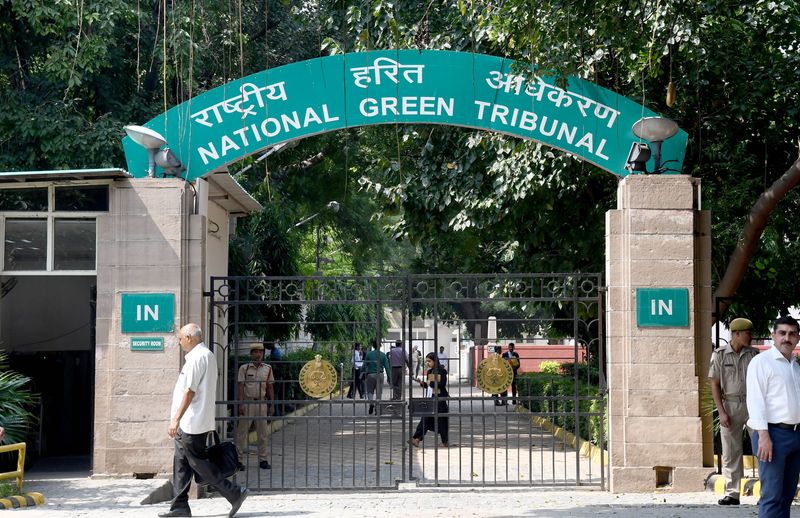

The National Green Tribunal (NGT) on Monday directed the deputy commissioners of Mohali, Ropar, Nawanshahr, Gurdaspur and Pathankot to place on record the documents pertaining to demarcation of land delisted from the provisions of the Punjab Land Preservation Act (PLPA).The tribunal passed the order on a petition challenging the Low Impact Green Habitats (LIGH) policy notified by the Department of Housing and Urban Development for the delisted PLPA areas.In the petition, Jaskirat Singh, a representative of Public Action Committee, drew the attention of the tribunal towards a meeting held on April 26, 2010, under the chairmanship of the Punjab Chief Secretary, in which it was decided that demarcation of delisted areas would be carried out using National Compensatory Afforestation Fund Management and Planning Authority (CAMPA) funds. Over 15 years down the line, no such demarcation was done, stated the petitioner.In the absence of demarcation, hundreds of illegal buildings and permanent structures reportedly mushroomed in the ecologically sensitive Shivalik foothills and Kandi belt regions, violating the directions of the Supreme Court of India and the Punjab Eco-Tourism Policy, 2018, which does not permit permanent constructions in delisted zones.After hearing the petition, the tribunal directed the DCs to submit a detailed action taken report before the next date of hearing (July 21). The report has to contain particulars of existing constructions, alleged violations, permissions granted, if any, and steps taken to prevent unauthorised development in the delisted PLPA land.The LIGH policy, notified on November 20 last year, seeks to provide a framework for the regularisation of existing structures and grant of permissions for low-impact constructions in these areas. The petitioner has sought a stay on its operation and implementation.The petitioner pointed out that the LIGH policy covered the five districts that account for nearly 68% of Punjab’s total forest cover even though the state had only 3.67% forest cover against the national mandate of 33%. Large parts of these areas were “delisted” following a Supreme Court order in 2005 and subsequent approvals by the Ministry of Environment, Forest and Climate Change in 2006 and 2009, but only for bona fide agriculture and livelihood purposes, with an explicit bar on commercial activity.