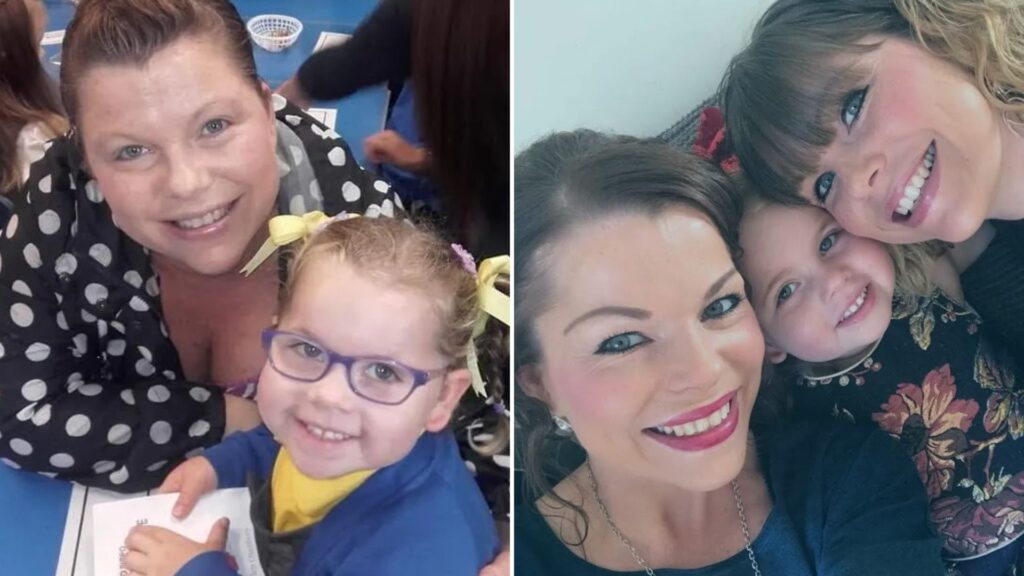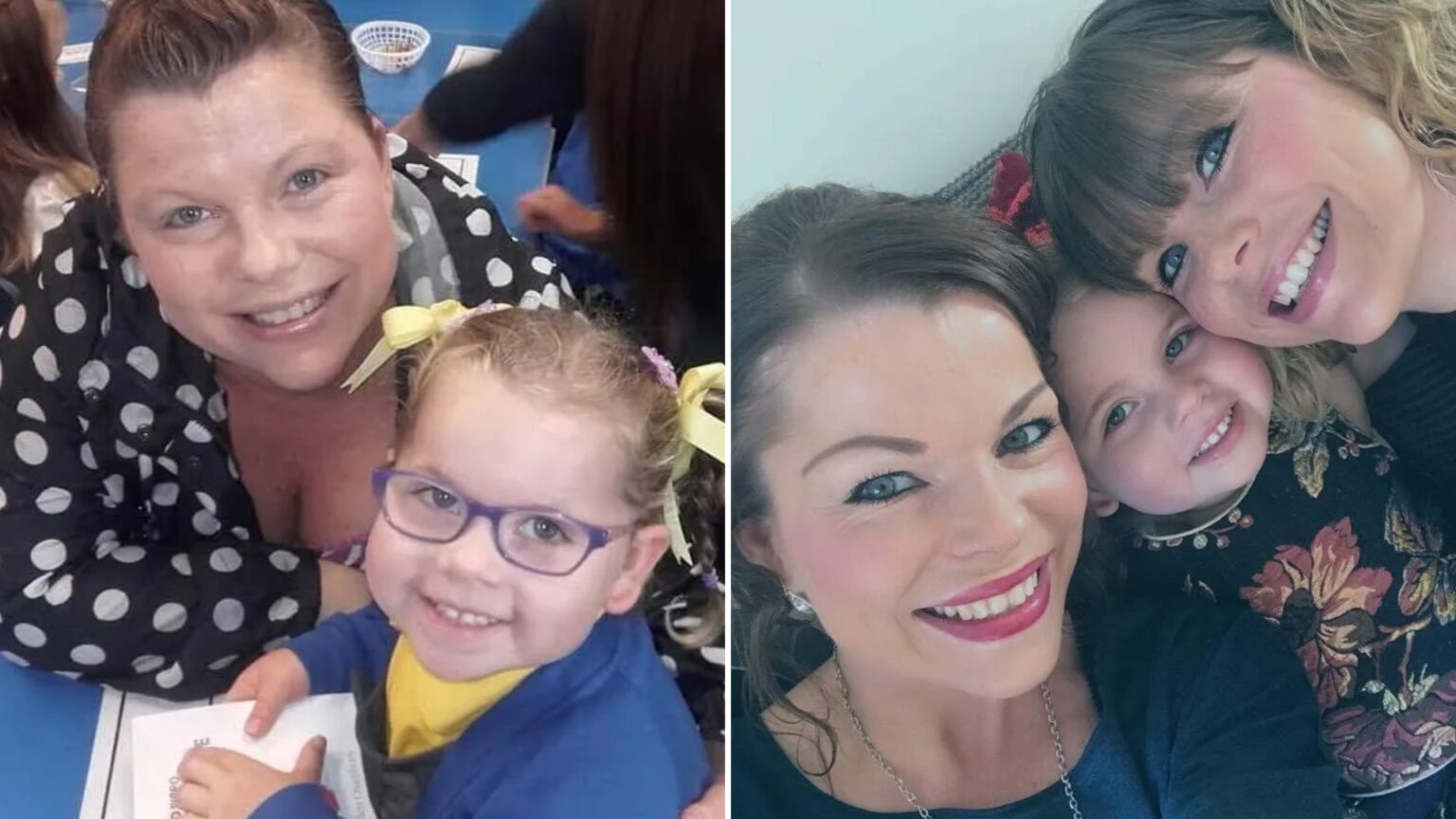


A MUM who went up four dress sizes in six months and was suffering from back pain was told her symptoms were “normal” – it was only after she died from a seizure that doctors discovered a deadly brain tumour.
Jemma Williamson had complained of sudden weight gain, headaches and back pain, but doctors dismissed her symptoms and prescribed her painkillers.
Sign up for the Health newsletter
Thank you!
Mum-of-one Jemma, pictured here with her identical twin sister Leanne, went up four dress sizes in six months but doctors dismissed her symptoms Credit: SWNS
Jemma, pictured here with her daughter Rosealeen a few months before she died, actually had a deadly brain tumour Credit: SWNS
Her identical twin sister, Leanne Wood, said: “Jemma was worried and so were all of us.
“I even went to the doctors with her to try and push for answers, but it felt like we were hitting a brick wall.
“Looking back now, I think she felt so unwell with the headaches and back pain that she had almost accepted the weight gain.”
Jemma sadly passed away from a fatal seizure at 33-years-old in 2019 and it was only after a post-mortem – and a five-month wait for results – that her family discovered she had been living with a brain tumour.
MENU-PAUSE
The diet proven to prevent menopause weight gain revealed – 4 foods to avoid
BREAST AWARE
How to check breasts for 8 signs of cancer, after Vanessa Trump’s diagnosis
Jemma had been suffering from back pain, weight gain and headaches and sadly died from a seizure, which was later discovered to have been caused by a brain tumour Credit: SWNS
Doctors discovered Jemma had an aggressive and fast growing meningioma Credit: SWNS
The aggressive, undiagnosed meningioma was fast growing and had wrapped around Jemma’s spinal cord – doctors say this is what caused the seizure.
Meningiomas are a type of brain tumour that are mostly non-cancerous with symptoms including seizures, headaches, changes in eyesight and hearing loss.
Around 27 out of every 100 brain tumours diagnosed in England between 1995 and 2017 were meningiomas.
It is the most common type of benign brain tumour diagnosed in the UK.
The mum to daughter, Rosealeen – who was five when Jemma passed away – gained three stone and went from a size 12 to a size 20 in six months.
Leanne, form Bathgate, Scotland, said: “I think she was 10.5 stone and went up to 14 stone.
“At first the weight gain was quite gradual, but then all of a sudden Jemma seemed to gain a lot of weight in a short space of time.
“It was out of character for her because after having Rosealeen she had been so active and had even trained for a half marathon to lose weight.”
Jemma’s sister added: “I still ask myself if there was more we could have done and whether Jemma might still be here. I know I can’t think like that, but it’s still incredibly hard to accept sometimes.”
Meningiomas usually grow slowly, but sadly this was not the case for the mum-of-one.
The cause of this type of brain tumour remains unclear, but Cancer Research UK say they are more common in women and the risk increases with age.
Leanne, a nurse, said the family was left in shock when Jemma passed away.
She said: “In February 2019, Jemma’s boyfriend had gone to her house one evening because they had plans together, but he couldn’t get inside.
“He collected spare keys from my dad and when they entered the house, they found Jemma collapsed on the floor.
Jemma went from a size 12 to a size 20 in the space of just six months Credit: SWNS
What is a meningioma?
Meningiomas are a type of brain tumour that starts in the layers of tissue that cover the brain and spinal cord.
Most meningiomas are not cancerous (benign).
Symptoms of meningioma depend on where the tumour is in the brain. Some meningiomas do not cause any symptoms. They might be picked up when you have a brain scan for something else.
If you do have symptoms, they may include:
Fits (seizures)
Weakness in your arms or legs
Changes in your eyesight
Hearing loss
Loss of smell
Headaches
There are 3 grades of meningiomas:
Grade 1 – these are slow growing tumours and are the most common type
Grade 2 – these can grow more quickly than grade 1. They are sometimes called atypical meningiomas
Grade 3 – these are faster growing tumours and are quite rare
Source: Cancer Research UK
“I still remember getting the call that night. I had spoken to Jemma at 2pm that afternoon and by 8pm I found out she was gone.”
Leanne continued: “The shock and confusion were unbearable because at that point we had absolutely no idea what had happened.
“Jemma and I spoke almost every single day. We would meet for coffees, go for runs together and tell each other everything.
“Losing that connection overnight was devastating.”
She said the first few months after Jemma’s death “felt like a nightmare” with the family “just functioning on autopilot”.
“Having to tell Rosealeen, who was only five at the time, that her mum had died was one of the hardest things our family has ever had to do,” Leanne said.
The sisters were inseparable growing up and remained very close as adults. Both studied nursing at Dundee University and lived in Dundee for several years before Jemma moved back to Glenrothes to be closer to family after the birth of her daughter.
Leanne continued: “It took me five years to truly accept that Jemma was never coming back. We will never get over losing her, but we’ve learned how to live with the grief together as a family.
“We still speak about Jemma all the time and Rosealeen has grown into a little mini-Jemma – sassy, witty and never stops talking.”
Leanne turned to running to try and help with her grief after Jemma’s death.
She said: “Running became my outlet and gave me focus when I felt completely lost.
“As our 40th birthdays approached in 2025, I wanted to do something meaningful for Jemma. I decided to take on the Edinburgh Marathon for Brain Tumour Research because I knew it was a charity she would have supported herself.
Leanne, pictured here, ran the Edinburgh Marathon in 2025 in memory of her sister Credit: SWNS
The twin sisters, pictured celebrating their 23rd birthday here, were inseparable Credit: SWNS
“I trained for five months and was terrified on race day that I would let Jemma down. But crossing that finish line was emotional because I truly felt she was with me every step of the way.”
She is now taking part in the Edinburgh Marathon again this year to raise money to support pioneering research projects such as those taking place at the University of Plymouth Brain Tumour Research Centre of Excellence.
Leanne said: “I run for Jemma every single time. In her honour and in her name.
“If raising awareness and funding research can help even one family avoid the pain we went through, then it’s worth everything.
“I hope that one day there will be quicker diagnoses, better treatments and more lives saved.”
Ashley McWilliams, community development manager at Brain Tumour Research, said: “Stories like Jemma’s demonstrate how devastating brain tumours can be and why greater investment in research is urgently needed for patients facing this disease.
“We urge the public to support our cause through fundraising, campaigning and helping raise awareness of this devastating disease.”