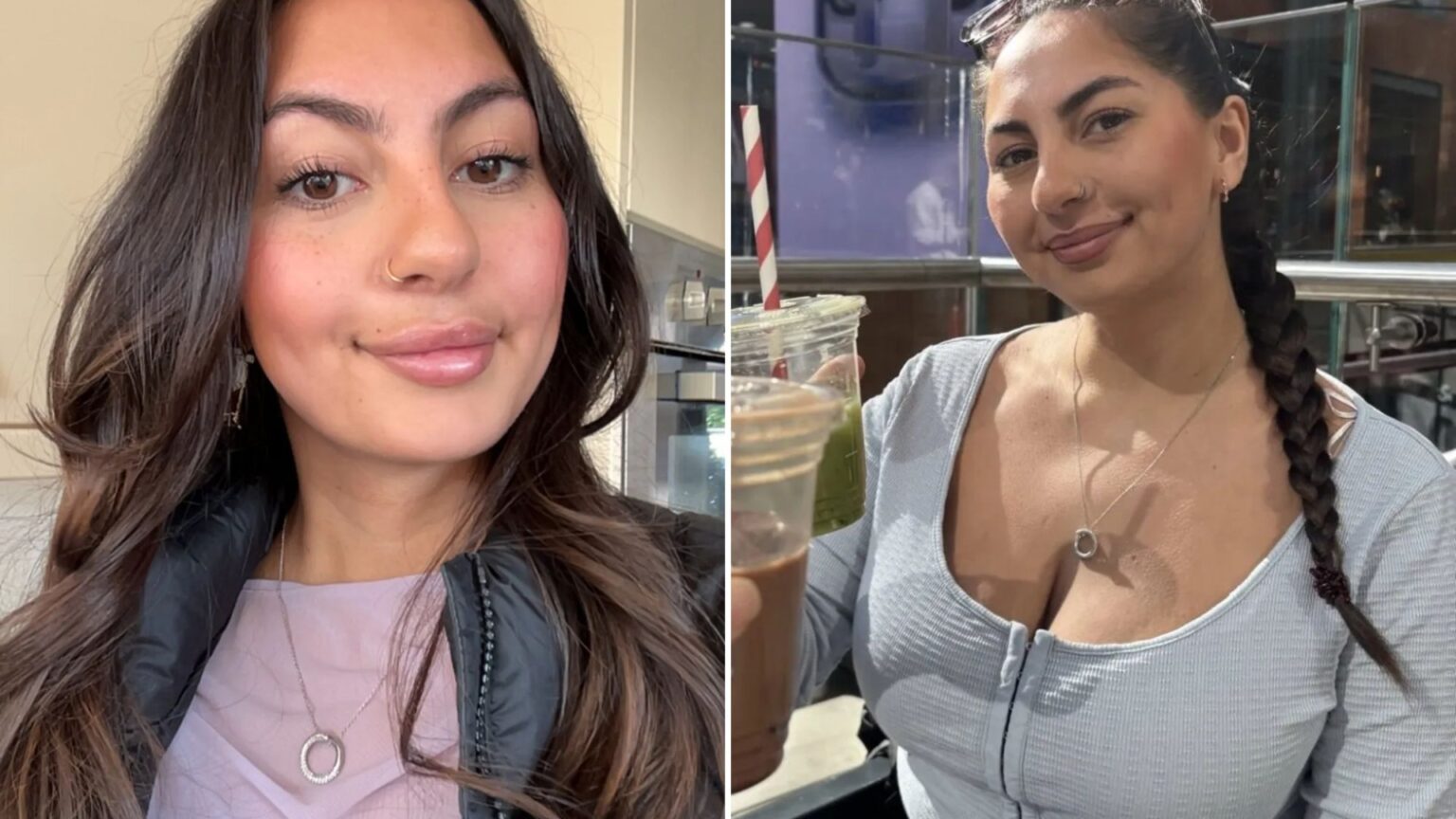


THIS woman took living above your means to a whole other level when she revealed she thought her overdraft was simply ‘free money’.
It all started with a small£100 overdraft at 18, but soon spiralled into nearly £20,000 worth of debt leaving her terrified every time a letter arrived through the door.
Sign up for the Fabulous newsletter
Thank you!
A woman has revealed how a £100 overdraft at 18 spiralled into nearly £20,000 worth of debt Credit: Jam Press
Chloe is now down to around £5,000 of debt after entering a debt management plan and dramatically changing her spending habit Credit: Jam Press
Chloe Chaldecot is now down to around £5,000 of debt after entering a debt management plan and dramatically changing her spending habits.
But the 25-year-old, who earns £32,075 a year before bonuses and overtime, admits she spent years secretly living beyond her means while pretending everything was fine to friends, family and social media followers.
Chloe says she became trapped in a cycle of overdrafts, credit cards, loans and buy now pay later schemes.
“My overdraft genuinely felt like free money,” Chloe, an admin and customer service worker, from Bristol, told creatorzine.com.
Tough times
Loose Women star applied to work in Starbucks after racking up huge debts
SUN SAVERS
Five savvy tips to save space and make money with a clear out of your wardrobe
“I remember thinking ‘I’ll just pay it back next month’ but instead I got used to living in my overdraft and increasing it whenever I could.”
Chloe said in hindsight she didn’t know anything about money management, budgeting, interest, or even the long-term impact of debt.
But she was keen to keep up appearances so didn’t try and solve her money woes until she was in above her head.
“When I was 20, I moved into a flat that realistically cost more than I could comfortably afford and I was trying to maintain a lifestyle that didn’t match my income.
“I spent a lot on shopping, eating out, gifts for other people, holidays and socialising.
“I was definitely a people pleaser and would spend money I didn’t have because I didn’t want to miss out or seem like I was struggling.
“Social media also played a part because everywhere you look online people seem to be living perfect lives, travelling constantly and buying new things and living what looks like a perfect lifestyle.
“I felt a lot of pressure to keep up with everyone around me.
“It becomes very normalised to live beyond your means because online it often feels like everyone else is doing the same.”
Things worsened significantly in April 2024 when she took out a £10,300 debt consolidation loan.
Chloe said: “Although part of it helped clear debts, the amount was more than I actually needed and because I hadn’t addressed my spending habits properly at the time, I ended up falling back into debt again afterwards.
“I used some of the remaining money on things like holidays, furniture and lifestyle spending.
“Looking back now I really regret not dealing with the emotional and behavioural side of spending before taking out more borrowing.”
At her lowest point, Chloe said she was “scraping pennies together” while pretending financially everything was fine.
“I was just trying to pretend I still had money and that everything was okay.
“I became very good at masking how bad things actually were, even when financially I was really struggling behind the scenes.”
She recalled the “embarrassment” of having her bank card decline and feeling “mortified” in front of other people.
“Those moments stay with you because it makes the situation feel so real and you feel like everyone around you is judging you, even if they probably aren’t.
“At that point I was constantly anxious about money and living month to month just trying to survive.
“Looking back now, I think I was mentally exhausted from carrying the stress of it all on my own for so long.”
Chloe owns a home with her mum, who paid the deposit, and the mortgage was approved based on their combined incomes.
She added that debt had a severe impact on her mental health and sleep.
Chloe said: “I was feeling completely trapped and stuck, like I was never going to get out of debt.
“It felt like no matter how much I worked or tried to fix things, the balances never really went down and I was constantly relying on credit to survive month to month.”
Chloe eventually sought help in March 2025 after a close friend encouraged her to contact StepChange, the debt charity which helped place her on a debt management plan.
She said: “When I entered my debt management plan, a different type of stress kicked in.
“Every time a letter came through the door I’d panic thinking I had breached something or done something wrong.
“I was terrified of things escalating, like bailiffs turning up or legal action happening, even if a lot of those fears were worst case scenarios in my head.
“The anxiety around money becomes constant because you’re always waiting for the next email, letter or payment to come out.
“Even seeing a notification from your bank could ruin my mood for the entire day.”
To tackle the debt, she drastically cut back her spending, cancelled unused subscriptions, reduced takeaways and stopped overspending socially.
She now shops at Lidl, meal preps more regularly and uses apps such as Too Good To Go and First Table to save money.
Chloe said: “ I’d spent so long trying to ignore the problem and convince myself I could sort it out alone that I didn’t realise how overwhelmed I had become.
“Getting my debt management plan was honestly one of the best decisions I’ve ever made and I will always be grateful to that friend for giving me the push I needed to finally face it properly.
“I check my bank accounts constantly and make sure I know exactly how much I realistically have available to spend.”
“One of the hardest things for me has been cutting back on gifts because I’m naturally a gift giver and I love treating people, but I’ve had to learn that I don’t need to spend loads of money to show people I care about them.
“Honestly, I’ve just had to stop doing a lot of unnecessary spending, but at the same time I still allow myself some nice things every now and then because if you become too restrictive it can backfire and lead to overspending again.
“I think it’s important to still enjoy your life while getting out of debt otherwise it becomes impossible to sustain long term.”
Chloe currently pays just under £700 a month towards her debts.
They include £1,572 on one credit card, £1,174 on another credit card, £1,500 on a Lloyds loan, an £86.61 overdraft and £500 owed to her mum after clearing a another overdraft.
Despite the progress, Chloe says spending addiction remains a daily battle.
“I’ve debated getting a credit card again in the future to help rebuild my credit score, but honestly that also scares me because I know my relationship with spending hasn’t always been healthy.
“I worry that having access to credit again too soon could tip me back into old habits, so it’s not something I want to do unless I fully trust myself and know I have the restraint and discipline in place first.”
One of her biggest regrets, she explained, was how she used spending as a coping mechanism.
This meant if she was ever stressed, upset, bored or even just wanting a dopamine boost, she would shop, book things in a bid to make herself feel better in the moment.
She noted she also regrets ignoring the issue for so long and admitted she should’ve asked for help sooner.
Chloe hopes to become completely debt free by August this year, the first time since turning 18.
Not only that, but she has hopes of properly paying into a pension, as well as having money in her ISA.
“It was only after starting my debt management plan and becoming more open about things that I realised how untrue that actually was.
“There is such a huge stigma around debt and people often suffer in silence because they’re embarrassed or scared of being judged.
“I’d tell other people struggling with debt to be honest about it and ask for help instead of suffering in silence.
“The second I opened up and admitted how bad things had become, everything started to improve.
“I’d also really encourage people to look at StepChange because they provide free advice and support without judgement.
“Every month, seeing the numbers go down gives me such a sense of achievement because I know how hard I’ve worked to get there.”
And to other young people in the same boat, she urged them to avoid relying on easy credit and take the time to educate themselves on money.
“I also think people need to remember that you do not need to keep up with every trend you see online,” she added.
“Social media creates so much pressure to constantly buy new clothes, travel, eat out and look a certain way, but most of the time nobody actually cares as much as you think they do.
“Trying to keep up appearances financially is just not worth the stress and anxiety that debt can cause later on.”