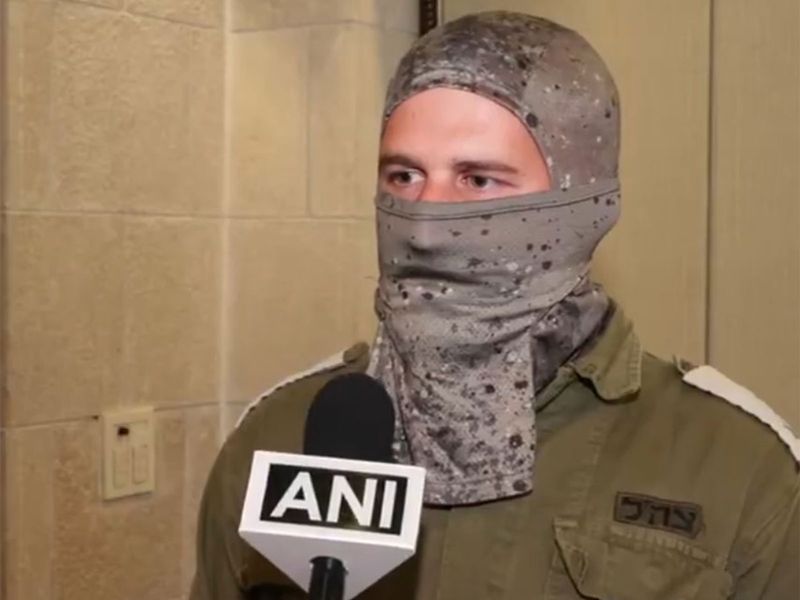

Jerusalem [Israel], May 26 (ANI): An Israeli Army reservist who served over 600 days on the ground fighting in the Gaza Strip, Lebanon, and on the Syrian border, shared his battle experience and motivation to protect the country against Hamas and Hezbollah militant groups.Speaking with ANI, Israeli Army reservist Major E (not his real name) emphasised the need to fight against Hamas and Hezbollah, stating that “no other country will come and fight” for them.”I was in active service for 7 years. And I was released from the army 4 years ago and joined the reserves. Since October 7th, I’ve done approximately 600 days, and my unit and I fought in the Gaza Strip, in Lebanon, and we also protected the Syrian border,” he said.”It’s not easy. We all understand the importance of this big war that we’re facing, which hasn’t ended yet. We understand that if we’re not going to do this job, no one is going to do this job for us. No other country will come and fight the Hamas terrorists or the Hezbollah terrorists,” he added.The Israeli army reservist also refuted the war crime allegations, maintaining that the army strictly adheres to the code of conduct and takes action against individuals involved in such acts.He further stated that the Israeli army respects all religions and civilians, clarifying that their war is only to protect their people and country.”We are very strict about war crimes. I would say there are not a lot of stories that happen in Gaza or in Lebanon. Even when it happens, we are very strict, and we punish whoever needs to be punished. We take them out of Lebanon or Gaza back to Israel, whoever doesn’t behave, because we understand that we are, first of all, human beings. We respect all religions, we respect every single civilian, and we’re not fighting against civilians; we’re fighting to protect our people and to protect our country,” he said.Speaking about Hamas and Hezbollah tactics in the war, he shared that they dig tunnels with entrances inside private houses, children’s rooms, mosques, schools, and hospitals. He said that these tunnels were not built to protect their people but strategically target Israel’s civilians and cities.”About the tunnels, we also found tunnels in Gaza and Lebanon. In Gaza, we found more since it’s easier to dig over there. All the tunnels we found were inside private houses, children’s rooms, mosques, schools, and hospitals. Those are the places where Hamas and Hezbollah were hiding their tunnels,” he added.Israel launched its military operations in Gaza after between 5,000 and 6,000 Palestinian militants, primarily from Hamas, along with members of other armed groups, entered Israel by land, sea and air on October 7, 2023, launching coordinated attacks across multiple locations near the Gaza border.The attacks resulted in the deaths of around 1,200 people and the abduction of 251 hostages, many of whom were taken into Gaza. Israeli authorities have also accused the attackers of committing acts including torture and sexual violence during the assault.Meanwhile, Israel continues to strike at Hezbollah, an Iranian-linked militia group in Lebanon, despite Tehran’s claims that the US-Iran ceasefire also includes Lebanon. (ANI)(This content is sourced from a syndicated feed and is published as received. The Tribune assumes no responsibility or liability for its accuracy, completeness, or content.)