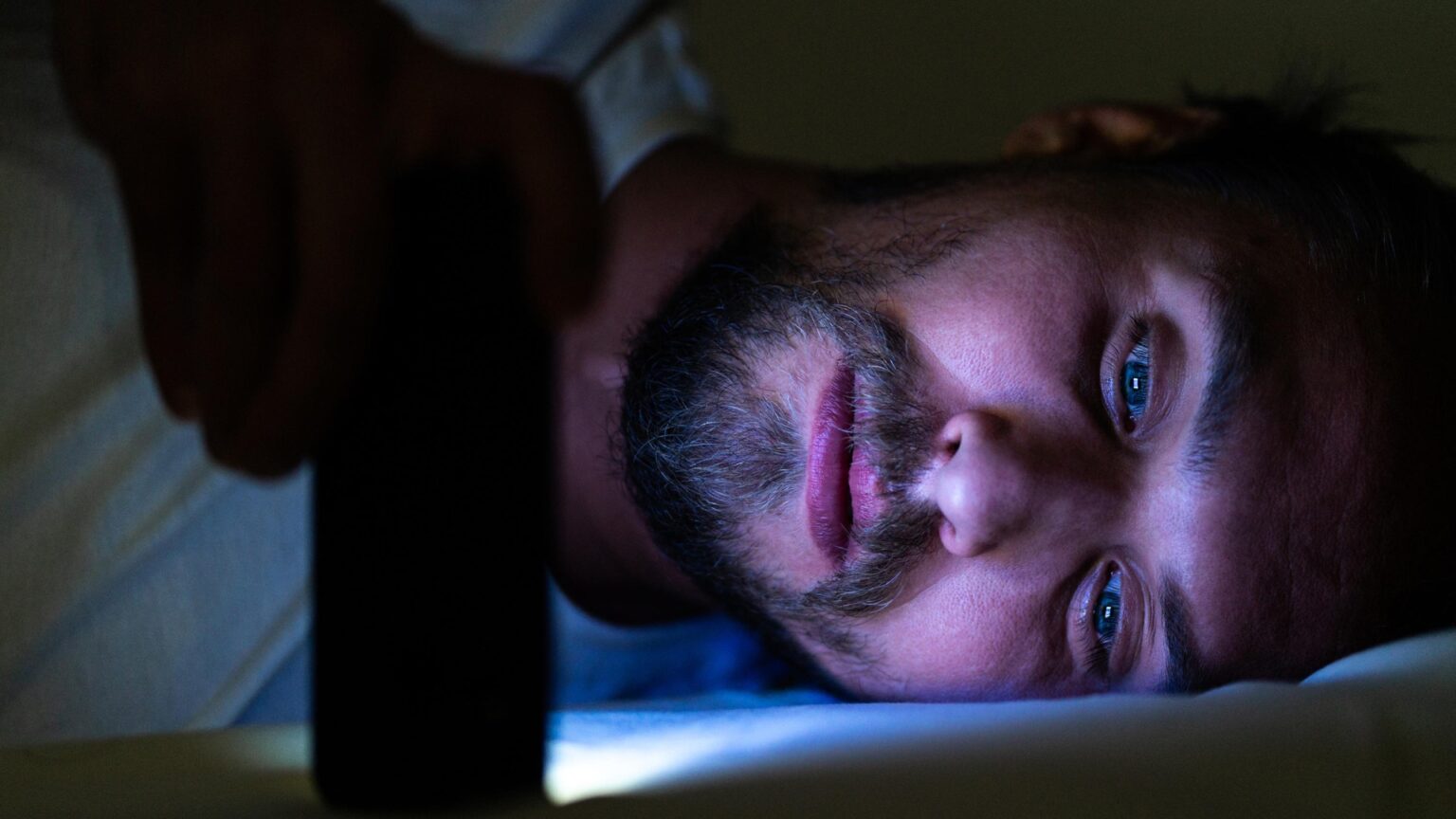


2A6J86A Bearded young handsome and tired man cannot sleep and is watching something on his phone at night. Blue light from the phone is all over his face. Credit: Alamy
INSOMNIA might be contributing to a rise in cancer in under-50s, research suggests.
A study of nearly 18.9million people found bad sleepers were more likely to be diagnosed with early-onset breast, bowel, womb or ovarian cancers.
Sign up for the Health newsletter
Thank you!
Around a third of Brits are estimated to suffer short, restless nights and it may be becoming more common due to phone and TV screens.
Doctors and scientists are trying to find out what is driving a rise in cancer in people in their 20s, 30s and 40s, with rates up 24 per cent since 1995.
In the UK, tumour risk is rising faster in under-50s than any other age group, with possible factors including junk food, sedentary jobs, pollution – and now sleep.
Research by Jefferson Health in New Jersey and the Anderson Cancer Centre in New Orleans analysed the health of 18 to 50-year-olds between 2021 and 2025.
RED FLAGS
The 11 cancers surging in young Brits now – little-known signs you’re at risk
RED FLAGS
The 6 cancers surging in young people right now & the easiest symptoms to miss
They found women diagnosed with insomnia were three times more likely to be diagnosed with breast cancer in the following five years, compared to those without the sleep condition.
Their risk of womb cancer was doubled and ovarian cancer 60 per cent higher.
For men and women the risk of early-onset bowel cancer was an average 85 per cent higher.
Presenting at the American Society of Clinical Oncology (ASCO) conference in Chicago, the authors said: “These findings suggest that sleep disruption may be a clinically relevant, potentially modifiable risk factor in early-onset cancer risk, and warrants further investigation.”
However, the study showed no significant link between insomnia and cancers of the throat, stomach, pancreas, prostate or testicles.
Tumour types with a strong connection were closely linked to the female sex hormone oestrogen, suggesting a possible link as poor sleep can disrupt it.
Dr David Garley, a GP and director of The Better Sleep Clinic in the UK, was not involved with the research but said: “One of the roles of sleep is restoring the immune system, so if your immune system takes a hit then it would make sense that your risk of some cancers may increase.
“When you’re sleep deprived it’s difficult to live a healthy life and there is more drinking, more obesity, less exercise and more smoking, which may cause any possible increased risk.
“But it also might be the other way around, that if you have cancer but it’s not yet clinically obvious, it could be causing some change in how you sleep.”
The NHS says adults should sleep seven to nine hours per night.
Someone may have insomnia if they regularly fail to sleep through the night, take ages to drop off, or are often very tired during the day.
The health service recommends keeping regular sleep and wake times, making the bedroom dark, quiet and comfortable, and avoiding alcohol, coffee, cigarettes or screen time before bed.
SYMPTOMS OF INSOMNIA
THE NHS says you may have insomnia if you regularly:
Find it hard to go to sleep
Wake up several times during the night
Lie awake at night
Wake up early and cannot go back to sleep
Still feel tired after waking up
Find it hard to nap during the day even though you’re tired
Feel tired and irritable during the day
Find it difficult to concentrate during the day because you’re tired
If you have insomnia for a short time (less than 3 months) it’s called short-term insomnia.
Insomnia that lasts 3 months or longer is called long-term insomnia.