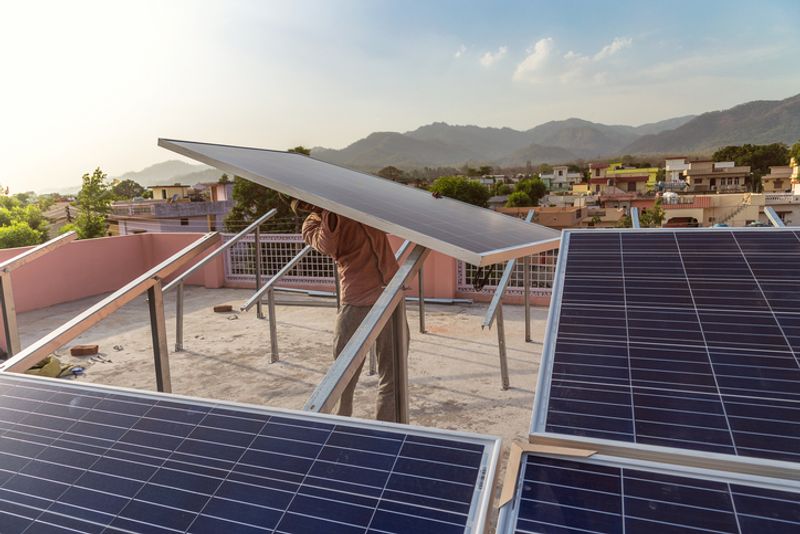

A major change in India’s solar energy sector came into effect on June 1, with the government mandating the use of domestically manufactured solar cells in a wide range of projects, including rooftop solar installations under net-metering arrangements and systems installed under the PM Surya Ghar: Muft Bijli Yojana.The rule also applies to open-access solar projects used by commercial and industrial consumers. Despite repeated requests from developers seeking more time to adapt, the government has made it clear that there will be no blanket extension.Why has the government introduced the rule?The objective is to strengthen India’s solar manufacturing ecosystem and reduce dependence on imported components, particularly from China.While India has developed an annual solar module manufacturing capacity of nearly 200 GW, domestic solar cell manufacturing capacity remains significantly lower at around 30 GW.As a result, a substantial share of solar modules assembled in India still relies on imported cells. Policymakers believe the new mandate will encourage fresh investments in cell manufacturing, improve self-reliance and support the country’s long-term clean-energy goals.The move is also aligned with the government’s broader vision of creating a complete domestic solar supply chain under the “Make in India” initiative.Rooftop solar may become costlierThe immediate impact is likely to be felt by consumers planning to install rooftop solar systems.Industry estimates suggest installation costs could rise by approximately Rs 3,000 per kilowatt because domestically manufactured cells are currently more expensive than imported alternatives.For a typical 5-kW residential rooftop solar system, this could mean an additional upfront cost of around Rs 15,000.Some industry experts caution that prices could increase further if domestic cell supplies remain constrained in the coming months.Consumers applying under the PM Surya Ghar: Muft Bijli Yojana will continue to receive government subsidies. However, compliance checks and documentation requirements are expected to become more stringent under the revised framework.Despite the higher initial investment, experts note that rooftop solar systems continue to offer significant long-term savings through reduced electricity bills.Why the solar industry is concernedIndustry stakeholders say the biggest challenge is the mismatch between demand and domestic production capacity.Current solar cell manufacturing capacity is estimated at 25-30 GW annually, while India’s demand is believed to be close to 50 GW.Historically, more than 90 per cent of India’s solar cell requirements have been met through imports. With the new rule restricting access to imported cells for several project categories, manufacturers fear a supply crunch.Smaller module manufacturers are expected to face the greatest pressure as many do not produce solar cells themselves and depend on external suppliers.Industry executives argue that domestic cell producers currently hold significant pricing power because supplies remain limited. As demand rises under the new mandate, costs could climb further.Smaller manufacturers face tough road aheadThe domestic solar industry is dominated by a large number of standalone module manufacturers that rely on imported cells.Industry insiders estimate that more than 125 module manufacturers and hundreds of ancillary businesses could come under pressure if cell availability remains tight.Several companies are already grappling with low capacity utilisation, reportedly operating at just 30-40 per cent of installed capacity.Manufacturers say modules built with domestic cells are substantially more expensive than those made using imported cells. As the June 1 deadline approached, the price gap widened considerably.Many industry observers believe the new policy could accelerate consolidation, with large integrated manufacturers gaining market share while smaller players struggle to remain competitive.Industry divided over impactNot everyone in the sector sees the development negatively.Several manufacturers support the government’s decision, arguing that strong policy support is necessary to encourage investments in domestic solar manufacturing.Supporters point out that many utility-scale solar projects awarded before August 31, 2025, have been exempted from the domestic cell sourcing requirement, reducing immediate pressure on available supplies.They also contend that temporary disruptions are unavoidable if India is serious about building a globally competitive solar manufacturing industry and reducing reliance on imports.As India races towards its renewable energy targets, the success of the new policy will depend on how quickly domestic cell production expands to meet growing demand while keeping rooftop solar affordable for consumers.