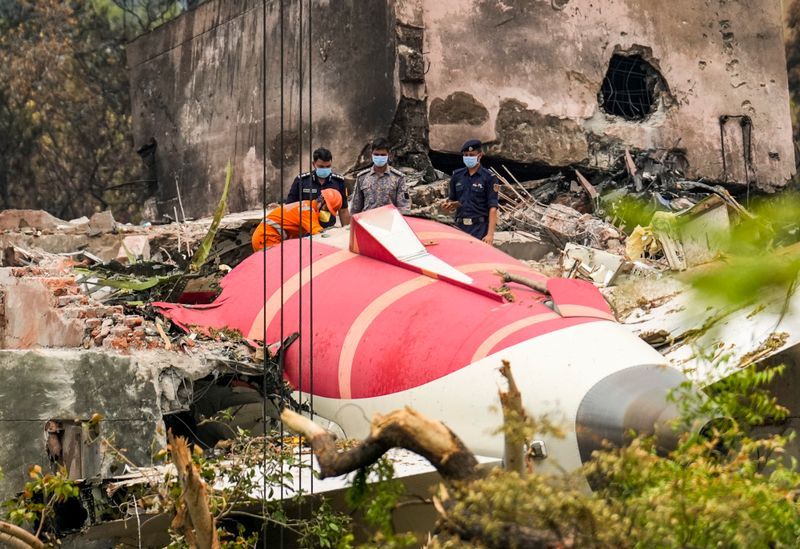

The Federation of Indian Pilots (FIP) has claimed that a pre-lift-off electrical disturbance, rooted in lithium-ion battery behaviour, relay response under abnormal voltage, and the Boeing 787 Dreamliner electrical architecture, could have triggered an unintended dual engine fuel cut-off in the June 2025 Air India crash, without any pilot input, and urged an independent technical probe into the hypothesis.In a detailed technical note submitted to the Ministry of Civil Aviation (MoCA) and the Aircraft Accident Investigation Bureau (AAIB), the pilots’ body said: “Based on lithium-ion battery failures, relay behaviour under abnormal voltage, and Boeing 787 electrical design, a pre-lift-off electrical disturbance could have caused unintended relay operation and dual engine fuel cut-off without pilot input.”The submission directly challenges early narratives that hinted at pilot action, arguing instead that “all credible technical causes be ruled out first” in line with ICAO norms.The FIP’s note reconstructed a chain of electrical events, beginning with a possible lithium-ion battery short circuit, a failure mode previously documented in global investigations, leading to abnormal current flow and voltage fluctuations in the aircraft’s DC electrical system. It pointed to past findings by the National Transportation Safety Board and Japan’s transport safety authorities, which recorded electrical arcing, high current flow and thermal damage in Boeing 787 battery incidents.According to the FIP, such a disturbance could alter the voltage across relay coils. The aircraft uses dual-coil latching relays to control fuel shutoff valves, and under abnormal or reversed voltage, these relays may switch states. Citing aerospace relay manufacturer data, the note states that reverse voltage “may transfer” the relay position, potentially shutting fuel supply.Crucially, the body linked this to the aircraft’s electrical configuration after Ram Air Turbine (RAT) deployment, where shared return paths could allow a disturbance to simultaneously affect both engines.“With a common return path after RAT deployment, reversal of voltage across the dual-coil relay energises the cut-off path… causing near-simultaneous switching from RUN to CUTOFF without pilot input,” said the FIP president, CS Randhawa, in the letter.The FIP has also cited visual evidence suggesting RAT deployment during the take-off roll, indicating a technical anomaly before lift-off. It argues that the timing sequence in the AAIB’s preliminary report needs verification, noting a narrow gap between recorded fuel cut-off and RAT hydraulic activation.Calling for a deeper investigation, the pilots’ body has formally urged the government to treat its findings as a testable hypothesis. “It is submitted that this may be treated as a testable hypothesis and examined through detailed electrical analysis by IIT Bombay, Aeronautical Development Agency, or Hindustan Aeronautics Limited (HAL). Technical causes cannot be ruled out till this analysis is made,” the letter said.The FIP has also reiterated its demand for simulator validation of the timeline. “In our last letters and emails we had requested the verification of the timings as given in the preliminary report of AAIB by carrying out a simulator session on B-787,” it said.The intervention comes amid continuing scrutiny of the AAIB’s preliminary findings into the June 12, 2025 Air India Boeing 787 accident that claimed 260 lives, with competing theories emerging over cockpit action versus systemic failure. The FIP’s latest submission shifts the focus firmly onto electrical systems and design vulnerabilities, arguing that a conclusive determination cannot be made without independent technical validation.