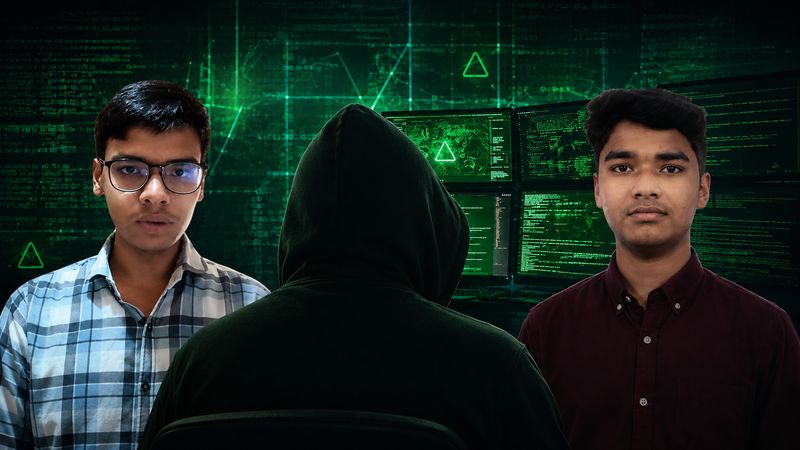

In an age where social media often drives public discourse, three teenagers have emerged at the centre of one of the biggest controversies involving the Central Board of Secondary Education (CBSE) in recent years.Their questions about the board’s new On-Screen Marking (OSM) system have triggered a nationwide debate on transparency, accountability and digital security.The controversy began when Vedant Shrivastava, a Class 12 student, claimed that the answer sheet provided to him by CBSE during the verification process was not his own.The alleged mix-up quickly went viral, raising concerns about the accuracy of the board’s evaluation process and prompting CBSE to address the issue publicly.Soon after, Sarthak Sidhant, a 17-year-old student, drew attention with a detailed analysis of the tendering process behind the OSM system. His findings fuelled discussions about procurement procedures and the selection of the technology platform used for evaluating lakhs of answer sheets.The third name making headlines is Nisarga Adhikary, a 19-year-old “ethical hacker” who claimed to have identified vulnerabilities in CBSE’s online marking portal. Adhikary alleged that security flaws could potentially expose sensitive examination data. CBSE later acknowledged that certain vulnerabilities had been identified and addressed, while maintaining that the overall system remained secure.Together, the three teenagers have become symbols of a new generation willing to challenge institutions using data, technology and public scrutiny rather than street protests. Their efforts have drawn attention from politicians, cybersecurity experts and students across the country.