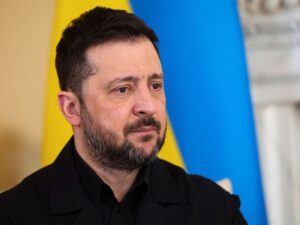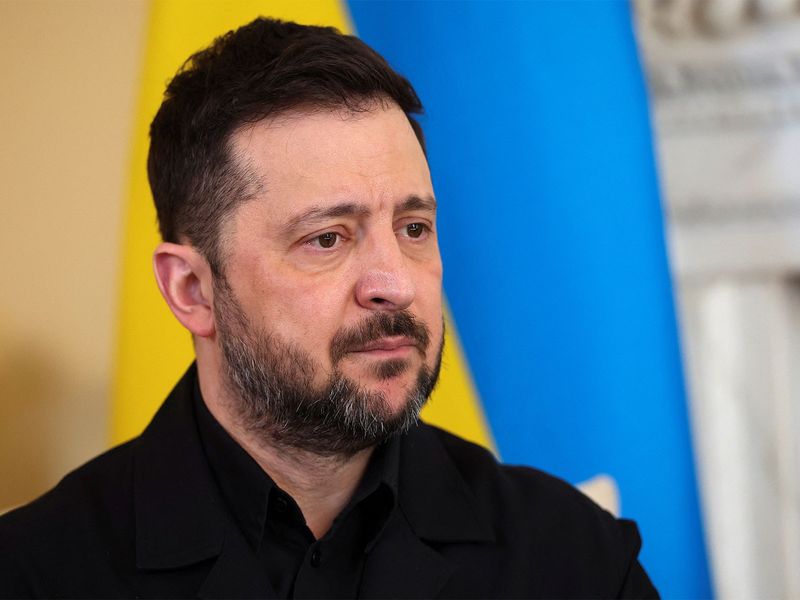


VOLODYMYR Zelenskyy has publicly challenged Vladimir Putin to face-to-face peace talks in a direct letter to the Kremlin strongman.
In the stark message, Zelenskyy wrote: “I am proposing a meeting.”
Sign up for The Jattvibe newsletter
Thank you!
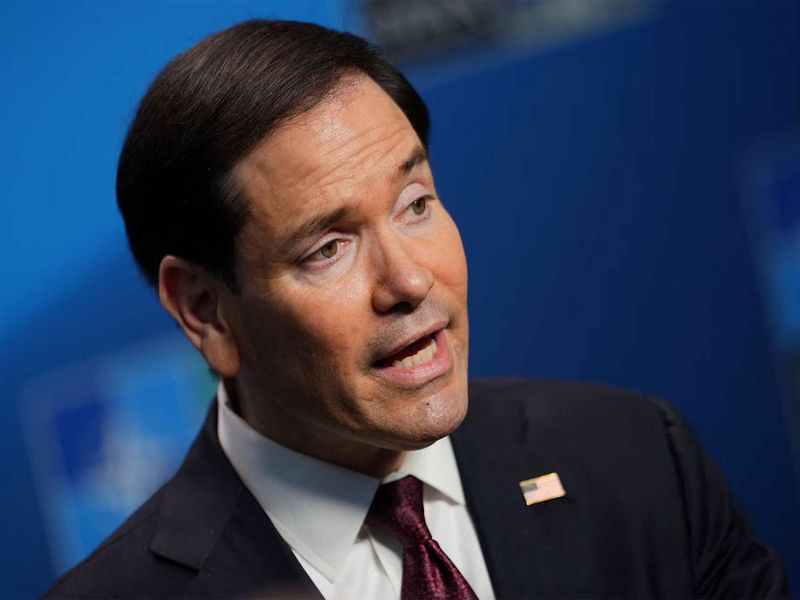
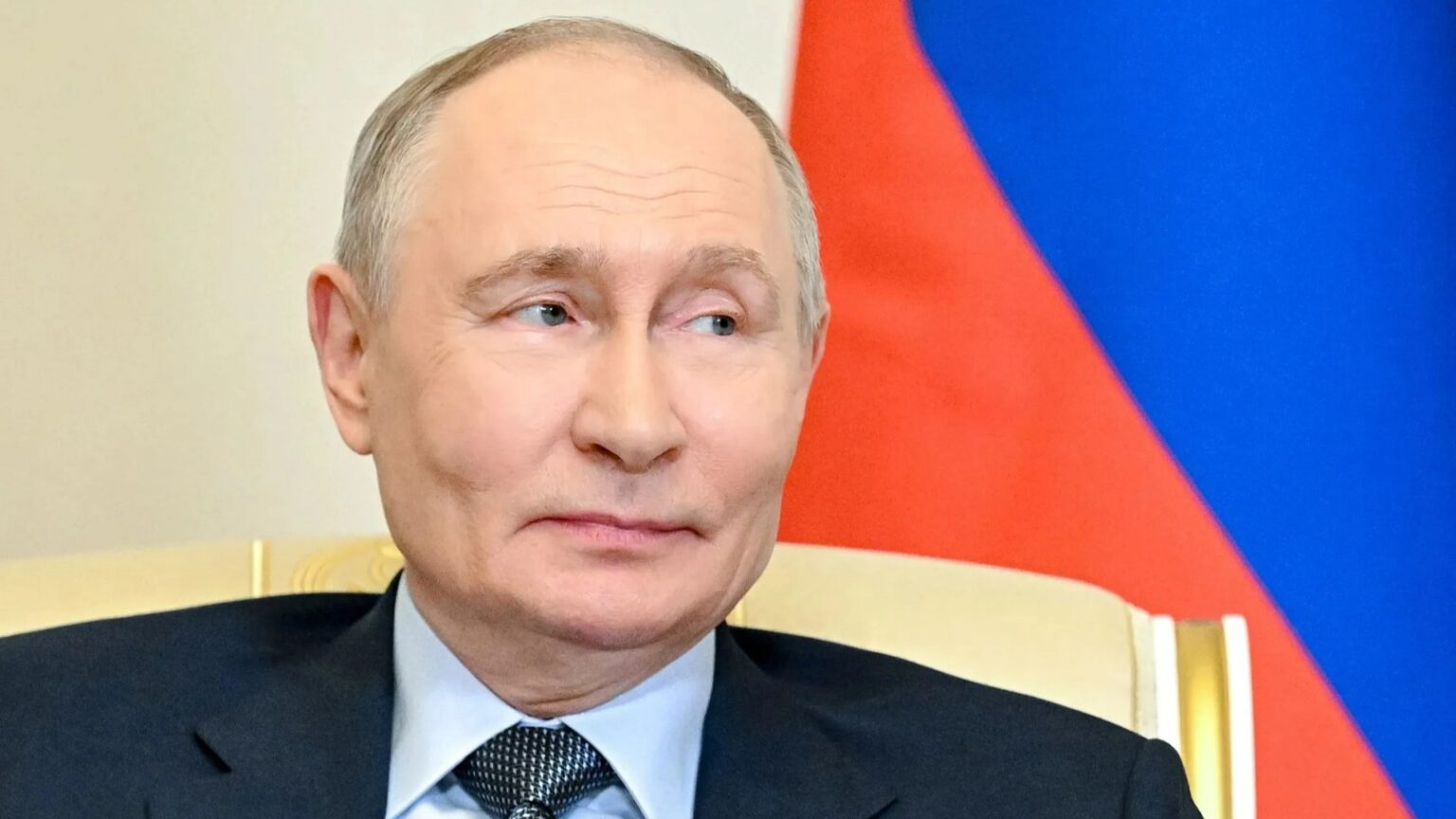
Volodymr Zelenskyy has publicly challenged Vladimir Putin to face-to-face peace talks Credit: AFP
Putin said former German Chancellor Gerhard Schroeder could play a role in bridging talks Credit: AP
But even as Kyiv pushes for negotiations, Putin has laid down his conditions for any peace process – rejecting the European Union as a mediator and instead pointing to a controversial former European leader as someone he can trust.
Speaking in St Petersburg, Putin said former German Chancellor Gerhard Schroeder could play a role in bridging talks between Russia and Europe.
“Who else but Schroeder could act as a mediator?” said Putin.
He added that Schroeder was not a personal friend, but a German statesman who “had his own views and was prepared to stand by them.”
DOCK-OUT BLOW
Satellite pics show smoke pour from docked Russian warship after drone blitz
FINAL BLOW?
Vid shows deadly Iranian blitz on airport as Trump says ‘he WON’T resume war’
Putin also insisted Moscow was not trying to dictate who Europe chooses to speak to, but made clear he sees Schroeder as a trusted option in contrast to Brussels.
He also rejected EU involvement in wider peace talks.
“Mediation assumes neutrality,” he said. “Where is the neutrality here?”
He insisted any mediator must be trusted by both sides, effectively shutting the door on Brussels while keeping control of the diplomatic track firmly on Moscow’s terms.
Putin also insisted Moscow was not trying to dictate who Europe chooses to speak to Credit: AFP
Putin also rejected EU involvement in wider peace talks. Credit: EPA
He also doubled down on his view that Russia will not pause fighting to negotiate, saying: “There is no need to suspend the hostilities to start negotiations.”
That stance leaves little room for Western-led mediation efforts and sets out Russia’s hard conditions for any future deal.
Zelenskyy warned Ukraine cannot wait for shifting US attention, saying it would be wrong to rely on Washington refocusing while the Iran war dominates global politics.
US President Donald Trump backed the idea of a summit, saying it would be “great” if Putin and Zelenskyy met and “get it done.”
Trump said: “They’re going to both make compromises, I suggested those compromises.”
He gave no details but insisted he had pushed both sides toward agreement.
Trump has repeatedly promised to end the war quickly but is now also focused on the Iran conflict involving the US and Israel.
On the battlefield, Zelenskyy said Ukraine is now in a rare position of momentum, stepping up long-range strikes while Russia continues heavy missile and drone attacks across Ukraine.
A video released by Ukraine shows the drone aiming for the Russian corvette Credit: Ukrainian Special Operations Forces
The followed explosionCredit: Ukrainian Special Operations Forces
He proposed talks in a neutral country such as Switzerland, Turkey or Arab states, and ruled out both Moscow and Kyiv.
“It is leaders who resolve the key issues. That has always been the case, and it always will be, he wrote. I propose to set a clear date for such a meeting,” he said.
Zelenskyy also claimed Russia is planning for a long war into 2027 and 2028, while increasing missile strikes as its ground offensive slows.
He accused Moscow of trying to drag Belarus deeper into the war and destabilise Moldova’s breakaway Transnistria region.
He said Russia is already under serious strain, pointing to drone attacks inside Russia, economic pressure, fuel shortages and growing mobilisation.
Zelenskyy claimed Russia suffered more than 30,000 troops killed or wounded in a single month and said Ukraine has video evidence of the losses.
He added Ukraine is still taking losses but said its casualty rate is lower, and called for a ceasefire during talks along with a full prisoner swap.
“The world has not grown tired of Ukraine, as you long hoped it would. But there is growing fatigue with Russia,” Zelenskyy said.
Vladimir Putin, meanwhile, used a major public appearance to double down on Russia’s war position and reveal key conditions for any peace deal.
He confirmed Ukraine’s drone strikes are now reaching deep inside Russia, forcing Moscow to strengthen its air defences.
“To our regret, some of them break through, Putin said of the drone strikes. Russia has an air defence system, we need to improve it, strengthen it, and we will do that,” he said.
Ukraine strikes a major St Petersburg oil terminal ahead of Putin’s flagship SPIEF economic forum in the city Credit: East2West
A plume of black smoke is seen over the port of St PetersburgCredit: AP
He repeated that Russia wants full control of Donetsk and claimed Russian forces are advancing across the front line.
He also said he has accepted what he called Trump-backed proposals from talks in Alaska, saying they could form the basis of a deal.
“Moscow wants a comprehensive settlement, not a temporary truce,” he said.
On Russia’s economy, he admitted inflation pressure but said growth continues despite sanctions.
As leaders talk peace, war has now hit deep inside Russia itself.
Ukrainian drones struck St Petersburg – Russia’s second city and key showcase – just hours before a major economic forum opened.
Fires ripped through the St Petersburg Oil Terminal, sending huge flames and thick black smoke into the sky.
The nearby Kronstadt naval base was also hit, with reports of damage to ships and military infrastructure.
Zelenskyy said the strikes were “yielding good results,” claiming the oil terminal, “purely military targets” at Kronstadt, and an arms site in Tambov were hit.
St Petersburg governor Alexander Beglov admitted damage, saying “cleanup and recovery operations were underway,” and confirmed several people were injured, but no deaths.
Officials said dozens of drones were shot down, but the city still faced major disruption, including airport delays and diverted flights.
The oil terminal sits just 90 miles from the Estonian border, with NATO member Estonia reportedly putting air defences on alert.
The timing was highly symbolic, coming as Russia hosted its St Petersburg International Economic Forum – often called “Russia’s Davos” – with delegates from 76 countries, including controversial influencer Andrew Tate and his brother Tristan.
Putin is expected to speak at the event as Russia tries to show strength despite sanctions and war pressure.
But behind the scenes, Russia’s economy is under strain, with rising inflation, growing deficits and interest rates at 14.5 per cent.
Putin dismissed concerns, saying the slowdown is deliberate to avoid runaway inflation.
“We dont want inflation hyperinflation to reach 60-80 per cent, as it is some countries, he said. Were fighting for the health of the Russian economy as a whole.”
As the forum opened, more reports emerged of damage to a Russian warship, the “Boyky”, at Kronstadt, with smoke seen pouring from the vessel.
Drone footage and images showed fires across multiple sites as Ukraine intensified deep strikes inside Russia.
Russian officials said most drones were intercepted but confirmed damage and ongoing emergency operations across the region.
Who is Gerhard Schröder?
By Jeylin Mehmet
Chancellorship (1998–2005): Governed Germany for seven years as the leader of the center-left Social Democratic Party (SPD).
Kremlin Friendship: Built a close personal relationship with Vladimir Putin during his time in office, which included celebrating birthdays together and adopting two Russian children with Putin’s help.
The “Flawless Democrat” Comment: Declared publicly on German television in 2004 that Putin was a “flawless democrat,” a statement that drew lasting criticism.
Nord Stream 1 Deal: Approved the construction of the Nord Stream 1 gas pipeline from Russia to Germany in late 2005, just weeks before losing the national election.
Corporate Energy Roles: Accepted a paid position to lead the Nord Stream shareholders’ committee immediately after stepping down as chancellor, later joining the boards of Russian state energy giants Rosneft and Gazprom.
2014 Crimea Backlash: Sparked international outrage by hugging Putin at a lavish birthday celebration in St. Petersburg shortly after Russia illegally annexed Crimea from Ukraine.
Refusal to Resign: Remained on Russian corporate boards long after the 2022 full-scale invasion of Ukraine, making him an anomaly among Western politicians who cut ties immediately.
Loss of State Privileges: Stripped of his taxpayer-funded office space and staff by the German parliament in 2022 due to his refusal to distance himself from Moscow.
Political Isolation: Ostracized by mainstream German politics and heavily criticized by his own party, though he maintains his friendship with Putin and explicitly refuses to apologize.
Proposed Peace Mediator: Emerged in news cycles after Putin suggested him as a potential EU-Russia negotiator—a proposal immediately rejected by Germany and Ukraine, who labeled him a Russian lobbyist.