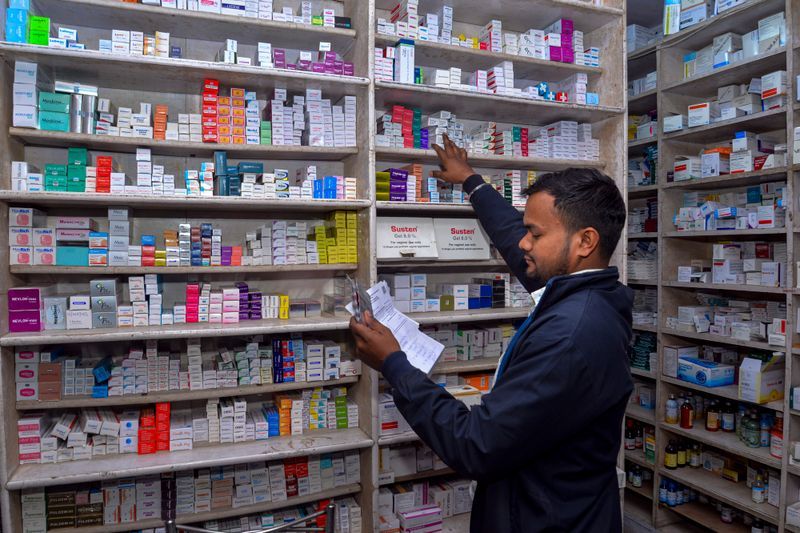

The National Pharmaceutical Pricing Authority (NPPA) on Thursday issued three separate gazette notifications approving steep increases in the ceiling prices of essential cancer chemotherapy drugs, anti-tetanus immunoglobulin injections, and key childhood immunisation vaccines, citing sharp increases in raw material costs and the need to prevent supply shortages.Cancer drugs Carboplatin, Cisplatin get 50% price hikeThe NPPA invoked its extraordinary powers under Paragraph 19 of the Drugs (Prices Control) Order (DPCO), 2013, to allow a one-time 50 per cent increase in the ceiling prices of two critical first-line oncology medicines.The ceiling price of Carboplatin 10 mg/ml Injection has been revised to Rs 90.74 per ml, while Cisplatin 1 mg/ml Injection now stands at Rs 10.89 per ml.The Authority noted that prices of the Active Pharmaceutical Ingredients (APIs) for both drugs had risen substantially in recent years, threatening the viability of their production and supply.Healthcare institutions, oncologists, manufacturers and other stakeholders had flagged shortages and supply disruptions of these formulations, which are used in the treatment of various cancers.The Committee constituted under Paragraph 19 of the DPCO had examined applications based on data on API price trends from 2021-22 to 2025-26 and, at its eighth meeting on May 18, 2026, recommended the price revision.The NPPA warned that non-availability of these drugs could disrupt cancer treatment and force patients toward costlier alternatives. The revised prices will be reviewed after six months, or earlier if warranted by raw material price fluctuations.Anti-Tetanus Immunoglobulin prices raised by 50% on manufacturer’s appealThe NPPA also approved a 50% one-time increase in the ceiling prices of Anti-Tetanus Immunoglobulin injections, manufactured solely by M/s Bharat Serums & Vaccines Limited.The price of the 250 IU vial has been revised to Rs 1,912.02, while the 500 IU vial now costs Rs 2,881.19.The case has a longer back-story. The NPPA had originally fixed prices for these formulations in December 2024, applying a 7.67% “monopoly reduction” — a standard cut applied under Paragraph 6 of the DPCO when only one company manufactures a drug.The sole manufacturer challenged this, arguing that the import-dependent API costs, currency fluctuations, and rising manufacturing expenses had made production financially unviable, resulting in continuous negative margins despite its continuing supply in public interest.The Department of Pharmaceuticals referred the matter back to the NPPA in April 2026, directing it to follow the precedent set in the case of BCG Vaccine under the National List of Essential Medicines (NLEM) 2015.The Committee, at its May 18 meeting, noted that the drug has been under price control since NLEM 2011 and that API costs had risen substantially, recommending the 50% increase.The NPPA clarified that since this hike already factors in market structure and supply conditions comprehensively, no separate reconsideration of the monopoly reduction was warranted.The third notification revised the ceiling prices of three vaccines manufactured by Serum Institute of India Private Limited, removing a 17.10% monopoly reduction that had been applied earlier and adding a Wholesale Price Index (WPI) impact of 0.64956% for 2026.The price of the BCG Vaccine, sold per 0.10 ml dose, has gone up from Rs 8.20 to Rs 9.89. The Measles-Rubella Vaccine, sold per 0.5 ml vial, now costs Rs 87.93, up from Rs 72.90, while the Measles Vaccine in the same vial size has risen from Rs 51.40 to Rs 62.00.The Serum Institute had challenged the December 2024 notification, arguing that applying an average price reduction based on other vaccines in the same sub-therapeutic category — as done under Paragraph 6 of DPCO, 2013 — was inappropriate for biologicals/vaccines, since each vaccine differs in manufacturing process, technology, market dynamics and therapeutic use.The Department of Pharmaceuticals, in its review order dated April 7, 2026, agreed that while NPPA had technically followed the prescribed methodology, these vaccines are of critical public health importance, have shown stable prices, impose minimal financial burden on citizens, and are supplied by a single manufacturer at relatively low cost.It directed the NPPA to follow the precedent of the BCG Vaccine case under NLEM 2015, where no monopoly reduction had been applied.The NPPA noted it had similarly revised BCG Vaccine prices without monopoly reduction in April 2018 and granted a further one-time hike in December 2019.At its 279th (Overall) and 147th Authority meeting held on June 11, 2026, the NPPA decided to fix/revise the prices without the monopoly-based reduction to address the manufacturer’s grievance and ensure adequate market availability of these essential immunisation vaccines.All three orders carry standard DPCO compliance conditions: manufacturers selling above the revised ceiling prices (plus applicable GST) must revise prices downward; price lists must be filed in Form-V through the Integrated Pharmaceutical Database Management System (IPDMS) to the NPPA, State Drug Controllers and dealers; retailers must display price lists prominently; and any manufacturer planning to discontinue production must give six months’ notice.Non-compliant manufacturers face liability to deposit overcharged amounts with interest under the Essential Commodities Act, 1955.