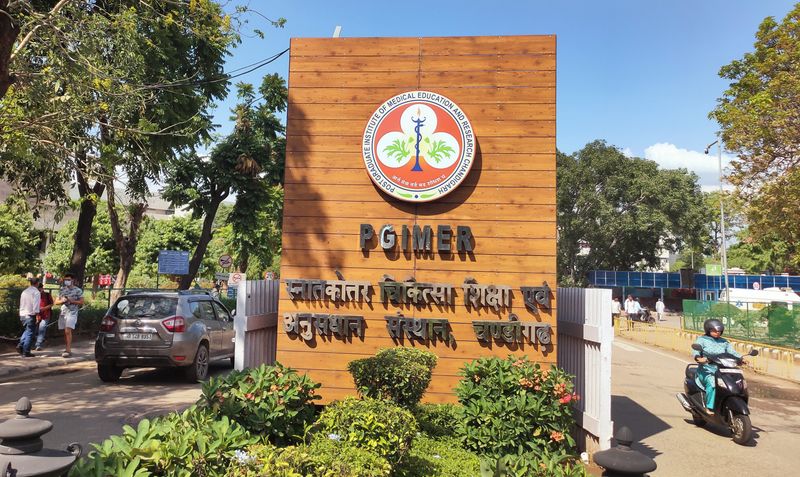

On the morning of June 8, George Richmond, the 54-year-old British cinematographer whose sweeping visual work has framed some of Hollywood’s biggest blockbusters, was part of a five-member group on a long-distance cross-country paragliding flight from Bir Billing in Kangra district of Himachal Pradesh, heading toward the high-altitude Deo Tibba region in the Kullu mountains. It was meant to be an adventure among friends. It turned, in seconds, into a struggle for life.Somewhere over the rugged Deo Tibba terrain, Richmond crashed into the mountain, triggering an extensive search and rescue operation by local Himachal Pradesh authorities and the Indian Air Force. Fellow paragliders raised the alarm; what followed was a race against altitude, injury and time. The rescuers evacuated Richmond from the accident site to a nearby safer location, from where he was airlifted by an IAF helicopter to Kullu for initial medical care.By the early hours of June 9, the man behind the camera for Deadpool & Wolverine, Rocketman, Free Guy, Kingsman: The Secret Service and Tomb Raider had been rushed to the Advanced Trauma Centre of the Postgraduate Institute of Medical Education and Research (PGIMER) in Chandigarh — barely conscious, paralysed in all four limbs, and fighting for every breath.A spine shattered at two levelsWhat the clinical and radiological assessment at PGIMER revealed was catastrophic: Richmond had sustained a C1 vertebra fracture along with a fracture-dislocation at the C5-C6 level — resulting in quadriplegia, one of the most severe forms of spinal trauma. Such injuries carry a significant risk of life-threatening respiratory compromise, because the affected spinal segments are perilously close to those that control diaphragmatic function — the very mechanism of breathing.In plain terms, Richmond had broken his neck in two separate places. Had either injury been even marginally worse in its neural impact, he could have stopped breathing entirely.Immediate resuscitation was initiated in accordance with Advanced Trauma Life Support (ATLS) protocols. Following stabilisation, Richmond was shifted to the High Dependency Unit for intensive monitoring. The PGIMER trauma team — spanning orthopaedics, neurosurgery, anaesthesiology, critical care and rehabilitation — worked through the assessment, building toward a surgical strategy.The surgery: a technical masterstrokeThe definitive operation was performed on Thursday, June 12 — four days after the accident, once the patient had been optimally stabilised.Prof Vijay G Goni, Head, Department of Orthopaedics, PGIMER, who led the multidisciplinary team, explained the complexity involved. “The patient presented with a highly complex cervical spine fracture-dislocation associated with significant neurological impairment,” he said.“A major milestone was achieved through fluoroscopy-guided closed reduction of the cervical fracture-dislocation — a technically demanding procedure that successfully restored spinal alignment and, critically, eliminated the need for a combined anterior and posterior surgery, thereby substantially reducing surgical morbidity.”Following satisfactory reduction, anterior cervical decompression, reconstruction and stabilisation were carried out.The surgery involved removal of the damaged intervertebral disc and fractured elements causing neural compression, reconstruction with an interbody cage packed with bone graft substitute material, and stabilisation with a cervical plate and screws. The lead surgeon was Dr Vishal Kumar, Additional Professor, Department of Orthopaedic Surgery.“It was a combined effort,” Prof Goni told The Tribune. “Our protocol is to wait for stabilisation of the patient and wound healing. Let’s see how it goes,” he added, indicating continued guarded optimism.‘World-class care, irrespective of nationality’Speaking to The Tribune, Prof Vivek Lal, Director, PGIMER, contextualised the case within the institution’s larger mission. “At PGIMER, our foremost commitment is to provide timely, compassionate and world-class medical care to every patient who comes to us — irrespective of nationality, background or circumstance. The successful management of George Richmond’s injury reflects the strength of our integrated trauma care ecosystem, where specialists from multiple disciplines work seamlessly to deliver rapid assessment, stabilisation and definitive treatment,” Prof. Lal said.He added: “Such complex spinal injuries demand not only advanced surgical expertise but also meticulous planning, cutting-edge infrastructure and coordinated teamwork across departments. What has been achieved here exemplifies PGIMER’s preparedness to manage the most challenging medical emergencies while adhering to the highest international standards. We remain committed to supporting Mr. Richmond through every stage of his recovery and rehabilitation.”Stable, conscious, communicatingRichmond is currently stable, conscious and communicating effectively in the post-operative unit at PGIMER. His vitals are stable and he is recovering, physicians confirmed this morning. Early mobilisation in a wheelchair has been planned as the first step in a comprehensive rehabilitation programme that will unfold over months.The road ahead, however, will be long. Cervical spinal injuries of this severity — dual-level fractures with quadriplegia — demand intensive neurological rehabilitation before any meaningful assessment of long-term limb function recovery can be made. Doctors said the immediate priority is wound healing and neurological monitoring; a fuller picture of motor and sensory recovery will emerge over the coming weeks.Medical experts indicate that the extent of spinal cord damage — whether complete or partial — is the decisive factor in recovery. A partial injury, where the cord is bruised rather than severed, leaves considerably more room for recovery of function than a complete injury. PGIMER doctors have not publicly characterised the extent of cord damage beyond confirming quadriplegia at presentation, and sources indicate the neurological picture continues to evolve post-surgery.A royal address for recoveryIn a gesture that speaks to the bonds of international friendship, Richmond was not convalescing at a hotel or clinic. Sources confirmed to The Tribune that the British cinematographer was hosted as a personal guest at the storied Patiala Mahal — the palatial ancestral residence of former Punjab Chief Minister Capt Amarinder Singh. The connection is Raninder Singh alias Tikku, the former CM’s son, titular heir to the Phulkian dynasty of Patiala and former president of the National Rifle Association of India, who is a close personal friend of Richmond.It is a distinctly Indian denouement to what began as a British adventurer’s tryst with the Himalayas — a Hollywood eye behind the lens now recovering in the shadow of Punjab’s most storied royal household.The man behind the cameraGeorge Richmond BSC is a British cinematographer known primarily for action films, the son of veteran British-American cinematographer Anthony B. Richmond. He began as a camera operator before making his directorial photography debut with The Hide (2008).Over the years, he built a reputation as one of Hollywood’s most respected cinematographers, particularly known for Deadpool & Wolverine, Rocketman and Free Guy. He has been a frequent collaborator of British filmmakers Matthew Vaughn and Dexter Fletcher, contributing to the Kingsman franchise and the Elton John biopic Rocketman, among others. His recent credits include Argylle (2024) with Matthew Vaughn and Now You See Me: Now You Don’t (2025).A warning above the cloudsThis near-fatal accident is the latest in a string of serious incidents involving cross-country paragliding in Himachal Pradesh’s Kullu-Kangra belt. The incident adds to a troubling pattern involving foreign nationals in the state. These incidents have intensified scrutiny over the lack of regulation and oversight in cross-district paragliding flights from Bir Billing to Manali and Kullu. Despite repeated warnings and media coverage, authorities have yet to implement stringent safety protocols or enforce registration of take-off sites.George Richmond survived. But as PGIMER’s finest work in advanced cervical spine trauma stands testament to what Indian public healthcare can achieve, the mountains above Deo Tibba offer a starker reminder: for those who read the skies carelessly, there may be no second frame.