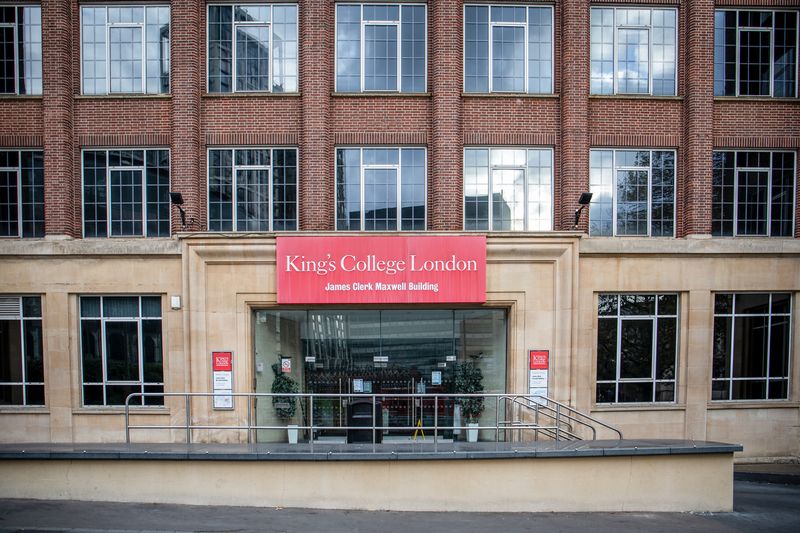

One of Britain’s leading universities, which is actively seeking to attract more students from India, is facing legal action from a former student who claims a First-Class degree was downgraded to a 2:1 after a series of administrative errors and conflicting explanations.The case involving King’s College London is likely to be watched closely by Indian students and their families, who invest large sums in British higher education in the expectation that academic assessments will be transparent, consistent and fair.The dispute centres on Ceana Agbro, 23, who studied Business Management at King’s. Agbro says she was initially led to believe she had achieved a First-Class degree before being informed that her final classification was an upper second, or 2:1.”I thought getting a first from King’s would open a lot of doors for me,” she said.According to Agbro, university records initially appeared to show that she had achieved the 70 per cent average normally required for a First. She says she later received communications suggesting that errors had been made in the calculation of her marks and that the matter would be corrected.Days before graduation, however, she was informed that the lower classification was correct because a peer-review component had not been included in the original calculation.”The reason given was peer review — a system I was never given access to. No link. No visibility. No opportunity to respond,” she wrote in a public appeal for support.Agbro postponed graduation and pursued a series of internal appeals before taking her complaint to the Office of the Independent Adjudicator for Higher Education. After failing to secure a favourable outcome, she launched legal proceedings.She insists the case is about more than a degree classification.”I want people to understand this isn’t even about the grade — it’s about the process and it’s been unjust,” she said.Agbro added: “I’m doing this for the students before me and after me — I don’t want it to happen to anyone else.”Responding to questions from The Tribune, King’s College London acknowledged that mistakes occurred in its communications with the student but rejected suggestions that the final degree classification was incorrect.A university spokesperson told The Tribune: “We take all matters relating to student grades and academic appeals very seriously to ensure fairness for all of our students and we have sincerely apologised for the error in email correspondence that occurred, however this error is separate from and does not affect the outcome of investigations.”The spokesperson added that the matter had been examined both through the university’s own procedures and by the Office of the Independent Adjudicator for Higher Education.”This matter has been investigated thoroughly, firstly through our own robust and objective appeals processes and then secondly by the independent, external Adjudicator, who upheld the University’s position,” the spokesperson said.”We have engaged fully with the appeals process pursued by the student, and are confident that this robust investigation of the matter has reached a conclusive outcome.”The case comes at a time when British universities are competing aggressively for international students, with India now one of their most important overseas markets. King’s College London has expanded its engagement with India in recent years and promotes itself heavily to prospective Indian applicants.The university is headed by Dr Shitij Kapur, the Indian-born President and Principal of King’s, who has spoken publicly about the importance of India to the institution’s international strategy and student recruitment efforts.For many Indian families, the cost of a British degree can exceed Rs 30 lakh to Rs 50 lakh once tuition fees, accommodation and living expenses are taken into account. As a result, disputes over grading, appeals and academic procedures are no longer viewed as purely internal university matters but as issues with potentially significant financial and career consequences.A British degree classification can affect postgraduate admissions, scholarship opportunities and employment prospects both in Britain and overseas.While the lawsuit concerns a single student, it raises broader questions about transparency, accountability and students’ ability to challenge academic decisions at institutions that are increasingly dependent on international enrolment.As British universities continue to court students from India and other overseas markets, the outcome of the case is likely to be watched closely by prospective applicants and their families, many of whom regard British higher education as one of the largest investments they will ever make.